Abstract
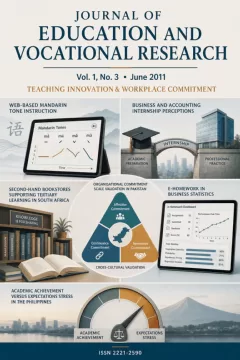
In South Africa, the capability of tertiary institutions to provide the best possible education to its students is hindered by financial difficulties. Determining how to make a place of learning more accessible takes decent consideration for the needs and wants of students as well as management. Most South African tertiary institutions have large numbers of students who are faced with challenges of learning. A major challenge that this study highlights is that of the short supply of and access to both prescribed and recommended textbooks. Short supply refers to the library not acquiring enough support texts that go round, while access refers to the lack of funds by the student to own a prescribed or recommended text book. The study sample was derived from the business faculty of a South African university of technology. In order to get a representative sample, 300 business students were randomly chosen. Out of this number, only 157 usable questionnaires were returned. The results indicated, amongst others, that the majority of the participants come from less fortunate backgrounds and as a result sought support from several sources for their studies. This is a strong indication that given the cheaper cost of textbooks, these students will favor a secondhand book store. This study explored the possible contribution to teaching, learning and academic development by a used book store. The findings indicated that a used bookstore would provide enormous support to student learning and development. This paper’s significance stems from its originality given that it is the first time that attention is paid to this serious issue of teaching and learning challenges in this regard.
Keywords
- Used Bookstores Search this journal for Used Bookstores (opens in a new tab)
- South Africa Search this journal for South Africa (opens in a new tab)
- Teaching Search this journal for Teaching (opens in a new tab)
- Learning Search this journal for Learning (opens in a new tab)
- Higher Education Search this journal for Higher Education (opens in a new tab)
- University of Technology Search this journal for University of Technology (opens in a new tab)
References
- Bergh, C. Z. & Theron, L. A. (2009). Psychology in the Work Context (4e). Oxford University Press.
- CHE (2010). Higher Education Finance and Cost-Sharing in South Africa. Retrieved October 12, 2010 from http://gse.buffalo.edu/org/inthigheredfinance/files/Country_Profiles/Africa/South_Africa.pdf.
- Collins, J. and Hussey, R. (2003) Business Research: a practical guide for undergraduate and postgraduate students. 2nd Edition. Basingstoke: Palgrave Macmillan
- DHET (2010). National Skills Development Strategy 111. Retrieved June 14, 2011 from http://www.dhet.gov.za/LinkClick.aspx?fileticket=nnfc2uv8OFI%3d&tabid=36&mid=1071.
- Ghose, A., Smith, M. D., & Telang, R. (2006). Internet exchanges for used books: an empirical analysis of product cannibalization and welfare impact. Information Systems Research , 17(1), 3-19.
- Harber, C. & Mncube, V. (2011). Is schooling good for the development of society? the case of South Africa. South African Journal of Education , 31, 233-245.
- Henning, E. (2004). Finding your way in Qualitative Research . Pretoria: Van Schaik.
- Illobre, N. (2008). Fear of Cannibalization. The Primary Barrier to Media Domination. Retrieved March 18, 2011 from http://www.spoig.com/l.c.bin/F/15045114/SPOIG_Cannibalization.pdf
- Makgato, M. & Mji, A. (2006). Factors associated with school learners’ poor performance. A spotlight on Mathematics and Physical Science. South African Journal of Education, 26(2), 253-266.
- Mncube, V. S. & Harber, C.R. (2010). Chronicling educator practices and experiences in the context of democratic schooling and quality education. International Journal of Educational Development , 30, 614-624.
- NSFAS (2010). Annual Report 2010. Retrieved October 16, 2010 from https://www.nsfas.org.za/web/view/general/reports/annualreport2010.
- Otive, I. (2006). The state of education in Nigeria. A keynote address delivered at a roundtable organized by civil society coalition on education for all. July 3, 2006. Action Aid International, Nigeria. Retrieved May 26, 2011 from http://www.dawodu.com/igbuzor14.htm
- Poole, M. (2004). Diversity of the student body and social cohesion. Paper presented at the IAU Sao Paulo 12th General Conference: The Wealth of Diversity. July 25 – 29, 2004.
- Samantha, W. (2010). Significance of Used Text Books. Retrieved October 10, 2010 from http://www.articledashboard.com/Article/Significance-of-used-text-books/1848641.
- Savikas, A. (2011). Does digital cannibalize print? Not yet. Retrieved May 24, 2011 from http://radar.oreilly.com/2009/08/does-digital-cannibalize-print-not-likely.html.
- Spreen, C. & Vally, S. (2006). Education rights, education policies and inequality in South Africa. International Journal of Educational Development , 26, 352-362.
- UNESCO (1996). Learning the treasure within. Report to the UNESCO commission on education for the 21st century. Paris. Retrieved May 26, 2011 from http://www.education.unesco.org/pdf/1562.pdf.
- Wellman, J. C. & Kruger, S. J. (2005). Research Methodology for Business and Administrative Sciences . 3rd Edition. Cape Town: Oxford University Press.
Downloads
No downloads have been recorded for this article yet. Figures appear here once readers begin downloading the full text.
How to Cite
Share this article
License
Copyright (c) 2011 Chux Gervase Iwu, Dumisani Xesha (Author)

This work is licensed under a Creative Commons Attribution 4.0 International License.
Author (s) should affirm that the material has not been published previously. It has not been submitted and it is not under consideration by any other journal. At the same time author (s) need to execute a publication permission agreement to assume the responsibility of the submitted content and any omissions and errors therein. After submission of revised paper in the light of suggestions of the reviewers, the editorial team edits and formats manuscripts to bring uniformity and standardization in published material.
This work will be licensed under Creative Commons Attribution 4.0 International (CC BY 4.0) and under condition of the license, users are free to read, copy, remix, transform, redistribute, download, print, search or link to the full texts of articles and even build upon their work as long as they credit the author for the original work. Moreover, as per journal policy author (s) hold and retain copyrights without any restrictions.
Keywords
- Used Bookstores Search this journal for Used Bookstores (opens in a new tab)
- South Africa Search this journal for South Africa (opens in a new tab)
- Teaching Search this journal for Teaching (opens in a new tab)
- Learning Search this journal for Learning (opens in a new tab)
- Higher Education Search this journal for Higher Education (opens in a new tab)
- University of Technology Search this journal for University of Technology (opens in a new tab)
Section
Published
Submissions
Have research to publish? Journal of Education and Vocational Research welcomes submissions.
Make a Submission