Abstract
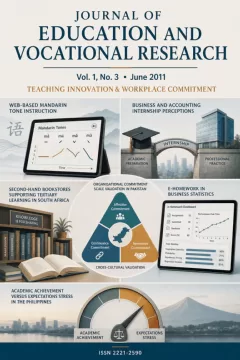
This paper compares the performance of two classes of students who were enrolled in an Introductory Business Statistics course. Students in one class were required to use e-homework, an online system and another class completed their homework assignments without the online system. The major objective of this study was to determine whether there was any difference in the level of performance between students who used the online homework system and those who did homework assignments in the traditional method. The students in a large class with online homework were compared to students without online homework. This e-homework system enables instructors to monitor individual student’s performance and transmit immediate feedback to students. This paper answers the question: Can online homework improve the performance of students enrolled in an Introductory Business Statistics course? To answer this question, we evaluated the students’ performance based on their final grades in a first year Introductory Statistics course. Students’ perceptions of the usefulness of online homework were also considered. The findings of this research showed that students obtain many benefits from online homework. Students were better prepared in writing test, their ability to understand course concepts increased because of the timely feedback they receive from instructors, discussion about Statistics among peers occurred more frequently than in previous semesters. Students cultivated better study habits, and consequently, they developed more confidence in applying their knowledge of statistical concepts.
Keywords
- Online Homework Search this journal for Online Homework (opens in a new tab)
- Student Performance Search this journal for Student Performance (opens in a new tab)
- Learning Search this journal for Learning (opens in a new tab)
- Technology Pedagogy Search this journal for Technology Pedagogy (opens in a new tab)
References
- Allain, R., and Williams, T. (2006). The Effectiveness of Online Homework in an Introductory Science Class. Journal of College Science Teaching , 35 (6), 28-30.
- Biktimirov, E. N., and Klassen, K. J. (2008). Relationship between the Use of Online Support Materials and Performance in the Introductory Finance Class. Journal of Education for Business, 83(3), 153-158.
- Bliss, J., Askew, M., and Macrae, S. (1996). Effective Teaching and Learning: Scaffolding Revisited . Oxford Review of Education, 22(1), 37-61.
- Bonham, S. W., Beichner, R. J., and Deardorff, D. L. (2001). Online homework: Does it make a difference? The Physics Teacher , 39, 293-296.
- Bonham, S. W., Deardorff, D. L., and Beichner, R. J. (2003). Comparison of Student Performance Using Web and Paper-based Homework in College-level Physics . Journal of Research in Science Teaching , 40(10), 1050–1071.
- Brightman, H. (1977). An evaluation of two models of undergraduate statistics. Decision Sciences, 8, 287-299.
- Burch, K. J., and Kuo, Y. (2010). Traditional Vs. Online Homework in College Algebra. Mathematics and Computer Education, 44, 53-63.
- Cheng, K. K., Thacker, B. A., Cardenas R. L., and Crouch, C. (2004). Using an online homework system enhances students’ learning of physics concepts in an introductory physics course. American Journal of Physics , 72(11), 1447-1453.
- Cole, R. S., and Todd, J. B. (2003). Effects of Web-Based Multimedia Homework with Immediate Rich Feedback on Student Learning in General Chemistry. Journal of Chemical Education, 80(11), 1338-1343.
- Cooper, H., Robinson, J. C., and Patall, E. A. (2006). Does homework improve academic achievement? A synthesis of research, 1987–2003. Review of Educational Research , 76(1), 1-62.
- Cooper, S. T., Tyser, R. W., and Sandheinrich, M. B. (2007). The Benefits of Linking Assignments to Online Quizzes in Introductory Biology Courses. Journal of Online Learning and Teaching, 3(3), 217-221.
- Cudd, M., Tanner, J., and Lipscomb, T. (2004). An Empirical Analysis of a Cumulative/Rework Testing Strategy: It’s Effect on Student performance in Principles of Finance. Journal of Financial education, 30(Winter), 16-31 .
- Dillard-Eggers, J., Wooten, T., Cholds, B., and Coker, J. (2008). Evidence on the Effectiveness of On-line Homework . College Teaching Methods and Styles Journal , 4(5), 9-15.
- Dufresne, R., Mestre, J., Hart, D. M., and Rath, K. A. (2002). The Effect of Web-based Homework on Test Performance in Large Enrollment Introductory Physics Courses . Journal of Computers in Mathematics and Science Teaching, 21(3), 229-251.
- Entwistle, N. (1997). Contrasting Perspectives on Learning . In the Experience of Learning: Implications for Teaching and Studying in Higher Education. Marton, F., Hounsell, D., and Entwistle, W.J. (ed.) 2nd Edition. Edinburgh: Scottish Academic Press, 3-22.
- Garfield, J., Hogg, B., Schau, C., and Whittinghill, D. (2002). First Courses in Statistical Science: The Status of Educational Reform Efforts. Journal of Statistics Education , 10(2), 456-467.
- Glass, J., and Sue, V. (2008). Student Preferences, Satisfaction, and Perceived Learning in an On-line Mathematics Class. Journal of Online Learning and Teaching. 4(3), 325-338.
- Hall, R. W., Butler, L. G., McGuire, S. Y., McGlynn, S. P., Lyon, G. L., Reese, R. L. and Limbach, P. A. (2001). Automated, Web-Based, Second-Chance Homework, Journal of Chemical Education , 78(12), 17041708.
- Harrington, C. F., and Schibik, T. J. (2004). Methods for Maximizing Student Engagement in the Introductory Business Statistics Course: A Review. Journal of American Academy of Business, 4(1), 360-364 .
- Hauk, S., and Segalla, A. (2005). Student perceptions of the web-based homework program Web Work in moderate enrollment college algebra classes. Journal of Computers in Mathematics and Science Teaching , 24(3), 229-253.
- Houts, L. M., and Taylor J. C. (2008). Assignment Of Grades And Student. Performance In A Hybrid Operations Management Course: What Works And Ideas For Improvements. Journal of College Teaching and Learning , 5(3), 61-68.
- Hyland, P. (2000). Learning From Feedback on Assessment. In: A. Booth and P. Hyland, eds. The Practice of University History Teaching . Manchester UP. 233-247.
- Jordan, W. E., and Stroup, D. E. (1984). The Image of Statistics. Collegiate News & Views Spring, 11-13.
- Johnston, T. C. (2004). Online Homework Assessments: Benefits and Drawbacks to Students. Academy of Educational Leadership Journal , 8(3), 29-40.
- Kimberly J. B. , and Kuo , Y. J. (2010). Traditional vs. Online Homework In College Algebra. Mathematics and Computer Education, Old Bethpage, 44(1), 53-64.
- Kortemeyer, G. (2006). An Analysis of Asynchronous Online Homework Discussions in Introductory Physics Courses. American Journal of Physics, 74 (6), 526-536.
- Lane, M. S., Mansour, A. H, and Harpell, J. I. (1993). Operations Research Techniques: A longitudinal Update 1973-1988, Interfaces , 23(2), 63-68.
- Lee, F. L., and Heyworth, R. M. (1997). Computer Diagnosis of Composed Errors in Solving Logarithms Problems . In Proceedings of Global Chinese Computer Conference of Education '97, ed. K.D. Li, and K. K He. Beijing: Beijing Normal University Press.
- Lee, W., Courtney, R.H., and Balassi, S. J. (2010). Do Online Homework Tools Improve Student Results in Principles of Microeconomics Courses? American Economic Review , 100(2), 283-286.
- Packard, A. L., Holmes, G. A., and Fortune, J.C. (1993). A Comparison of Three Presentation Methods of Teaching Statistics. ERIC Document Reproduction Service No. 365 696, Chicago, IL.
- Palocsay, S. W., and Stevens, S. P. (2008). A Study of the Effectiveness of Web-based Homework in Teaching Undergraduate Business Statistics. Decision Sciences Journal of Innovative Education , 6(2), 213-232.
- Peng, J. (2009). Using online homework system to submit accounting homework: the role of cognitive need, computer efficacy, and perception. Journal of Education for Business, 84 (5), 263-268.
- Peng, Z. (2006). Applying Internet-based Technologies to Teaching Corporate Finance and Investments. Journal of Educators Online , 3(6), 1-18.
- Penn, J. H., Nedeff, V. M., and Gozdik, G. (2000). Organic Chemistry and the Internet: A Web-based Approach to Homework and Testing Using the WE LEARN System . Journal of Chemical Education , 77(2), 227-31.
- Peters, M., Kethley, B., and Bullington, K. (2002). The relationship between homework and performance in an introductory operations management course. Journal of Education for Business, 77(6), 340-344.
- Philip, G. C., and Schultz, H. K. (1994). Operations Research in Medium-Sized Companies and the Microcomputer Revolution: Educational Implications. Journal of Education for Business, 69(4), 217221.
- Prosser, M., and Trigwell, W. (1999). Understanding Teaching and Learning: The Experience of Higher Education. Buckingham, UK: Open University Press.
- Rayburn, L. G., and Rayburn, J. M. (1999). The Impact of Course Length and Homework Assignments on Student Performance. Journal of Education for Business . 74, 325-331.
- Rhett, A., and Williams, T. (2006). The Effectiveness of Online Homework in an Introductory Science Class. Journal of College Science Teaching, 35(6), 28-30.
- Sasser, J. E. (1991). The Effect of Using Computer Tutorials as Homework Assignments on the Mathematics Achievements of Elementary Education Majors . Journal of Computers in Mathematics and Science Teaching, 10(2), 95-102.
- Smolira, J. C. (2008). Student’s Perceptions of Online Homework in Introductory Finance Courses. Journal of Education for Business, 84(2), 90-95
- Svinicki, M. D., Hagen, A. S., and Meyer, K. K. (1996). How research on learning strengthens instruction. In Menges, R. J. and Weimer, M. Teaching on solid ground: Using scholarship to improve practice, San Francisco, CA: Jossey-Bass, 257-288.
- Swanson, J. C., Meinhert, D. B., and Swanson, N. E. (1994). Business Communications: A Highly Valued Core Course in Business Administration . Journal of Education for Business. 69(4), 235-239.
- Thoennessen, M., and Harrison, M. J. (1996). Computer assisted Assignments in A Large Physics Class. Computers and Education. 27(2), 141–147.
- Vygotsky, L. S. (1978). Mind in Society: The Development of Higher Psychological Processes. Cambridge, Harvard University Press.
- Wong, C. K. (2001) Attitudes and Achievements: Comparing Computer-based and Traditional Homework Assignments in Mathematics. Journal of Research on Technology in Education , 33(5), 159–176
- Zanakis, S. H., and Valenzi, E. R. (1997). Student Anxiety and Attitudes in Business Statistics . Journal of Education for Business, 73(1), 10-15.
Downloads
No downloads have been recorded for this article yet. Figures appear here once readers begin downloading the full text.
How to Cite
Share this article
License
Copyright (c) 2011 Clare Chua-Chow, Carole A. Chauncey, Doug McKessock (Author)

This work is licensed under a Creative Commons Attribution 4.0 International License.
Author (s) should affirm that the material has not been published previously. It has not been submitted and it is not under consideration by any other journal. At the same time author (s) need to execute a publication permission agreement to assume the responsibility of the submitted content and any omissions and errors therein. After submission of revised paper in the light of suggestions of the reviewers, the editorial team edits and formats manuscripts to bring uniformity and standardization in published material.
This work will be licensed under Creative Commons Attribution 4.0 International (CC BY 4.0) and under condition of the license, users are free to read, copy, remix, transform, redistribute, download, print, search or link to the full texts of articles and even build upon their work as long as they credit the author for the original work. Moreover, as per journal policy author (s) hold and retain copyrights without any restrictions.
Keywords
- Online Homework Search this journal for Online Homework (opens in a new tab)
- Student Performance Search this journal for Student Performance (opens in a new tab)
- Learning Search this journal for Learning (opens in a new tab)
- Technology Pedagogy Search this journal for Technology Pedagogy (opens in a new tab)
Section
Published
Submissions
Have research to publish? Journal of Education and Vocational Research welcomes submissions.
Make a Submission