Abstract
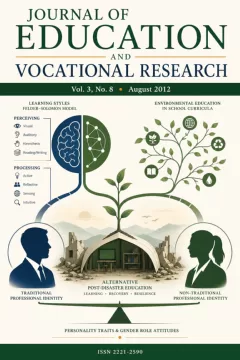
The concept of ‘the environment’ has changed over time. Early views focused on changing ecosystems and the impact of various forms of pollution. However, the social, economic and cultural dimensions of the environment have been increasingly recognized and the inclusion of sustainable development makes the concept even broader. Environmental education is an approach to acquire the values and clarifying concepts, which aims to develop the necessary skills to understand and appreciate the relationships between human culture and the natural environment vitality, and it is not just the teaching of information and knowledge, but experience in the process of decision making, responsibility, and a law of conduct on issues related to assessment and environmental protection. The importance of environmental education lies when it takes its position between the arts and sciences which are taught, so it turns into a special approach able to take its role in all curricula and in all stages of school and In order to prepare the minds of new generations aware of the concept of environmental education, and work on its application. Therefore, it is through environmental education can make radical changes in ways of thinking and environmental behavior in the society. So that each person is acting like a mature decision maker. This paper highlights the aspects: a) Importance of teaching environmental education in schools b) The approaches adapted to the teaching of environmental education c) Learning strategies of environmental education in school.
Keywords
References
- Chelliah, T. (1985). Approach to Teaching Environmental. Education in Schools. Workshop on Consumers and the Environment for Secondary School Teachers .Kuala Lumpur, Malaysia.
- Curriculum Corporation for Environment Australia. (2003 ) . Environmental Education Review – Formal Education Sector (Schools) . Retrieved Mar. 18, 2012, from : http://www.environment.gov.au/education/publications/ee-review-schools/index.html.
- Department of the Environment and Heritage. (2005). Educating For a Sustainable Future, A National Environmental Education Statement for Australian Schools. The Australian Government Department of the Environment and Heritage, Australia.
- European Commission. (1997). Environmental Education in the European Union. Luxembourg: Office of the Official Publications of the European Communities.
- NDT Resource Center. (2012). Teamwork in the Classroom. Center for nondestructive Evaluation, Iowa State University. Retrieved Feb.27, 2012, from: http://www.ndted.org/TeachingResources/ClassroomTips/Teamwork.htm.
- Nixon, J., Sankey, K., Furay, A. & Simmons, M. (1999). Education for sustainability in Scottish Secondary Schools: boundary maintenance or professional reorientation? Environmental Education Research , 5(3), 305-318.
- Rogers, E. (2004). The Power of Narrative in Developing an Environmental Ethic . Thesis has been submitted in partial fulfillment of the A.B Environmental Studies Degree . Brown University .
- Stokes, E., Edge, A. & West, A. (2001). Environmental education in the educational systems of the European Union. Commissioned by the Environment Directorate-General of the European Commission. Retrieved Mar. 11, 2012, from: http://www.medies.net/_uploaded_files/ee_in_eu.pdf.
- UNESCO, Tbilisi Declaration. (1978). Intergovernmental Conference of Environmental education. Final Report. Paris.
Downloads
No downloads have been recorded for this article yet. Figures appear here once readers begin downloading the full text.
How to Cite
Share this article
License
Copyright (c) 2012 Asia Hamid Yarkandi, Naeema Hamid Yarkandi (Author)

This work is licensed under a Creative Commons Attribution 4.0 International License.
Author (s) should affirm that the material has not been published previously. It has not been submitted and it is not under consideration by any other journal. At the same time author (s) need to execute a publication permission agreement to assume the responsibility of the submitted content and any omissions and errors therein. After submission of revised paper in the light of suggestions of the reviewers, the editorial team edits and formats manuscripts to bring uniformity and standardization in published material.
This work will be licensed under Creative Commons Attribution 4.0 International (CC BY 4.0) and under condition of the license, users are free to read, copy, remix, transform, redistribute, download, print, search or link to the full texts of articles and even build upon their work as long as they credit the author for the original work. Moreover, as per journal policy author (s) hold and retain copyrights without any restrictions.
Keywords
Section
Published
Submissions
Have research to publish? Journal of Education and Vocational Research welcomes submissions.
Make a Submission