Abstract
This study aimed to determine the effectiveness of the implementation of interactive media and characterized meme media on the student learning. This study applied experimental research method which used simple random sampling technique. The participants of the study consisted of two group as group A amount twenty-nine students and group B amount twenty-eight students. Each group had a different treatment, for the group a was treated by implementing interactive media, while group B was treated by implementing characterized memes media. Data analysis applied hypothesis testing of paired sample t-test and obtained that both of implementing of interactive media, and implementing characterized memes media, probability value .00 was less than alpha value, .05, which means the media provide impact to the student learning. Data analysis applied hypothesis testing of independent sample t-test and obtained p, .972 was greater than alpha value, .05. Thus, there was no difference between student learning achievement taught by using interactive media and characterized memes media. However, in accordance with effective criteria, it was presented that interactive learning media is more effective than characterized memes media. The percentage of classical completeness of students who were taught by using interactive learning media enhanced to 89.12 percent, while using characterize memes learning media reach 60.41 that not reached the classical completeness. In addition, in terms of appropriate student learning activity in the classroom using interactive media reached 90.12 percent, while in memes characterized media class character merely 66.65 percent.
Keywords
References
- Ainina, I. A. (2014). Pemanfaatan media audio visual sebagai sumber pembelajran sejarah. Indonesian journal of history education, 3(1), 2252-6641.
- Arsyad. & Azhar. (2011). Media Pembelajaran. Jakarta: Raja Grafindo Persada.
- Conrad, P. (2017). Taking the Pulse of the Online Classroom: Data-based Student Engagement. International Journal for Educational Media and Technology, 17.
- D, D. (2010). Media Pembelajaran peranannya sangat penting dalam mencapai tujuan pembelajran. Yogyakarta: Pustaka Pelajar.
- Dantes, N., Dharsana, K. & Sutrisna, G. N. (2017). Penerapan Model Pembelajaran Kooperatif Type TGT dengan media kartu kata untuk meningkatkan motivasi belajar dan kemampuan membaca. International Journal of Elementary Education, 1(1), 19.
- Daryanto, D. (2010). Media Pembelajaran peranannya sangat penting dalam mencapai tujuan pembelajran. Yogyakarta: Pustaka Pelajar.
- Dawkins, R. (1967). The selfies gene. New York: New York University.
- Depdiknas. (2008). Kamus Besar Bahasa Indonesia. Jakarta: Balai Pustaka.
- Education of Ministry. (2016). Curriculum planning & development division. Singapore: Primary-SecondaryPre University.
- Firdaus. (2014). Efektivitas penggunaan media audio-visual dalam pembelajaran sains. Jurnal Spektra.
- Garrison, D. R., Anderson, T. & Archer, W. (2000). Critical inquiry in a text-based environment: Computer conferencing in higher education. The Internet and Higher.
- Hanum, N. S. (2013). Keefektifan E-Learning Sebagai Media Pembelajaran (Studi Evaluasi Model Pembelajaran E-Learning Smk Telkom Sandhy Putra Purwokerto) . Jurnal Pendidikan Vokasi.
- J, K, S. (2014). The development of children's understanding of map and models a prospective cognition . Journal of cognitive education and phycology Volume 13(2), 19.
- Jaliusril, Asyhar, R. & Harjono, H. S. (2012). Pengembangan media audio-visual pembelajaran lari jarak pendek untuk SMP. Jurnal Tekno-Pegagogi, 2, 1.
- Kariman, T. M. (2014). Pemanfaatan Web Blog sebagai media pembelajran untuk meningkatkan hasil belajar bahasa inggris. Jurnal Teknology Pendidikan.
- Kobel, S., Keszztyus, K. D., Eekelenz, N., Drenowatz, C. & Steinacker, J. (2010). Correlates of habitual physical activity and organized Sport in German Primary School Children. Humberg.
- Mannaf, I., Khanna, G. l. & Chandra, P. D. (2010). Effect of training an antonometric, physiological and biochemical variables of elite field Hockey Players. International Journal Of Sports science and engineering, 236.
- Marens. & Rainer. (2004). Successful Coaching 3 rd Edition . Champaign: Human Kinetics.
- Mendoza, G. A., Jung, I. & Kobayashi, S. (2017). A Review of Empirical Studies on MOOC Adoption: Applying the Unified Theory of Acceptance and Use of Technology. International Journal for Educational Media and Technology, 22.
- Miftakh, F. & Samsi, Y. S. (2015). Penggunaan media audio visual dalam meningkatkan kemampuan menyimak mahasiswa. Jurnal ilmiah solusi, 2(5), 2355-1119.
- Mosston, M. & Ashworth, S. (2010). Teaching Physical Education F i r s t O n l i n e E d i t i o n. San Diego: New York City Association of Physical Education Teachers.
- Mulyasa, E. (2003). Management berbasis sekolah. Bandung: Remaja Rosdakarya.
- Northcote, M. (2008, November).
- Nugraha, A., Sudrajat, R. H. & Putri, B. P. (2015). Fenomena meme di media sosial: studi etnografi virtal posting meme pada pengguna media sosial instagram. Jurnal Sosioteknologi, 14(3), 238.
- Olivares, P. R., Cassios- Balanos, M. A., Gomes Campos, R. a., Almonacid-Fiero, A. a. & Rubio, G. (2015). Influences of parents and physical education teachers in adolescent physical activity. International Journal of clinical and health psychology, 15.
- Paek, S. & Fulford, C. (2017). Learning Instructional Design in a Flipped Classroom: A Comparison of Online and Face-to-Face Formats. International Journal for Educational Media and Technology, 32.
- Park, K. M. & Park, H. (2015). Effects of self-esteem improvement program on self-esteem and peer attachment in elementary school children with observed problematic behaviors. Journal Asian nursing research xxx, 7.
- Putro, E. W. (2013). Teknik penyususunan instrumen penelitian. Yogyakarta: Pustaka Pelajar.
- Roux, P. W., Suzuki, K., Matsuba, R. & Goda, Y. (2018). Developing Cultural Intelligence (CQ): Designs for Blended Learning. International Journal for Educational Media and Technology, 27.
- Seaman, J. (2013). Social Media For Teaching and Learning. Boston: Pearson Learning Solutions and Babson Survey Research Group.
- Sheehan, J. K. (2014). The development of children's understanding of map and models a prospective cognition. Journal of cognitive education and phycology Volume, 13(2), 19.
- Sinambella. (2006). keefektivan model pembelajaran berdasarkan masalah (problem based Instrction) dalam pembelajaran matematika untuk pokok bahasan sistem linear dan kuadrat dikelas X SMA Negeri 2 Rantau Selatan Sumut. Surabaya: PPS Unesa Press.
- Smith, L. A., Gardner, B. b. C. D. A. & Hamer, M. (2015). Preventive Medicine. Journal of Public Health, 129.
- Sianturi, M. & Lin , H. H. (2017). Effects of Student’s Grade to Teacher’s Teaching: a Case Study in an Indigenous Classroom. Journal of Education and Vocational Research, 7(4), 6-11.
- Sianturi, M., Chiang, C. L. & Hurit, A. A. (2018). Impact of a Place-Based Education Curriculum on Indigenous Teacher and Students. International Journal of Instruction, 11(1), 311-328.
- Sumarsono, A. (2017). Implementasi Model Pembelajaran Atletik Melalui Permainan Berbasis Alam. Magistra, 71.
- Sumarsono, A. (2018). The four-net game to improve students'psychomotor skill. Advances in Social Science, Education and Humanities Research, volume 226 1st International Conference on Social Sciences.
- Sulistyo, N. H. (2013). Keefektifan e learning sebagai media pembelajran (studi evaluasi model pembelajaran eleraning SMK Telkom Sandhy Putra Purwokerto). Jurnal Pendidikan Vokasi, 3, 1.
- Sun, H. (2013). Journal of sport and Health Science, 2, 144.
- Takabayashi, T. (2017). Expectations of learning media for self-directed learning: Learners’ perceptions of media choice. International Journal for Educational Media and Technology, 11(1), 59-67, 63.
- Vaughan, N. D., Cleveland-Innes. & Garrison, D. R. (2013). Teaching in blended learning environments: creating and sustaining communities of inquiry. Edmonton: AU Press.
- Wadipalapa, R. P. (2015). Meme culture & komedi-satire politik:kontestasi pemilihan presiden dalam media baru. Jurnal Komunikasi, 12(1), 2.
- Yu, W. (2017). STEMS2, Social Presence and Sense of Place in a Hybrid Distance Program. International Journal for Educational Media and Technology, 47.
Downloads
No downloads have been recorded for this article yet. Figures appear here once readers begin downloading the full text.
How to Cite
Share this article
License
Copyright (c) 2018 Adi Sumarsono, Murni Sianturi (Author)

This work is licensed under a Creative Commons Attribution 4.0 International License.
Author (s) should affirm that the material has not been published previously. It has not been submitted and it is not under consideration by any other journal. At the same time author (s) need to execute a publication permission agreement to assume the responsibility of the submitted content and any omissions and errors therein. After submission of revised paper in the light of suggestions of the reviewers, the editorial team edits and formats manuscripts to bring uniformity and standardization in published material.
This work will be licensed under Creative Commons Attribution 4.0 International (CC BY 4.0) and under condition of the license, users are free to read, copy, remix, transform, redistribute, download, print, search or link to the full texts of articles and even build upon their work as long as they credit the author for the original work. Moreover, as per journal policy author (s) hold and retain copyrights without any restrictions.
Keywords
Section
Published in
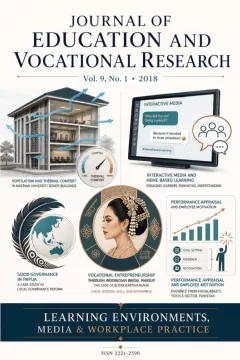 Vol. 9 No. 1 (2018)
Learning Environments, Media & Workplace Practice
View issue contents
Published
Submissions
Have research to publish? Journal of Education and Vocational Research welcomes submissions.
Make a Submission