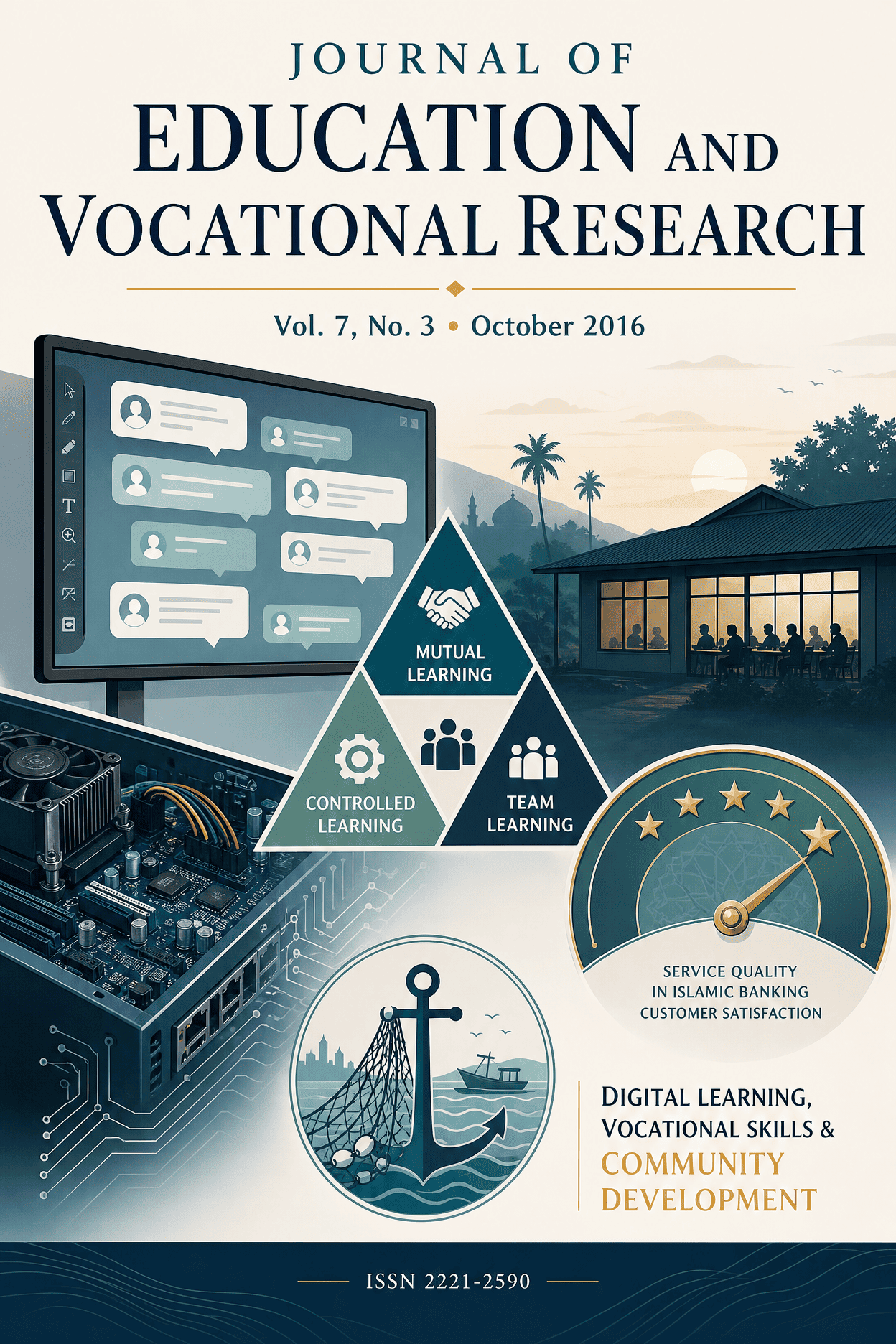
Articles

  • Article 1 in this issue

    Anonymous Feedback Using Digital Walls: A Case Study

    • Author: Besma Allagui

    A common problem faced by many language teachers is students’ fear from speaking in front of the whole class and making mistakes. Research showed that reticence to participate in class may influence students’ language learning who may miss important opportunities for correction. This paper reports on students’ reactions to the use of digital walls to provide anonymous oral feedback and to maximize students’ participation. The students engaged in answering three-minute instructor-posed questions on their mobile devices using an application called Quick fire as found on www.spiral.ac. The anonymous answers were displayed instantaneously on the smartboard which allowed the instructor to provide the students with realtime feedback. The students answered 14 questions after eight weeks of instruction. At the end of the project, the students were invited to focus group discussions in order to delve into their opinions about using digital walls for providing feedback and encouraging class participation. Qualitative analysis of the students’ comments indicated that they had a generally positive experience and that anonymous posting can foster students’ engagement.

    Pages 6-11

    PDF - Anonymous Feedback Using Digital Walls: A Case Study (opens in a new tab)
  • Article 2 in this issue

    Vocational Education and Training in Rural Zimbabwe: Attitudes and Opinions of Students, Teachers and Education Inspectors: The Case of Murewa District

    • Author: Tapiwa Emmanuel Katsande

    The 2008 global economic crisis has seen young people’s career and employment prospects dwindle, particularly for those based in rural areas. Governments in both industrialised and developing countries are considering vocational education reform to meet nations’ employment and economic needs. Despite renewed interest in VET, the sentiments of students and teachers remain largely unexplored. This study investigated the views and attitudes of students, teachers and education inspectors towards VET in rural Zimbabwe. The findings revealed divergent views. It emerged that most students did not necessarily have negative views of VET, but they were put off by the low status, lack of choice and the lacklustre delivery of VET. Teachers and students alike were sceptical about the role of VET in securing employment. This study will contribute to the on-going review of Zimbabwe’s education system and will inform school managers and policy makers on curriculum development and culture change in rural communities and schools.

    Pages 12-29

    PDF - Vocational Education and Training in Rural Zimbabwe: Attitudes and Opinions of Students, Teachers and Education Inspectors: The Case of Murewa District (opens in a new tab)
  • Article 3 in this issue

    Effectiveness of Modern Teaching Methods; Evidence from Digital Learning Model of Modern Teaching Methods

    • Author: Ejaz Gul

    This paper elucidates the efficacy of three selected modern and innovative methods of learning by taking a group of 80 students of economics class at university level. Their opinion regarding three selected modern teaching methods was obtained through a questionnaire and statistical analysis of their opinion was carried out which indicated strong tendency towards mutual practice method as 40 out of 80 students (50%) declared it as very effective method of learning in the practice stage. On the other hand, 30 students (37.5%) opined that controlled practice method is moderately effective and 28 (35%) students opined that team practice method is slightly effective. After this analysis, students were put to practically learn use of econometric software ‘E Views’ through the same three selected methods. The digital model for their learning process was created using Computer Assisted Qualitative Data Assisted Software (CAQDAS). The statistical analysis of students’ opinion and digital analysis of practical learning process indicated that mutual practice is the most effective method of practice. It is because students learn better and fast when they are allowed to use their initiative and judgment. At the end, guidelines for effective teaching have been suggested.

    Pages 30-37

    PDF - Effectiveness of Modern Teaching Methods; Evidence from Digital Learning Model of Modern Teaching Methods (opens in a new tab)
  • Article 4 in this issue

    The Contribution of Teaching Skill and Learning Skill To The Competence Achievement of Computer Assembly in Public Vocational High School of Malang City

    • Author: Tri Maryati, Hakkun Elmunsyah, Eddy Sutadji

    Good competence mastering for the package of Computer and Network Engineering skill can’t be separated from maturity of competence achievement in the skill program basic as well. Thus, with good and appropriate basic competence achievement of Computer and Network Engineering skill, competence mastering of Computer and Network Engineering skill will also be great. Computer assembly subject is one subject which included into basic of Computer and Network Engineering skill. Besides that, computer assembly subject supports computer technician work which much needed in the industrial or business world. Less basic competence mastering of Computer and Network Engineering skill is assumed due to many aspects, both internal and external aspect. Internal aspect includes factor which affects from the inside of student such as learning skill. External aspect is factor which affects from student’s outside such as teacher teaching skill. This research aims to know how large the contribution of teaching skill and learning skill to the vocational competence achievement for students in the Vocational High School (SMK-Sekolah Menengah Kejuruan) at Computer and Network Engineering skill Malang City. Type and data analysis in this research included into quantitative research. Sample in this research was 199 students in the 10th Grade. Data collection technique for teaching skill and learning skill variable used questionnaire, while competence achievement of computer assembly variable used test and documentation. Data analysis that used in this research was frequency distribution with SPSS program for Windows version 16. Data analysis included description and multiple regression. Research result showed that: (1) contribution of teaching skill to the competence achievement of computer assembly was 5%; (2) contribution of learning skill to the competence achievement of computer assembly was 8%; and (3) contribution of teaching skill and student learning skill simultaneously to the competence achievement for computer assembly was 20.2%. Suggestion that recommended in this research as follow: (1) it needs improvement or development for teachers in order to be able to give question and distribute the question which will encourage student to have critical thinking; (2) it needs guidance for students who have difficulty in arranging their learning schedule and cooperate with parents in order to support their children’s effort to be discipline in learning as with the learning schedule.

    Pages 38-47

    PDF - The Contribution of Teaching Skill and Learning Skill To The Competence Achievement of Computer Assembly in Public Vocational High School of Malang City (opens in a new tab)
  • Article 5 in this issue

    Effect of Dimensions of Service Quality Satisfaction and Customer Loyalty of Islamic Bank in the Perspective of Islam in Palopo

    • Author: Suhardi M. Anwar, Goso

    This paper aims to analyze the quality of service using five dimensions that is tangible empathy, Reliability, Responsiveness, and Assurance . Where the first tangible dimension using attribute consists of the location, appearance of staff, office facilities are up-to-date, the cleanliness of the office, and exterior offices. The second dimension empathy that use attributes greet customers by name, an apology for the error service, understand customer needs, personal attention, and operational time. The dimensions of the third namely reliability that use service attributes as promised, timeliness of services, verification requests, and sincerity helped. The fourth dimension is the responsiveness attributes staff's willingness to help, the notification time of service, speed of service, readiness to serve. Then dimension the latter is the dimension of assurance that use attributes confidence in the ability of staff, courtesy staff, security transactions, and staff in still customer confidence. This research tested using SEM analysis, quality of service significant positive effect directly on customer satisfaction, means the better quality of service perceived by the customer, the higher the satisfaction of using services provided by the Islamic Bank in Palopo. Conversely, if the lower the quality of the service perceived by the customer, diminishing also their satisfaction to use the service provided by the Islamic Bank in the City of Palopo . Thus it can be conclusion that states that the quality of service in the perspective of Islam have a significant effect on customer satisfaction Islamic Bank in Palopo acceptable.

    Pages 48-52

    PDF - Effect of Dimensions of Service Quality Satisfaction and Customer Loyalty of Islamic Bank in the Perspective of Islam in Palopo (opens in a new tab)
  • Article 6 in this issue

    Model of Strengthening Human Resources Through the Fisheries Resource Utilization Makassar

    • Author: Hj. Dahliah

    This study aims first to analyze the strengthening of human resource models with variable quality fishing gear insyani resources, involvement in economic activities and the local culture through economic capacity in the utilization of natural resources and the second to analyze fisheries MP3EI program didaaerah Sulawesi economic corridor that has not been synchronized. Implementation of these variables in strengthening human resources in coastal communities. This research was conducted in the coastal area of Makassar, precisely the small island-island Makassar in (two) years. The study population was all fishermen are categorized as poor. Slovin sample was determined with the theory that those who have a poor criterion of 99 respondents.The urgency of research, human resources strength problems, need to be identified at the planning MP3EI program ekonomi.agar growth can go hand in hand between the economic corridor and central Sulawesi. Outcomes research result in models of reinforcement of human resources, strengthening human resources design gran sesuiaThe urgency of research, human resources strength problems, need to be identified at the program ekonomi.agar growth can go hand in hand between the economic corridor and central Sulawesi. Outcomes research result in models of reinforcement of human resources, strengthening human resources design gran sesuia purpose MP3EIresearch initerinspirasi of theory Nurkses (1953), which states that the causes of poverty or weakening of human resources led to the theory of the vicious circle of poverty (Vicions Circle of poverty) put forward by the six elements, namely keterbelakanganataumelemahnya human resources, low investment, omission lack of capital, low savings and low productivity, method used is quantitative method. Model Strengthening human resources with quantitative methods with associated variables later via Path analysis.

    Pages 53-63

    PDF - Model of Strengthening Human Resources Through the Fisheries Resource Utilization Makassar (opens in a new tab)