Abstract
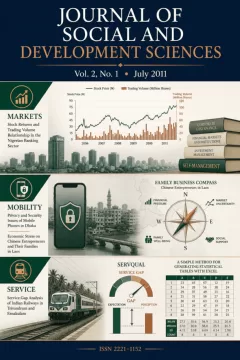
The forecasted number of mobile phone users will be around 70 million at the end of 2011. This statement makes everybody remind the quick emergence of cell phone and shows the strong and fastest growth in mobile phone industry which also reminds the importance of mobile phone retailers. No doubt, that mobile phone services are an important contributor to the cash-strapped nation's economy. When this industry is booming out, the safety and security issue related to the use of mobile phone has come up with a great concern. The development of mobile technology has positioned privacy and security into risk to its users.) This risk hampers the daily economic activities thus the economic growth and development. This study concerns about how personal, social and economic safety and security, health and privacy issues can be hampered by the misuse of mobile phone (threat, harassment). This study also concerns whether crime committing has become more organized with the help of mobile technology. And whether there should be a clear law to protect general people from harassment through mobile phone. Lastly this study comes up with the decision that whether the misuse of mobile phone (threat, harassment), hampers economic activities which have an adverse affect on economic development. The target population for his study is the micro entrepreneurs in Dhaka who inseparably depend on mobile phone for their business communication as well as the users of mobile phone are the target population of this study. The sample size is one hundred and four (104) micro entrepreneurs and users in Dhaka. The sample size is one hundred and four micro entrepreneurs and users in Dhaka. The structured questionnaire based on Likert scale has been used to ask the respondents to indicate their agreement or disagreement on a five point scale ranging from strongly agrees. The study comes up with the findings that misuse of mobile phone (threat, harassment), hampers economic activity thus have an adverse affect on economic development.
Keywords
References
- Bayes, A., Braun, J. V., & Akhter, R. (1999). Village pay phones and poverty reduction: Insights from a Grameen Bank Initiative in Bangladesh. ZEF Discussion Paper on Development Policy 8. Center for Development Research, Universität Bonn.
- Dennis, N., Erdos, G. & Robinson, D. (2003). The Failure of Britain’s Police: London and New York compared, London: Civitas, 46-47.
- Hardell, L., Hallquist, A., Mild, K. H., Carlberg, M, Pahlson, A. & Lilja A. (2002a). Cellular and cordless telephones and the risk for brain tumours. Eur J Cancer Prev , 11(4), 377-86.
- Hardell, L, Mild, K. H., Carlberg, M. (2002b). Case-control study on the use of cellular and cordless phones and the risk for malignant brain tumours. Int J Radiat Biol, 78(10), 931-936.
- Hardy, A. P. (1980). The role of the telephone in economic development. Telecommunications Policy , 4(2), 278-286.
- Madden, G., & Savage, S. J. (1998). CEE telecommunications investment and economic growth. Information Economics and Policy , 10(2), 173- 195.
- Richardson, D., Ramirez, R., & Haq, M. (2000). Grameen Telecom's village phone program in rural Bangladesh: A multi-media case study. Ottawa: Canadian International Development Agency , 11(2), 155-170.
Downloads
No downloads have been recorded for this article yet. Figures appear here once readers begin downloading the full text.
How to Cite
Share this article
License
Copyright (c) 2011 SSM Sadrul Huda, Afsana Akhtar, Md. Gazi Salah Uddin (Author)

This work is licensed under a Creative Commons Attribution 4.0 International License.
Author (s) should affirm that the material has not been published previously. It has not been submitted and it is not under consideration by any other journal. At the same time author (s) need to execute a publication permission agreement to assume the responsibility of the submitted content and any omissions and errors therein. After submission of revised paper in the light of suggestions of the reviewers, the editorial team edits and formats manuscripts to bring uniformity and standardization in published material.
This work will be licensed under Creative Commons Attribution 4.0 International (CC BY 4.0) and under condition of the license, users are free to read, copy, remix, transform, redistribute, download, print, search or link to the full texts of articles and even build upon their work as long as they credit the author for the original work. Moreover, as per journal policy author (s) hold and retain copyrights without any restrictions.
Keywords
Section
Published
Submissions
Have research to publish? Journal of Social and Development Sciences welcomes submissions.
Make a Submission