Abstract
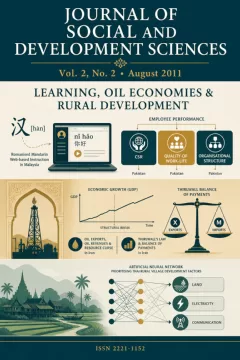
The trends of organizations are changing and demanding satisfied employees rather than dissatisfied employees. This paper provides factors through which employee’s performance can be increased to achieve organizational goals and objectives. To attract the motivated employees and building relations, CSR can perform for society which will change the thoughts of stakeholders. Quality of work life has impact on organization’s effectiveness which is essential for firms to be healthy and productive. Firms should adopt employee oriented policies which satisfies them to achieve organizational objectives. This study also indicates that effective organizational structure is necessary for improving the performance of employees and the organization. The structure is a source of success or failure because it empowers the employee which will increase the sense of responsibility. For the improvement in the organization and removing stress of the employees management must consider the hygiene factors to motivate the employees. The conceptualized work is conducted which is proved through evidence. For further study statistical analysis can be done for confirmation of the hypothesis.
Keywords
- Corporate Social Responsibility Search this journal for Corporate Social Responsibility (opens in a new tab)
- Quality of Work Life Search this journal for Quality of Work Life (opens in a new tab)
- Organization Structure Search this journal for Organization Structure (opens in a new tab)
- Employee Performance Search this journal for Employee Performance (opens in a new tab)
- Organization Performance Search this journal for Organization Performance (opens in a new tab)
References
- Ajila, C. & Abiola, A. (2004). Influence of Rewards on Workers Performance in an Organization, Journal of Social Science , 8(1), 7-12.
- Ali, A., Nasruddin, E. & Lin, K. S. (2010). The relationship between internal social responsibility and organization commitment within banking sector in Jordan. International Journal of Human and Social Science, 5 (14), 932-951.
- Ali, I., Rehman, K., Ali, S. I., Yousaf, J. & Zia, M. (2010). Corporate social responsibility influences, employee commitment and organization performance. African Journal of Business Management, 4(13), 27962801.
- Batt, R. (2002). Managing Customer Services: Human Resource Practices, Quit Rates, and Sales Growth. Academy of Management Journal , 45(3), 587-597.
- Bothe, J. & Meier, J. K. (2001). Structure and performance of public organization: Task difficulty and span of control. Public Organization Review: A Global Journal, 1, 341-354.
- Breukelen, W. V., Van Der Vlist, R. & Steensma, H. (2004). Voluntary employee turnover: Combining variables from the traditional turnover literature with the theory of planned behavior. Journal of Organizational Behavior, 25, 893–914.
- Cappelli, P. (2000). Managing without Commitment. Organizational Dynamics, 28(4), 11-24.
- Collier, J. & Esteban, R. (2007). Corporate Social responsibility and employee commitment. Business Ethics: A European Review, 16(1), 19-33.
- Collins, C. J. & Smith, K. G. (2006). Knowledge exchange and combination: The role of human resource practices in the performance of high technology firms. Academy of Management Journal , 49, 544-560.
- Connolly, J. J. & Viswesvaran, C. (2000). The Role of Affectivity in Job Satisfaction: A Meta Analysis. Personality and Individual Differences , 29, 265-281.
- Sriyan, R. (1998). An introduction to performance and skill-based pay systems. Bureau for Employers’ Activities, International Labour Organization. Geneva: ILO, 1998.
- Freeman, R. E. (1984). Strategic Management: A strategic Approach, (Ed. Pitman, Boston).
- Friedman, M. (1970). The Social Responsibility of Business Is to Increase Its Profits. The New York Times Magazine , 32(33), 122-126.
- Gelso, C. J. & Mohr, J. J. (2001). The working alliance and transference-counter transference relationship in psychotherapy: Their manifestation with racial/ethnic and sexual orientation minorities. Applied and Preventive Psychology, 10, 51-68.
- Griffin, J. J. & Mahon, J. F. (1997). The corporate social performance and financial performance debate: twenty five years of incomparable research. Business and Society, 361, 5-31.
- Hackman J. R. & Oldham, G. R. (1976). Motivation through the design of work: Test of a theory. Organizational Behavior and Human Performance , 16, 250-279.
- Homburg, S. (2002). The Optimal Income Tax: Restatement and Extensions . University Hannover. http://www.ilo.org/public/english/dialogue/actemp/papers/1998/srspaysy.htm.
- Huffman, W. G. (1988). The accuracy of the grid approximation method. Research Working Paper, 88-06.
- Islam, M. Z. & Siengthai, S. (2009). Quality of work life and organizational performance: Empirical evidence from Dhaka Export Processing Zone. Paper presented to ILO Conference on Regulation fro Decent Work, Geneva.
- Kalyani, L. D. (2006). An Empirical investigation of the Impact of Organizational factors on the Perceived Job Performance of Shop Floor Employees of Large scale Garment Industries in Sri Lanka.
- Khan, K. U., Farooq, S. U. & Ullah, M. I. (2010). The relationship between rewards and employee motivation in commercial banks of Pakistan. Research Journal of international studies, 14, 37-52.
- Kwon, K., Bae, J. & Lawler, J. J. (2010). High Commitment HR Practices and Top Performers: Impact on Organizational Commitment. Management International Review , 50, 57-80.
- Lau, A. W. & Pavett, C. M. (1980). The nature of managerial work: A comparison of public-and private-sector managers. Group and Organization Studies , 5(4), 453-466.
- Locke, E. A. (1991). The Essence of Leadership. New York: Lexington.
- Malik, M. E., Ghafoor, M. M. & Naseer, S. (2011). Organization effectiveness: A case study of telecommunication and banking sector of Pakistan. Far East Journal of Psychology and Business, 2(1), 37-48.
- Mirvis, P. H. & Lawler, E. E. (1984). Accounting for the quality of work life. Journal of Occupational Behavior, 5, 197-212.
- Pace, R. W. (2002). Organization Dynamism. West Port, CT: Quorum.
- Peterson, D. K. (2004). The relationship between perceptions of corporate citizenship and organizational commitment. Business and Society, 43, 296-319.
- Pfeffer, J. (1994). Competitive advantages through people: Unleashing the power of the work force. Harvard Business School Press (Boston, Mass) .
- Pierce, L. J. (1979). Employee affective responses to work unit structure and job design: A test of an intervening variable. Journal of Management, 5(2), 193-212.
- Porter, L. W. (1963). Job attitudes in management: IV. Perceived deficiencies in need fulfillment as a function of size of company. Journal of Applied Psychology, 47, 386-397.
- Randall, D. M. (1987). Commitment and the organization: The organization man revisited. Academy of Management Review , 12(3), 460–471.
- Rao, H. & Drazin, R. (2002). Overcoming resource constraints on product innovation by recruiting talent from rivals: A study of the mutual fund industry, 1986–94. Academy of Management Journal , 45 (3), 491– 507.
- Rettab, B., Brik, A. B. & Mellahi, K. (2009). A Study of Management Perceptions of the Impact of Corporate Social Responsibility on Organizational Performance in Emerging Economies: The Case of Dubai. Journal of Business Ethics, 89, 371-390.
- Rodrigo, P. & Arenas, D. (2007). Do Employees Care About CSR Programs? A Typology of Employees According to their Attitudes. Journal of Business Ethics, 83(2), 265-283.
- Romme, A. G. L. (2003). Making a difference: Organization as design. Organization Science , 14, 558-573.
- Scherer, K. R. & Ellgring, H. (2007). Multimodal expression of emotion: Affect programs or componential appraisal patterns. Emotion, 7(1), 158-171.
- Scott, M. (2004). Corporate social responsibility: a burning issue for recruits. Financial Times, Oct 18th 2004.
- Shah, F. T. & Aslam, M. M. (2009). Impact of employees’ performance management system; to achieve the objective of the organizations. Proceedings 2nd CBRC, Lahore, Pakistan.
- Sirin, A. F. (2009). Analysis of relationship between job satisfaction and attitude. Journal of Theory and Practice in Education , 5(1), 85-104.
- Spector, B. (2007). Implementing Organization Change: Theory and Practice (1st ed). Pearson Prentice Hall.
- Robbins, P. S. (2005). Organizational Behavior (11th ed). Pearson Education International U.S.
- Tabassum, A., Rahman, T. & Jahan, K. (2011). A Comparative Analysis of Quality of Work Life among the Employees of Local Private and Foreign Commercial Banks in Bangladesh. World Journal of Social Sciences, 1(1), 17-33.
Downloads
No downloads have been recorded for this article yet. Figures appear here once readers begin downloading the full text.
How to Cite
Share this article
License
Copyright (c) 2011 Adeel Razaq, Muhammad Yameen, M. Suleman Sabir, Jam Javed Iqbal, Syed Kamran Ali Shah, Muhammad Asif Khan (Author)

This work is licensed under a Creative Commons Attribution 4.0 International License.
Author (s) should affirm that the material has not been published previously. It has not been submitted and it is not under consideration by any other journal. At the same time author (s) need to execute a publication permission agreement to assume the responsibility of the submitted content and any omissions and errors therein. After submission of revised paper in the light of suggestions of the reviewers, the editorial team edits and formats manuscripts to bring uniformity and standardization in published material.
This work will be licensed under Creative Commons Attribution 4.0 International (CC BY 4.0) and under condition of the license, users are free to read, copy, remix, transform, redistribute, download, print, search or link to the full texts of articles and even build upon their work as long as they credit the author for the original work. Moreover, as per journal policy author (s) hold and retain copyrights without any restrictions.
Keywords
- Corporate Social Responsibility Search this journal for Corporate Social Responsibility (opens in a new tab)
- Quality of Work Life Search this journal for Quality of Work Life (opens in a new tab)
- Organization Structure Search this journal for Organization Structure (opens in a new tab)
- Employee Performance Search this journal for Employee Performance (opens in a new tab)
- Organization Performance Search this journal for Organization Performance (opens in a new tab)
Section
Published
Submissions
Have research to publish? Journal of Social and Development Sciences welcomes submissions.
Make a Submission