Abstract
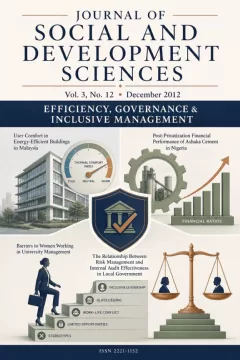
The paper aims to investigate the gender in higher education andcareer experience of women academicians to understand the factors that undermine their career progression. The objectives of the study are to overview the existing situation of women and men in universities and to identify the barriers that cause the underepresentation of women. Both primary and secondary data was used in the study.Questionnaire (Quantitative method )was used to collect the data. The sample of the study consists of 120 women academician of three universities. The sample universities were AIOU, AJ&K and FJWU. Data was analysed through percentage,tabulation and graphs. The paper examined the factors such as work/family conflict, exclusion of women from policy formulation,facilities provided by organization, attitude of male superior and colleagues and difficulties to exercise authority over male.The findings show that work/family conflict and difficulties to exercise authority, exclusion of women from policy formulation are negatively impact on women’s career progression.This study provides an opportunity to develop an insight into the issue of women’s representation in academic and administrative positions in universities. The findings of this study may provide information to different working organizations. There are different projects and programs of ministry of education, ministry of women development. This research would be beneficial both for public and private universities. The study might serve to strengthen efforts to implement equal opportunities for women in the universities and encourage women to put themselves forward for appointment to management positions.
Keywords
References
- Amondi, O. (2011). Representation of women in top educational management and leadership positions in Kenya. Journal of advancing women in leadership , 31, 57-68.
- Al-lamki, M. S. (1999). Paradigm Shift: A perspective on Omani women in management in the sultanate of Oman. Advancing women in leadership journal, 2(1), 1-25.
- Benson, J., & Vimol, W. (2005). Asian women managers’ participation, barriers and future prospects. Journal of pacific business review , 11(2), 283-291.
- Benschop, Y. & Brounds, M. (2003). Crumbling ivory towards: Academic organizing and its gender effects. Gender, work and organization , 10(2), 194-212.
- CEDAW. (1995). UN treaty Series, 1249, 13.
- Chitnis, S. (1993). The place of women in the management of higher Education in India. In
- Dines, E. (1993). Women in higher Education management, Paris UNESCO Commonwealth Secretariat.
- Chesterman, C. (2000). Women’s Executive Development in Australian higher Education: The WEXDEV Model. Paper presented at NAWE conference, New Orleans.
- Government of Pakistan. (2005). Pakistan Education Statistics 2005, Academy of Education planning and Management, Ministry of education.
- Foster, N. (2001). A case study of women academics views on equal opportunities, career prospects and work family conflicts in UK University . Journal of career development international, 6, 28-38.
- Flechl, V. (2009). Work Life Balance - A comparative Study of Women in Senior Management Positions in Austria, Denmark and Great Britain. ebook ISBN 978-3-640-54822-4.
- ILO. (2004). Tripartite On Breaking Through the Glass ceiling: Women in management, ILO Geneva. December 15-19 www.ilo.org .
- Lund, H. (1998). A Single Sex Profession? Female Staff numbers in commonwealth universities, London. Commonwealth Higher education Management service.
- Lamki, M .S. (1999). A perspective on Omani Women In Management in The Sultanate of Oman. AWL Journal , 2(2).
- Lacy, S. & Lucinda, D. & Caroline, M. (1998). Women in Newspaper Newsroom management, WJMCR 1:2 Mamsen, J. (1991). Women in the Third World. Routledge. London.
- Neale, J. & Ozkanli, O. (2010). Organizational Barriers for Women in Senior Management: A Comparison of Turkish and Newzealand Universities .
- Onokala, C. P. & Onah, O. F. (1998). Women in academic positions in the universities in Nigeria. Special project of the association of African universities.
- Ruth, D. (2005). Gender and Perceptions of Academic Work in South Africa. JHEA/RESA , 3, 57-85.
- Singh, J. K. S. (2003). Prioritising Gender Equality in Higher education management, Part Three Tertiary Education, Commonwealth Education Partnerships.
- Thomas, A. (2002).Women in academic administration. Sage online journal http//ema.sagepub.com. UNESCO. (2002). Women and Management in Higher Education. A good Practice Handbook.
- U.N. (2000). Women 2000: Women and Decision-Making, www.undp.org .
- UNESCO. (1993). Women in Higher Education Management. Commonwealth Secretariate.
- Wentling, R. & Thomas, S. (2007). The career Development of Women executives In information Technology. Journal of Information Technology Management , XVIII (1).
- World Economic Forum. (2011). Global Gender Gap Report, 2011. www.weforum.org.
Downloads
No downloads have been recorded for this article yet. Figures appear here once readers begin downloading the full text.
How to Cite
Share this article
License
Copyright (c) 2012 Syeda Qudsia Batool, M. A Sajid, Hassan Raza (Author)

This work is licensed under a Creative Commons Attribution 4.0 International License.
Author (s) should affirm that the material has not been published previously. It has not been submitted and it is not under consideration by any other journal. At the same time author (s) need to execute a publication permission agreement to assume the responsibility of the submitted content and any omissions and errors therein. After submission of revised paper in the light of suggestions of the reviewers, the editorial team edits and formats manuscripts to bring uniformity and standardization in published material.
This work will be licensed under Creative Commons Attribution 4.0 International (CC BY 4.0) and under condition of the license, users are free to read, copy, remix, transform, redistribute, download, print, search or link to the full texts of articles and even build upon their work as long as they credit the author for the original work. Moreover, as per journal policy author (s) hold and retain copyrights without any restrictions.
Keywords
Section
Published
Submissions
Have research to publish? Journal of Social and Development Sciences welcomes submissions.
Make a Submission