Abstract
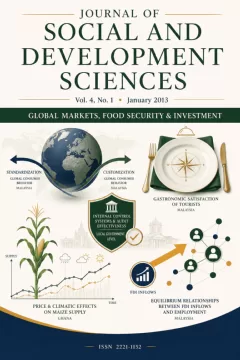
This research aims to explore consumer behavior and their responses to possible effects of globalization, resulting in adopting different global marketing strategies in an Asian country particularly Malaysia which is so different of European ones, especially, in terms of cultural aspects. Homogeneity and heterogeneity in consumer behavior are the main approaches of this research. Rather than causes hindering the possible phenomena of two-polarity of world economy or empires, to find out companies global marketing strategies are the research objectives. So, this research examines data collected through, respectively, qualitative and quantitative methods and addresses companies’ marketers and consumers. However, due to innumerous affecting variables and multidimensional nature of globalization, at this point of study there is no absolute evidence to show results but the theoretical assumptions on companies’ tendency toward standardization or customization strategies.
Keywords
- Globalization Search this journal for Globalization (opens in a new tab)
- Consumer Behavior Search this journal for Consumer Behavior (opens in a new tab)
- Global Marketing Strategies Search this journal for Global Marketing Strategies (opens in a new tab)
- Standardization Search this journal for Standardization (opens in a new tab)
- Customization Search this journal for Customization (opens in a new tab)
References
- Belk, R. (1996). Hyperreality and Globalization: Culture in the age of Ronald McDonald. Journal of International Consumer Marketing , 8(3/4), 9-22.
- Creswell, J. W. (2010). Designing and Conducting Mixed Methods Research, Sage Publication.
- De Mooij, M. (2003). Convergence and divergence in consumer behavior: Implications for global advertising. International Journal of Advertising , 22, 189.
- De Mooij, M. & Hofstede, G. (2002). Convergence and divergence in consumer behavior: Implications for international retailing. Journal of Retailing , 78, 61-69.
- Douglas, S. P. & Yoran, W. (1987). The myth of globalization. The Columbia Journal of World Business , 22(4), 19-30.
- Engledow, J. L., Hans, B. T. & Helmut, B. (1975). The information seekers - across-cultural consumer elite. Advances in consumer research. Ed. Mary.
- Gachunga, H. G. (2008). Impact of Globalization on the Human Resource Management in a developing Country: A Case Study of Kenya Public Corporations, 36.
- Greener, S. (2008). Business Research Methods, Ventus Publishing APS, Copenhagen, 47-51.
- Hassan, S. S. & Coskun, S. A. (1994). The new frontiers of intermarket segmentation. Global marketing Perspectives and cases. Salah S. Hassan, and Roger D. Blackwell, 76-100. Fort Worth: The Dryden Press, Harcourt Brace College Publishers.
- Hassan, S., Craft, S. & Kortam, W. (2003). Understanding the new bases for global marketing segmentation. Journal of Consumer Marketing , 20(5), 446-62.
- Jain, S. C. (1989). Standardization of international marketing strategy: Some research hypothesis. Journal of Marketing , 53(71).
- Kale, S. H. & Sudharshan, D. (1987). A strategic approach to international marketing. International Marketing Review , 3, 60-70.
- Kolb, B. (2008). Marketing Research: A Practical Approach. A Perspective on Consumer Behavior , 2, 4-6.
- Kotler, P. (1986). Global standardization - Courting danger. The Journal of Consumer Marketing , 3(2), 1315.
- Kreutzer, R. T. (1988). Marketing mix standardization: An integrated approach in global marketing. European Journal of Marketing , 22(10), 19-30.
- LeBlanc, R. P. & Neil, C. H. (2001). Cross-cultural consumer decisions: Consideration sets - A marketing universal? Marketing Intelligence and Planning , 19(7), 500-506.
- Levitt, T. (1983). The globalization of markets. Harvard Business Review , 2, 2-11.
- Levitt, T. (1988). The pluralization of consumption. Harvard Business Review , 2, 8.
- Manrai, L. & Ajay, M. (1996). Current issues in the cross-cultural and cross- national consumer research. Journal of International Consumer Marketing , 8(3/4), 9-22.
- Ryans, J. K., Griffith, D. A. & White, S. D. (2003). Standardization/adaptation of international marketing strategy: necessary conditions for the advancement of knowledge. International Marketing Review , 20(6), 588-603.
- Shoham, A. (1995). Global marketing standardization. Journal of Global Marketing , 9(1/2), 91-119.
- Ter-Hofstede, F., Steenkamp, J. B. & Wedel, M. (1999). International market segmentation based on consumer-product relations. Journal of Marketing Research , 36, 1-17.
- Usunier, J. C. (1999). Cultural aspects of international business negotiations. International business negotiations. Ed. Pervez Ghauri, and Jean-Claude Usunier, Amsterdam: Pergamon, 91-118.
- Viswanathan, N. K. & Divkson, P. R. (2007). The fundamentals of standardizing global marketing strategy. Emerald Group Publishing Limited International Marketing Review , 24(1), 46.
- Walters, P. G. P. (1986). International Marketing policy: A discussion of the standardization construct and its relevance for corporate policy. Journal of International 330 Business Studies , 17(2), 55-69.
- Waters, M. (2000). Globalization. 2nd Edition: 36-37. Retrieved from http://pol.atilim.edu.tr/files/kuresellesme/kitaplar/Globalization_keyideas.pdf.
- Zou, S. & Cavusgil, T. (2002). The GMS: A broad conceptualization of global marketing strategy and its effect on firm performance. Visit web site: impgroup.org/uploads/papers/5675.pdf. Journal of Marketing , 66(4), 40-57.
Downloads
No downloads have been recorded for this article yet. Figures appear here once readers begin downloading the full text.
How to Cite
Share this article
License
Copyright (c) 2013 Hossein Nezakati, Maryam Akhoundi (Author)

This work is licensed under a Creative Commons Attribution 4.0 International License.
Author (s) should affirm that the material has not been published previously. It has not been submitted and it is not under consideration by any other journal. At the same time author (s) need to execute a publication permission agreement to assume the responsibility of the submitted content and any omissions and errors therein. After submission of revised paper in the light of suggestions of the reviewers, the editorial team edits and formats manuscripts to bring uniformity and standardization in published material.
This work will be licensed under Creative Commons Attribution 4.0 International (CC BY 4.0) and under condition of the license, users are free to read, copy, remix, transform, redistribute, download, print, search or link to the full texts of articles and even build upon their work as long as they credit the author for the original work. Moreover, as per journal policy author (s) hold and retain copyrights without any restrictions.
Keywords
- Globalization Search this journal for Globalization (opens in a new tab)
- Consumer Behavior Search this journal for Consumer Behavior (opens in a new tab)
- Global Marketing Strategies Search this journal for Global Marketing Strategies (opens in a new tab)
- Standardization Search this journal for Standardization (opens in a new tab)
- Customization Search this journal for Customization (opens in a new tab)
Section
Published
Submissions
Have research to publish? Journal of Social and Development Sciences welcomes submissions.
Make a Submission