Abstract
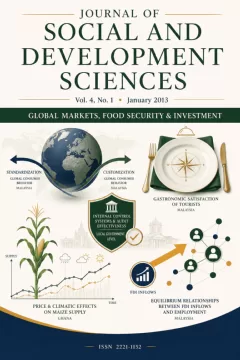
This paper aims to contextualize the idea of food tourism, not only as an attention-grabbing field of research, but in the contention that it can be utilized as a wider theoretical lens to propose a system for rationally identifying preferences of food / gastronomy / culinary tourists. This paper will make an attempt to put forward the insights currently underpinning the latest progress towards a more culturally responsive and critically orientated tourism research. More to the point, this study will be able to facilitate the practitioners to gain insights on the factors affecting satisfaction of tourists which will in turn lead to a boost in visits by foreign tourists to Malaysia. A conceptual framework consisting of 4 independent variables and 1 dependent variable has been proposed. Since there are limited numbers of studies on Gastronomy tourism in Malaysia, there is a need to study this significant topic.
Keywords
- Customer Satisfaction Search this journal for Customer Satisfaction (opens in a new tab)
- Tourism Search this journal for Tourism (opens in a new tab)
- Culinary Search this journal for Culinary (opens in a new tab)
- Cuisine Search this journal for Cuisine (opens in a new tab)
- Food Tourism Search this journal for Food Tourism (opens in a new tab)
References
- Aaker, D. A. & Jacobson, R. (1994). The financial information content of perceived quality. Journal of Marketing Research , 31(2), 191-201.
- Athena, H. N. M., Margaret, L., Anita, E. (2012). Globalisation and food consumption in tourism. Annals of Tourism Research , 39(1), 171–196.
- Baker, J., Grewal, D. & Parasuraman, A. (1994). The influence of store environment on quality inferences and store image. Journal of the Academy of Marketing Science, 22(4), 328-339.
- Bell, R. & Marshall, D. W. (2003). The construct of food involvement in behavioral research: Scale development and validation. Appetite, 40 , 235-244.
- Bendegul, O., Fevzi, O., Bob, M. (2007). Incorporating local and international cuisines in the marketing of tourism destinations: The cases of Hong Kong and Turkey. Tourism Management , 28(1), 253–261.
- Bessiere, J. (1998). Local development and heritage: Traditional food and cuisine as tourist attractions in rural areas. Sociologia Ruralis , 38(1), 21–34.
- Boniface, P. (2003). Tasting tourism: Travelling for food and drink. Burlington: Ashgate Publishing.
- Boyne, S., Hall, D. & Williams, F. (2003). Policy, support and promotion for food-related tourism initiatives: A marketing approach to regional development. Journal of Travel & Tourism Marketing, 14(3), 131-154.
- Boyne, S., Williams, F. & Hall, D. ( 2002) . On the Trail of Regional Success: Tourism, Food Production, and the Isle of Arran Taste Trail. In Tourism and Gastronomy, edited by A-M. Hjalager and G . Richards. London : Routledge, 91— 114.
- Carmen, J. M. (1990). Consumer perceptions of service quality: an assessment of the SERVQUAL dimensions. Journal of Retailing, 66(1), 33-55.
- Caruana, A., Money, A. H. & Berthon, P. R. (2000). Service quality and satisfaction- the moderating role of value. European Journal of Marketing , 34(11/12), 1338-1352.
- Chow, I. H., Lau, V. P., Lo, T. W., Sha, Z. & Yun, H. (2007). Service quality in restaurant Operations in China: decisionand experiential-oriented perspectives. International Journal of Hospitality Management, 26(3), 698-710.
- Clark, M. A. & Wood, R. C. (1999). Consumer loyalty in the restaurant industry: a preliminary exploration of the issues. British Food Journal , 101(4), 317-326.
- Cohen, E. & Evieli, N. (2004). Food in tourism: Attraction and impediment. Annals of Tourism Research , 31(4), 755–778.
- Correia, A., Moital, M., Da-Costa, C. F. & Peres, R. (2008). The determinants of gastronomic tourists’ satisfaction: a second-order factor analysis. Journal of foodservice, 19 , 164-176.
- Cronin, J. J., Brady, M. K. & Hult, G. T. M. (2000). Assessing the effects of quality, value, and customer satisfaction on consumer behavioral intentions in service environments. Journal of Retailing, 76(2), 193-218.
- Dann, G. M. & Jacobsen, J. K. (2002). Leading the tourist by the nose. In: Dann, G. M. (Ed.), the Tourist as a Metaphor of the Social World. CABI Publishing, New York, 209-236.
- Day, R. L. (1984). Modelling choices among alternative responses to dissatisfaction. Advances in Consumer Research , 11, 496-499.
- Du-Rand, G. E. & Heath, E. (2006). Towards a framework for food tourism as an element of destination marketing. Current Issues in Tourism , 9(3), 206 – 234.
- Ekinci, Y., Riley, M. & Fife-Schaw, C. (1998). Which school of thought? The dimensions of resort hotel quality. International Journal of Contemporary Hospitality Management , 10(2/3), 63-67.
- Everett, S. & Aitchison, C. (2008). The role of food tourism in sustaining regional identity: A case study of Cornwall, south west England. Journal of Sustainable Tourism, 16(2), 150-167.
- Frochot, I. (2003). An analysis of regional positioning and its associated food images in French tourism regional brochures. Journal of Travel and Tourism Marketing, 14(3/4), 77–96.
- Geoffrey, R. L. & Chi-Ok, O. (2012). Is Tourism a Low-Income Industry? Evidence from Three Coastal Regions. Journal of Travel Research, 51(4,) 464–472.
- George, A. A. & Alexander, J. (2012). Identifying and Ranking the Determinants of Tourism Performance: A Global Investigation. Journal of Travel Research, 51(4), 388–399.
- Hall, C. M. & Mitchell, R. (2001). Wine and food tourism. In: N. Douglas, N. Douglas and R. Derrett (eds.) Special Interest Tourism: Context and Cases. New York, NY: John Wiley and sons, 307 – 329.
- Hall, M. & Sharples, L. (2003). The consumption of experiences or the experience of consumption? An introduction to the tourism of taste. In M. Hall, L. Sharples, R. Mitchell, N. Macionis, & B. Cambourne (Eds.), Food tourism around the world: Development, management and markets. Oxford: Butterworth-Heinemann.
- Ha, J. & Jang, S. C. (2010). Effects of service quality and food quality: The moderating role of atmospherics in an ethic restaurant segment. International Journal of Hospitality Management, 29 , 520-259.
- Heldke, L. (2003). Exotic appetites. London: Routledge.
- Henderson, J. C. (2004). Food as a tourism resource: a view from Singapore. Tourism Recreation Research, 29(3), 69-74.
- Hjalanger, A. M. & Corigliano, M. A. (2000). Food for tourists: determinants of an image. International Journal of Tourism Research , 2(4), 281-93.
- Hjalager, A. & Richards, G. (Eds.). (2002). Tourism and gastronomy. London: Routledge.
- Joan, C. H. (2009). Food tourism reviewed. British Food Journal , 111(4), 317–326.
- Juhl, H. J., Kristensen, K. & Ostergaard, P. (2002). Customer satisfaction in European food retailing. Journal of Retailing and Consumer Services, 9 , 327-334.
- Kim, Y. G., Eves, A. & Scarles, C. (2009). Building a model of local food consumption on trips and holidays: A grounded theory approach. International Journal of Hospitality Management , 28 , 423-431.
- Kivela, J., Inbakaran, R. & Reece, J. (2000). Consumer research in the restaurant environment. Part 3. Analysis, findings and conclusions. International Journal of Contemporary Hospitality Management, 12(1), 13-30.
- Lau, D., Krondl, M. & Coleman, P. (1984). Psychological factors affecting food selection. In J. Galler (Ed), Nutrition and behavior (397-415).
- Laureati, M., Pagliarini, E., Calcinoni, O. & Bidoglio, M. (2006). Sensory acceptability of traditional food preparations by elderly people. Food Quality and Preferences, 17 , 43-52.
- Lawrence, W. L., Wei-Wen, W., Yu-Ting, L. (2012). Promoting Food Tourism with Kansei Cuisine Design. Procedia - Social and Behavioral Sciences, 40, 609 – 615.
- Lee, W. & Lambert, C. U. (2000). Impact of waiting time on evaluation of service quality and customer satisfaction in foodservice operations. Foodservice Research International , 12, 241-254.
- Lewin, K. (1938). The Conceptual Representation and Measurement of Psychological Forces. Nurham: Duke University Press.
- Lin, I. Y. (2004). Evaluating a servicescape: the effect of cognition and emotion. International Journal of Hospitality Management, 23(2), 163-178.
- Lin, W. B. (2007). The exploration of customer satisfaction model from a comprehensive perspective. Expert System with Applications, 33 , 110-121.
- Lindstrom, M. (2005). Brand Sense: Build Powerful Brands through Touch, Taste, Smell, Sight, and Sound. New York: Free Press.
- Liu, A. & Geoffrey, W. (2006). Planning Tourism Employment: A Developing Country Perspective. Tourism Management, 27(1), 159-70.
- Mano, H. & Oliver, R. L. (1993). Assessing the dimensionality and structure of the consumption experience: evaluation, feeling, and satisfaction. Journal of Consumer Research, 20, 451-466.
- Martinez, J. A. & Martinez, L. (2010). Some insights on conceptualizing and measuring service quality. Journal of Retailing and Consumer Services, 17, 29-42.
- Martins, Y. & Pliner, P. (1998). The development of the food motivation scale. Appetite, 30, 94.
- Mattila, A. S. & Wirtz, J. (2001). Congruency of scent and music as a driver of in-store evaluations and behavior. Journal of Retailing , 77 , 273-289.
- Namkung, Y. & Jang, S. (2007). Does food quality really matter in restaurant: its impact of customer satisfaction and behavioral intentions? Journal of Hospitality and Tourism Research, 31(3), 387410.
- Nam, J. H. & Lee, T. J. (2011). Foreign travellers’ satisfaction with traditional Korean restaurants. International Journal of Hospitality Management , 30, 982-989.
- Neild, K., Kozak, M. & LeGrys, G. (2000). The role of food service in tourist satisfaction. International Journal of Hospitality Management, 19(2), 375-84.
- Nikolich, M. A. & Sparks, B. A. (1995). The hospitality service encounter: the role of communication. Journal of Hospitality and Tourism Research , 19(2), 43-56.
- Okumus, B., Okumus, F. & McKercher, B. (2006). Incorporating local and international cuisines in the marketing of tourism destinations: the cases of Hong Kong and Turkey. Tourism Management , 28, 253-61.
- Oliver, R. L. (1980). A cognitive model of the antecedents and consequences of satisfaction decision. Journal of Marketing Research, 17, 460-469.
- Oliver, R. L. (1999). Whence consumer loyalty? Journal of Marketing, 63(4), 33-44.
- Oliver, R. L. (1989). Processing of the satisfaction response in consumption: a suggested framework and research propositions. Journal of Consumer Satisfaction, Dissatisfaction and Complaining Behavior, 2, 1-6.
- Olsen, S. O. (2002). Comparative evaluation and the relationship between quality, satisfaction, and repurchase loyalty. Journal of the Academy of Marketing Science, 30(3), 240-249.
- Oosterveer, P. (2006). Globalization and sustainable consumption of shrimp: consumers and governance in the global space of flows. International Journal of Consumer Studies, 30(5), 465–476.
- Palmer, A. (2005). Principles of Services Marketing. London: McGraw-Hill.
- Parasuraman, A., Zeithaml, V. A. & Berry, L. L. (1988). SERQUAL: A multiple-item scale for measuring consumer perceptions of service quality. Journal of Retailing, 64, 12-37.
- Paul, S. S. (2010). Metropolitan Cuisine Tourism: Exploring Food Tourists to the Creole Cuisine in New Orleans, LA USA. A Thesis Presented in Partial Fulfilment of the Requirements for the Degree Master of Arts. Arizona State University.
- Parasuraman, A., Zeithaml, V. A. & Berry. L. L. (1994). Alternative scales for measuring service quality: a comparative assessment based on psychometric and diagnostic criteria. Journal of Retailing , 70 (3), 193-199.
- Quan, S. & Wang, N. (2004). Towards a structural model of the tourist experience: an illustration from food experiences in tourism. Tourism Management, 5(2), 297-305.
- Raajpoot, N. A. (2002). A multiple item scale for measuring tangible quality in foodservice industry. Journal of Foodservice Business Research , 5(2), 109-127.
- Ramjee-Singh, D., Wright, A., Hayle, C. & Craigwell, R. (2010). Is the Tourism-Led Growth Thesis Valid? The Case of the Bahamas, Barbados, and Jamaica. Tourism Analysis, 15(4), 435-45
- Rappaport, L., Peters, G., Huff-Corzine, L. & Downey, R. (1992). Reasons for eating: An exploratory cognitive analysis. Ecology of Food and Nutrition, 28 , 171-189.
- Reimer, A. & Kuehn, R. (2005). The impact of servicescape on quality perception. European Journal of Marketing, 39(7/8), 785-808.
- Remmington, M. & Yuksel, A. (1998). Tourist satisfaction and food service experience: results of an empirical investigation. Anatolia , 9(1), 37-57.
- Saila, S. & Mika, K. (2011). Problematizing the Concept of Tourism Destination: An Analysis of Different Theoretical Approaches. Journal of Travel Research, 50(2), 133–143.
- Santich, B. (2004). The study of gastronomy and its relevance to hospitality education and training. International Journal of Hospitality Management , 23(1), 15 – 24.
- Scarpato, R. (2002). Sustainable Gastronomy as a Tourist Product’, pp. 132–51 in Hjalager and G. Richards (eds) Tourism and Gastronomy. London: Routledge.
- Seetanah, B. (2011). Assessing the Dynamic Economic Impact of Tourism for Island Economies. Annals of Tourism Research, 38(1), 291-308.
- Shahin, A. & Dabestani, R. (2010). Correlation Analysis of Service Quality Gaps in a Four-Star Hotel in Iran. International Business Research, 12(3), 22-35.
- Soderlund, M. & Ohman, N. (2005). Assessing behaviour before it becomes behaviour: an examination of the role of intentions as a link between satisfaction and repatronizing behaviour. International Journal of Service Industry Management, 16(2), 169-185.
- Sparks, B. A., Wildman, K. L. & Bowen, J. T. (2001). Restaurants as a contributor to tourist destination attractiveness. Australian Journal of Hospitality Management , 8(2), 17 – 30.
- Sparks, B., Bowen, J. & Klag, S. (2003) Restaurants and the tourist market. International Journal of Contemporary Hospitality Management, 15(1), 6 – 13.
- STB. (2005). Let’s Makan, Singapore Tourism Board, Singapore.
- Steptoe, A., Pollard, T. M. & Wardle, J. (1995). Development of a measure of the motives underlying the selection of food: The Food Choice Questionnaire. Appetite, 25(3), 267-284.
- Sulek, J. M. & Hensley, R. L. (2004).The relative importance of food, atmosphere, and fairness of wait. Cornell Hotel and Restaurant Administration Quarterly , 45(3), 235-247.
- Susheela, U. (1998). Food Product Design: New Ethnic entrees. Northbrook: Weeks Publishing Co.
- Susskind, A. M. & Chan, E. K. (2000). How restaurant features affect check averages. Cornell hotel and restaurant Administration Quarterly , 41(6), 56-63.
- Taylor, S. A. & Baker, T. L. (1994). An Assessment of the Relationship between Service Quality and Customer Satisfaction in the Formation of Consumers’ Purchase Intentions. J. Retailing , 70(2), 163 - 178.
- Tikkanen, I. (2007). Maslow’s hierarchy and food tourism in Finland: five cases. British Food Journal , 109(9), 721-34.
- Tourism Malaysia. (2007). Food, Tourism Malaysia, and Kuala Lumpur, available at: www.travel.tourism.gov.my
- Tourism Malaysia. (2012). Intra-regional tourism is a lucrative business for all ASEAN countries, [Press Release]. Malaysia: Ministry of Tourism Malaysia.
- Urry, J. (1990). The Tourist Gaze: Leisure and Travel in Contemporary Societies. London: Sage.
- Urry, J. (2002). The Tourist Gaze (2nd ed.). London: Sage.
- Wall, E. A. & Berry, L. L. (2007). The combined effects of the physical environment and employee behavior on customer perception of restaurant service. Cornell Hotel and Restaurant Administration Quarterly, 48(1), 59-69.
- Westbrook, R. A. & Oliver, R. L. (1991). The dimensionality of consumption emotion patterns and consumer satisfaction. Journal of Consumer Research, 18 , 84-91.
- Yong, Y. W., Keng, K. A. & Leng, T. L. (1993). A Delphi Forecast for the Singapore Tourism Industry: Future Scenario and Marketing Implications. International Marketing Review, 20(2), 10-29.
- Yoon, S. J. & Park, J. E. (2011). Do sensory ad appeals influence brand attitude? J Bus Res (2011), doi: 10.1016/j.jbusres.2011.02.037
- Zainal, A., Zali, A. N. & Kassim, M. N. (2010). Malaysian gastronomy routes as a tourist destination. Journal of Tourism, Hospitality and Culinary Arts, 2, 15-24.
Downloads
No downloads have been recorded for this article yet. Figures appear here once readers begin downloading the full text.
How to Cite
Share this article
License
Copyright (c) 2013 Gunjan Suresh Jaiswal, Nandita Sapra, Jyotsna A. Patil, Neerjang Lama (Author)

This work is licensed under a Creative Commons Attribution 4.0 International License.
Author (s) should affirm that the material has not been published previously. It has not been submitted and it is not under consideration by any other journal. At the same time author (s) need to execute a publication permission agreement to assume the responsibility of the submitted content and any omissions and errors therein. After submission of revised paper in the light of suggestions of the reviewers, the editorial team edits and formats manuscripts to bring uniformity and standardization in published material.
This work will be licensed under Creative Commons Attribution 4.0 International (CC BY 4.0) and under condition of the license, users are free to read, copy, remix, transform, redistribute, download, print, search or link to the full texts of articles and even build upon their work as long as they credit the author for the original work. Moreover, as per journal policy author (s) hold and retain copyrights without any restrictions.
Keywords
- Customer Satisfaction Search this journal for Customer Satisfaction (opens in a new tab)
- Tourism Search this journal for Tourism (opens in a new tab)
- Culinary Search this journal for Culinary (opens in a new tab)
- Cuisine Search this journal for Cuisine (opens in a new tab)
- Food Tourism Search this journal for Food Tourism (opens in a new tab)
Section
Published
Submissions
Have research to publish? Journal of Social and Development Sciences welcomes submissions.
Make a Submission