Abstract
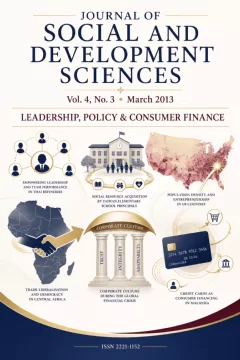
Due to rapid social changes and shrinking family size, the management of Taiwan's elementary schools faces many severe challenges. The question of how to enhance school competitiveness has become an important issue that must be addressed by school principals. Looking from the resource-based view and the organizational ecology perspective, the acquisition of social resources by schools is an important mission for today's principals. Because of the great importance of social resources to school operation, and the great lack of research on the effective acquisition of social resources, this study seeks to employ systematic methods to examine how outstanding benchmark principals in Taiwan utilize social resources in order to acquire the resources their schools need for sustainable operation. Hence, the main purpose of this study is to explore how schools use social resources in order to maintain their competitiveness, and their strategies for acquiring social resources, from the perspectives of outstanding principals. The results of this study reveal (1) eight findings concerning how public elementary school principals' perspectives on the use of social resources, such as active interaction with the community, establishment of networks of diverse relationships, obtaining recognition of superior teaching, and school marketing; and (2) ten findings concerning elementary school principals' strategies for acquiring social resources, such as maintenance of personal relationships, establishment of distinctive school features and enhancement of teaching performance, and skillful use of communication to acquire social resources. These important research results reveal a wide range of social resource utilization and acquisition strategies, and suggest the necessity and value of the implicit knowledge and wisdom that principals bring to bear in the workplace.
Keywords
- Social Resources Search this journal for Social Resources (opens in a new tab)
- Resource Acquisition Search this journal for Resource Acquisition (opens in a new tab)
- Elementary School Search this journal for Elementary School (opens in a new tab)
- Principal Search this journal for Principal (opens in a new tab)
References
- Araujo, B. (2011). The college assistance migrant program: A valuable resource for migrant farm worker students. Journal of Hispanic Higher Education , 10(3), 252-265.
- Bagin, D. & Gallagher, D. R. (2001). School community relations. Boston: Allyn & Bacon.
- Barney, J. B. (1991). Firm resources and sustained competitive advantage. Journal of Management , 17(1), 99-120.
- Chang, D. F. (2008). Educational administration: Theories and innovations. Taipei: A books company.
- Chang, H. H. & Chou, H. W. (2011). Drivers and effects of enterprise resource planning post-implementation learning. Behavior & Information Technology , 30(2), 251-259.
- Chen, L. J. (2002). The impact of the systematization of local grants policy on school finance. Educational Review , 19, 91-119.
- Cheng, H. G. (2005). The connections between community resource and school education. Inservice Education Bulletin , 22(1), 88-94.
- Chesbrough, H. (2003). Open platform innovation: Creating value from internal and external innovation. Intel Technology Journal , 7(3), 5-9.
- Chesbrough, H. (2006). Open business models: How to thrive in the new innovation landscape. New York: Harvard Business Pres.
- Conrad, D. L. (1974). Techniques of fundraising. Secaucus, NJ: Lyle Student Inc.
- Daft, R. (2008). Organization theory and design. New York: West Publishing.
- Daniel, E. D. & Wilson, H. N. (2003). The role of dynamic capabilities in e-business transformation. European Journal of Information Systems , 12(4), 282-296.
- D’Aveni, R. A. (1994). Hyper competition. New York: The Free Press.
- DeStefano, J. R., Van Hook, S. & Draht, S. (2000). The future connection. American School & University , 72(5), 24-25.
- Enkel, E., Gassmann, O. & Chesbrough, H. (2009). Open R&D and open innovation: Exploring the phenomenon. Business & Management , 39(4), 311-316.
- Epstein, J. L. (2009). School, family and community partnerships. Thousand Oaks: Corwin Press.
- Fan, C. W. (2008). School management: Concept, theory, and practice (2nd edition). Kaohsiung: Liwen Publisher.
- Fong, C. M. (2000). Business competitive advantage. Taiwan: Chien-Cheng Publishing.
- Fox, A. & Wilson, E. (2008). Viewing recently qualified teachers and their networks as a resource for a school. Teacher Development , 12, 97-100.
- Garner, C. W. (2004). Education finance for school leaders: Strategic planning and administration. Upper
- Saddle River, N.J.: Pearson Prentice Hall.
- Geller, S. L. & Salamon, L. M. (2010). Museums and other nonprofits in the current recession: A story of resilience, innovation, and survival. Journal of Museum Education , 35(1), 129-140.
- Gestwicki, C. (2007). Home, school and community relations. Clifton Park: Thomson Delmar.
- Grant, R. M. (1991). The resource-based theory of competitive advantage: implications for strategy formulation. California Management Review , 33(3), 114-135.
- Grant, R. M. (2002). Contemporary strategy analysis: Concepts, techniques, applications (4th edition). UK: Blackwell Publishers Inc.
- Greenfield, J. M. (1997). Fund-raising: Evaluation and management the fund development process. New York: John Wiley & Sons.
- Hafeez, K., Zhang, Y. B. & Malak, N. (2002). Core competence for sustainable competitive advantage: A structured methodology for identifying core competence. IEEE Transactions on Engineering Management , 49(1), 28-35.
- Halley, A. A. (1992). Delivering human services (3rd edition). New York: Longman.
- Herzog, T. R. (1996). Research methods and data analysis in the social sciences. New York: Pearson.
- Hsieh, C. Y. (2007). A study on the use of community resources and the effectiveness in elementary schools of Taipei County. Master thesis, National Taiwan Normal University.
- Huang, S. H. (2005). A practice study on the use of parents and social resources. Teachers Bulletin , 134, 60-63.
- Huang, T. S. & Cheng, M. Z. (2008). Innovative leadership of the winner of outstanding leadership award and its implications for school. Contemporary Educational Research Quarterly , 16(4), 109-153.
- Jimenez-Castellanos, O. (2010). Relationship between educational resources and school achievement: A mixed method intra-district analysis. Urban Review , 42(4), 351-371.
- Jones, D. (2011). Make your PTA an essential resource to your community. Our Children: The National PTA Magazine , 36(4), 9-10.
- Jones, G. R. & George, J. M. (2008). Essentials of contemporary management (3rd edition). New York: McGraw-Hill.
- Kappan, P. D. (2006). Why are schools always begging for money? Elementary and Secondary Schools , 88(1), 70-75.
- Karen, W., Daniel, E. & Adrian, F. (2003). The quality of urban environments: Mapping variation in access to community resources. Urban Studies , 40(1), 161-77.
- Kilpatrick, S., Johns, S., Vitartas, P. & Homisan, M. (2011). Mobile skilled workers: Making the most of an untapped rural community resource. Journal of Rural Studies , 27(2), 181-190.
- Lin, M. D. (2002). The relationship between school and community. Taipei: Wu-Nan.
- Mckinney, J. R. (1996). Legal and ethical aspects of public relations. In T.J. Kowalski (ed.), Public relations in educational organization (92-116). Englewood Cliff, NJ: Merrill.
- Marcia, M. & Sharon, B. W. (2009). Case study of leadership practice and school community interrelationships in high-performing, high-poverty, rural California high schools. Journal of Research in Rural Education , 24(1), 1-18.
- Mark, P. (2011). Schools, teachers, and curriculum change: A balancing act? Journal of Educational Change , 12(1), 1-23.
- Mulford, B. (2011). Teacher and school leader quality and sustainability. Resource Sheet No. 5. Retrieved from ERIC database. (ED516157)
- Pilo, M., Mantero, A. & Marasco, A. (2011). Science centers: A resource for school and community. US-China Education Review , 8(1), 80-88.
- Prahalad, C. K. & Hamel, G. (1990). The core competence of the corporation. Harvard Business Review , 68(3), 79-91.
- Rhodes, C. (2001). Resource management for school: A handbook of staff development activities. London: David Fulton Publishers.
- Sergiovanni, T. J. (1994). Building community in schools. San Francisco: Jossey-Bass.
- Tang, Y. (2001). School management and strategies. Taipei: Wu-Nan.
- Thompson, D. C. & Wood, R. C. (2001). Money and schools (2nd edition). New York: Eye on Education Inc.
- Tuffy, J. (2011). The learning trip: Using the museum field trip experience as a teaching resource to enhance curriculum and student engagement. Retrieved from ERIC database. (ED517713)
- Wernerflet, B. (1984). A resource-based view of the firm. Strategic Management Journal , 5(2), 171-180.
- Wiepking, P. & Maas, I. (2009). Resources that make you generous: Effects of social and human resources on charitable giving. Social Force , 87(4), 73-95.
- Wisner, B., Jones, B. & Gwin, D. (2010). School-based meditation practices for adolescents: A resource for strengthening self regulation, emotional coping, and self-esteem. Children & Schools , 32(3), 150-159.
- Worth, M. J. (Ed.) (1993). Educational fund raising: Principles and practice. Phoenix, AZ: Oryx Press.
- Wu, C. S. (2006). Introduction to education (2nd edition). Taipei: Wu-Nan.
- Wu, W. H. (2005). Community resource and excellent school management. Journal of Education Research , 135, 26-37.
Downloads
No downloads have been recorded for this article yet. Figures appear here once readers begin downloading the full text.
How to Cite
Share this article
License
Copyright (c) 2013 Tzung-Hsien Huang, Ya-Ching Yeh (Author)

This work is licensed under a Creative Commons Attribution 4.0 International License.
Author (s) should affirm that the material has not been published previously. It has not been submitted and it is not under consideration by any other journal. At the same time author (s) need to execute a publication permission agreement to assume the responsibility of the submitted content and any omissions and errors therein. After submission of revised paper in the light of suggestions of the reviewers, the editorial team edits and formats manuscripts to bring uniformity and standardization in published material.
This work will be licensed under Creative Commons Attribution 4.0 International (CC BY 4.0) and under condition of the license, users are free to read, copy, remix, transform, redistribute, download, print, search or link to the full texts of articles and even build upon their work as long as they credit the author for the original work. Moreover, as per journal policy author (s) hold and retain copyrights without any restrictions.
Keywords
- Social Resources Search this journal for Social Resources (opens in a new tab)
- Resource Acquisition Search this journal for Resource Acquisition (opens in a new tab)
- Elementary School Search this journal for Elementary School (opens in a new tab)
- Principal Search this journal for Principal (opens in a new tab)
Section
Published
Submissions
Have research to publish? Journal of Social and Development Sciences welcomes submissions.
Make a Submission