Abstract
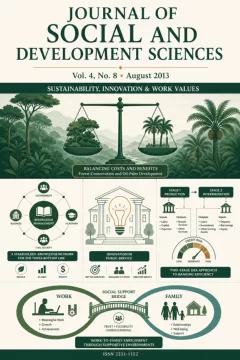
Sabah is known in the world with its nature and biodiversity. In fact, one of the contributions of tourism sector in Sabah is the uniqueness of the nature and wildlife. Unfortunately, the developments of agriculture, particularly for oil palm cultivation cause so many negative impacts to environmental imbalance, especially in fragile areas such as Lower Kinabatangan. Because of that, Lower Kinabatangan need for a balanced approach to reduce the negative effects due to the clearing of forests. In this study, Cost Benefit Analysis (CBA) model with three option namely, Option1: Status Quo, Option 2: Compromise and Conservation and Option 3: Translocation is used to provide alternative solution to local residents in Lower Kinabatangan which faced with problems due to insufficient of forest management. A total of 234 respondents were randomly selected from four villages with high conflict because of the of oil palm cultivation namey Kg, Kg Bilit, Kg Sukau and Kg Batu Putih. Study results found that Option 2, which recorded the highest NPV is the best option selected by the local people in solving their problems. This study thus shows that there is awareness among the local community on the importance of balancing development and environmental conservation to ensure sustainable forest management can be achieved in Lower Kinabatangan, Sabah.
Keywords
- Cost Benefit Analysis Search this journal for Cost Benefit Analysis (opens in a new tab)
- Sustainable Forest Management Search this journal for Sustainable Forest Management (opens in a new tab)
- Environmental Conservation Search this journal for Environmental Conservation (opens in a new tab)
- Sustainable Agriculture Search this journal for Sustainable Agriculture (opens in a new tab)
References
- Ashworth, A. (1994). Cost Studies of Buildings. United Kingdom: Longman Scientific & Technical Harlow.
- Briscoe, G. (1991). The Economics of the Construction Industry. London, United Kingdom: Michel Publishing Co.
- Ferry, D. & Brandon, P. (1984). Cost Planning of Building. London, United Kingdom: Granada Publishing.
- Folmer, H. & Gable, H. L. (1998). Principles of Environmental Resources Economics. New York: Edward Elgar.
- Food Agriculture Organization (FAO). (2000). Global Forest Assessment. New York: FAO Forestry Paper no 140, Main report.
- Hanley, N. (2000). Cost benefit analysis. In Folmer, H. and Landis, G.H, Principle of Environment and Resources Economics (pp. 104-129). New York: Edward Elgar.
- Hutton, J., Adams, W. M. & Murombedzi, J. (2005). Back to the Barriers? Changing Narratives in Biodiversity Conservation. Forum for development Studies , 32(2) 341-365.
- Kinabatangan District Office. (2007, August 1). Agriculture in Kinabatangan. (Abdul Latip, N., Interviewer)
- Koh, L. P. & Wilcove, D. S. (2007). Cashing in Palm Oil for Conservation. Nature 448 , 993-994.
- Manser, J. (1994). Economics: A Foundation Course for the Built Environments. London, United Kingdom: E&FN Spon.
- Payne, J. (1997). The Kinabatangan Floodplain: An Introduction. Malaysia: WWF-Malaysia.
- Prudente, C. & Balamurugan, G. (1999). Sungai Kinabatangan "Partner for Wetlans" Project: A Partnership for Sustainable Development and Conservation. Sabah Society Journal, 16, 41-56
- Sassone, P. (1978). Cost-Benefit Analysis: A Handbooks. New York: Academic Press
- Seeley, I. (1996). Building Economics: Appraisal and Control of Building Design and Cost Efficency. United Kingdom: Macmillan Press
- World Wildlife Fund-Malaysia (WWF). (2005). Kinabatangan Flood Plain Forest Conservation Project Phase II (July 2005-June 2007). Sabah: WWF-Malaysia.
Downloads
No downloads have been recorded for this article yet. Figures appear here once readers begin downloading the full text.
How to Cite
Share this article
License
Copyright (c) 2013 Normah Abdul Latip, Siegfried Bauer, Mohd Umzarulazijo Umar (Author)

This work is licensed under a Creative Commons Attribution 4.0 International License.
Author (s) should affirm that the material has not been published previously. It has not been submitted and it is not under consideration by any other journal. At the same time author (s) need to execute a publication permission agreement to assume the responsibility of the submitted content and any omissions and errors therein. After submission of revised paper in the light of suggestions of the reviewers, the editorial team edits and formats manuscripts to bring uniformity and standardization in published material.
This work will be licensed under Creative Commons Attribution 4.0 International (CC BY 4.0) and under condition of the license, users are free to read, copy, remix, transform, redistribute, download, print, search or link to the full texts of articles and even build upon their work as long as they credit the author for the original work. Moreover, as per journal policy author (s) hold and retain copyrights without any restrictions.
Keywords
- Cost Benefit Analysis Search this journal for Cost Benefit Analysis (opens in a new tab)
- Sustainable Forest Management Search this journal for Sustainable Forest Management (opens in a new tab)
- Environmental Conservation Search this journal for Environmental Conservation (opens in a new tab)
- Sustainable Agriculture Search this journal for Sustainable Agriculture (opens in a new tab)
Section
Published
Submissions
Have research to publish? Journal of Social and Development Sciences welcomes submissions.
Make a Submission