Abstract
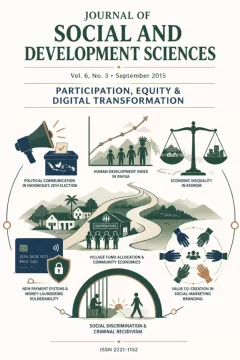
This paper will assess on the impact of the newest development on payment systems, which has been manifested in such kinds of payments products and threatening through money laundering. In order to increase the quality of people’ lives in this technologically advanced era, many sophisticated products have been produced, such as virtual currencies, or other stored value cards. The anonymity characteristic of new payment systems and products is vulnerable to money laundering exploitation. The study of FATF, as reported by APG, shows that the AML/CFT risk has associated with the payment method (means as virtual currencies). There are some reason which may indicate the potentiality of AML/CFT. (APG, 2014). As a part of Scientific Research, this legal research will be using qualitative methods. It will assess on the implementation of virtual currencies in real world which is causing problem for anti money laundering. It is a doctrinal research and using conceptual approach to solve the problem. The result of this research shows that anti money laundering rules and regulation should be strictly implemented to virtual currencies’s problem in order to anticipate its vulnerabililty to money laundering. The Due Diligence should be developed further.
Keywords
- New Payment System Search this journal for New Payment System (opens in a new tab)
- Payment Products Search this journal for Payment Products (opens in a new tab)
- Payment Services Search this journal for Payment Services (opens in a new tab)
- Anti Money Laundering Approach Search this journal for Anti Money Laundering Approach (opens in a new tab)
References
- APG. (2014). APG Yearly Typologies Report 2014: Methods and trends of Money Laundering and Terrorism Financing. APG Secretariat: Australia, 10.
- Boister, N. (2012). An Introduction To Transnational Criminal Law. London: Oxford, 7.
- Bryans, D. (2014). Bitcoin and Money Laundering: Mining for an Effective Solution, Article. Indiana Law Journal , 89(441), 443-444.
- Emily, F. (2014). Prominent Bitcoin entrepreneur charged with money laundering. Retrieved from http://www.reuters.com .
- FATF Report. (2014). Virtual Currencies: Key Definitions and Potential AML/CFT Risk., Retrieved from: http://www.fatf-gafi.org .
- Garnasih, Y. (2003). Kriminalisasi Pencucian Uang (Money Laundering). Jakarta: Universitas Indonesia, 52.
- Ibrahim, J. (2006). Teori & Metodologi Penelitian Hukum Normatif. Malang: Bayumedia Publishing, 147.
- Richet, J. L. (2013). Laundering Money Online: A review of Cybercriminals’ Methods, retreived from http://arxiv.org/ftp/arxiv/papers/1310/1310.2368.pdf .
- Rothe, D. L. & Friedrichs, D. O. (2015). Crimes of Globalization: New Directions in Critical Criminology, London: Routledge, 16.
- Santora, M., Rashbaum, W. K. & Perleroth, N. (2013). Online Currency Exchange Accused of Laundering $6 Billion, retrieved from: http://www.nytimes.com/2013/05/29/nyregion/liberty-reserve-operatorsaccused-of-money-laundering.html?_r=0.
- Schneider, F. (2012). The Hidden Financial Flows of Organized Crime: A Literature Review and Some Preliminary Empirical Results in (2012). Illicit Trade and The Global Economy. C.C. Storti & P.D. Grauwe (eds). London: Cambridge, 44.
- Smith, R. G., Grabosky, P. & Urbas, G. (2006). Cyber Criminals on Trial. Australia: Cambridge University Press, pp. 48-49.
- Stessens, G. (2000). Money Laundering: A New International Law Enforcement Model. United Kingdom: Cambridge, 5.
- Wignjosubroto, S. (2009). Penelitian Hukum dan Hakikatnya Sebagai Penelitian Ilmiah”, in S. Irianto & Shidarta (Eds), Metode Penelitian Hukum: Konstelasi dan Refleksi, Jakarta: Yayasan Obor Indonesia, pp. 114-115. www.CoinDesk.com . www.identitymindglobal.com/bitcoin . www.wikipedia.com.
Downloads
No downloads have been recorded for this article yet. Figures appear here once readers begin downloading the full text.
How to Cite
Share this article
License
Copyright (c) 2015 Go Lisanawati (Author)

This work is licensed under a Creative Commons Attribution 4.0 International License.
Author (s) should affirm that the material has not been published previously. It has not been submitted and it is not under consideration by any other journal. At the same time author (s) need to execute a publication permission agreement to assume the responsibility of the submitted content and any omissions and errors therein. After submission of revised paper in the light of suggestions of the reviewers, the editorial team edits and formats manuscripts to bring uniformity and standardization in published material.
This work will be licensed under Creative Commons Attribution 4.0 International (CC BY 4.0) and under condition of the license, users are free to read, copy, remix, transform, redistribute, download, print, search or link to the full texts of articles and even build upon their work as long as they credit the author for the original work. Moreover, as per journal policy author (s) hold and retain copyrights without any restrictions.
Keywords
- New Payment System Search this journal for New Payment System (opens in a new tab)
- Payment Products Search this journal for Payment Products (opens in a new tab)
- Payment Services Search this journal for Payment Services (opens in a new tab)
- Anti Money Laundering Approach Search this journal for Anti Money Laundering Approach (opens in a new tab)
Section
Published
Submissions
Have research to publish? Journal of Social and Development Sciences welcomes submissions.
Make a Submission