Articles

  • Article 1 in this issue

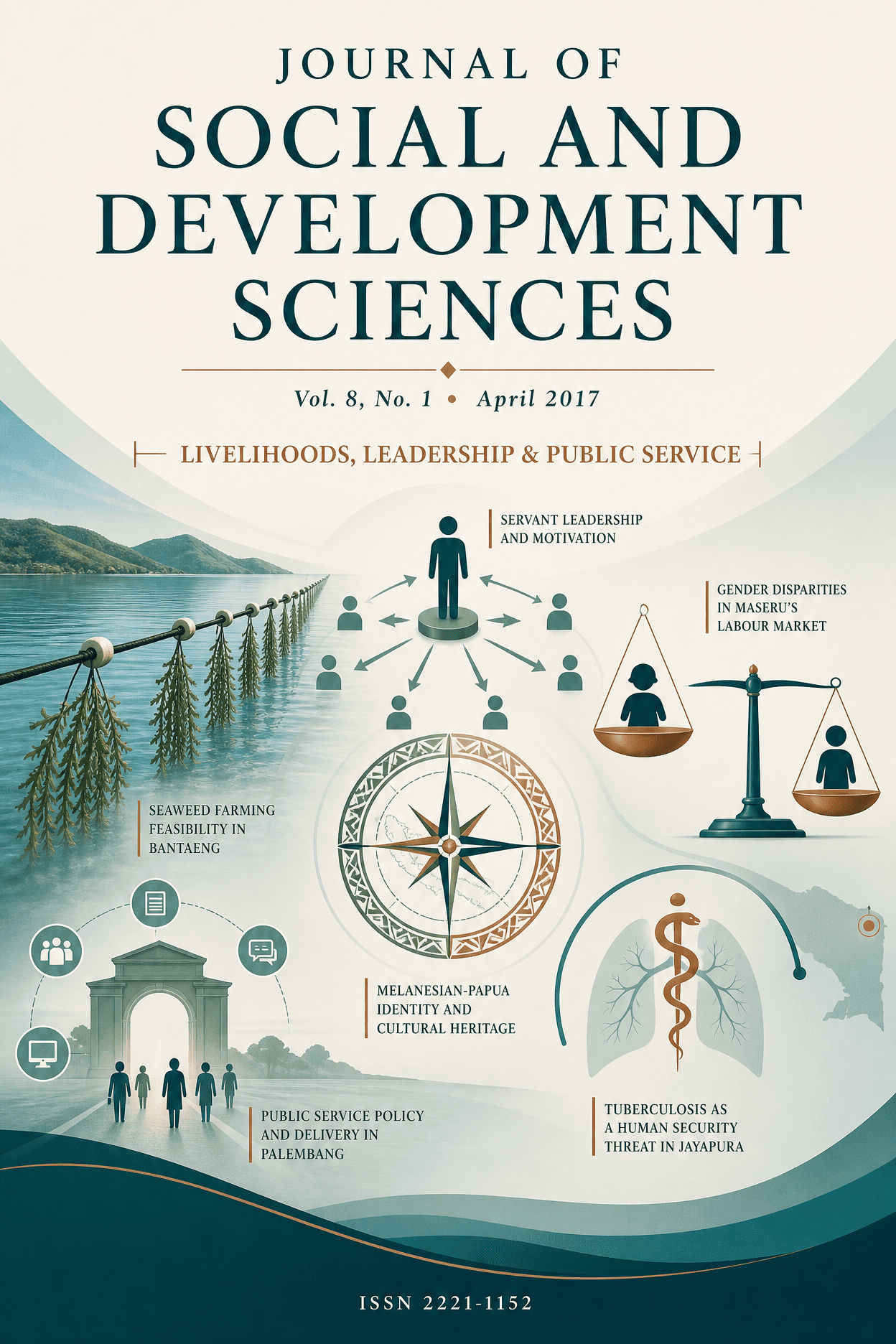
    Feasibility Analysis Seaweed (Eucheuma Cottonii) Long Line System in the Village District of Pa’jukukang Rappoa Bantaeng

    • Author: Yuliana

    This study aims to calculate and analyze the feasibility of seaweed farming ( Eucheuma cottonii ) long line system in the village of the District Rappoa Pa'jukukang Bantaeng. Subjects were farmer’s seaweed farming in the village Rappoa. With the number of respondents as many as 30 people. Data were collected by using observation, interview and questionnaire administration. The data were analyzed qualitatively and quantitatively using criteria analysis: analysis of the feasibility of operating revenue, revenue analysis cost ratio (R / C), analysis and Breakeven point (BEP). This research was conducted in the village of the District Rappoa Pa'jukukang Bantaeng selected intentionally (purposive) based on the consideration that the village Rappoa Bantaeng located in the coastal city where people do a lot of seaweed farming activities, to meet their needs. The results showed that the analysis of revenues and revenue cost ratio (R / C) can be interpreted that the cultivation of seaweed at the water village of the District Rappoa Pa'jukukang Bantaeng experiencing gains, based on the criteria of the R / C is more than 1. While based Break Event point (BEP) break-even point will be reached when the cultivation of seaweed dried seaweed produce as much as 264 kg or breakeven will be achieved at the price of selling seaweed for Rp.5.461 / kg. So that it can be interpreted that the cultivation of seaweed ( Eucheuma cottonii) long line system in the village Rappoa feasible, or can be explained that the capital Rp.3.429.482 we can get the seller by 1.46 times the amount of capital. So from the results of this study can be generalized that seaweed farming ( Eucheuma cottonii) with Long line system in the village of the District Rappoa Pa'jukukang Bantaeng feasible.

    Pages 6-12

    PDF - Feasibility Analysis Seaweed (Eucheuma Cottonii) Long Line System in the Village District of Pa’jukukang Rappoa Bantaeng (opens in a new tab)
  • Article 2 in this issue

    Influence of the Servant Leadership, Organizational Culture and Employee Motivation on Work Performance

    • Author: Peter Yumte, Yohanis Rante, Josephus Ronsumbre, Westim Ratang

    Servant Leadership, Organizational Culture and Work Motivation is a very important variable that to Achieve the performance of employees / employee better. Performance is an aspect to measure the quality and quantity of individuals in an organization. Employee performance affects the achievement of organizational goals. The dynamics of working in organization need individuals who are effective and efficient in their work, both personal and team. The purpose of this study is: to analyze the effect of servant leadership to employee performance Mimika District Hospital, to analyze the influence of organizational culture on employee performance Mimika District Hospital, To analyze the effect of work motivation on employee performance Mimika District Hospital. This study uses a saturated or census sampling methods and the data used in this research is the primary data is in the form of a questionnaire. This study used a sample of as many as 198 people. The analysis technique used in this study is the technique of path analysis (path analysis) using the program Structural Equation Modeling (SEM) with the help of program Analysis Moment Structures (AMOS) and qualitative analysis using interactive methods .. Based on test validity and reliability by using factor analysis shows, the instruments used in the study are valid and reliable. The results Showed that (1) Effect of servant leadership to employee performance Mimika district hospitals have a significant effect, in the which the servant leadership Directly Contribute to or influenced by 1.6% on employee performance and influence indirectly because of his association with two other independent variables by 1.2% and by 2.5% job satisfaction. The influence of organizational culture on employee performance Mimika hospitals have a significant effect of the which contributes greatly to the performance of employees. The effect of work motivation on employee performance hospitals Mimika has a significant influence on employee performance Mimika district hospitals, where the higher work motivation will improve employee performance.

    Pages 13-19

    PDF - Influence of the Servant Leadership, Organizational Culture and Employee Motivation on Work Performance (opens in a new tab)
  • Article 3 in this issue

    Analyzing Gender Disparities in the Labour Market in an Urbanizing City- Maseru, Lesotho

    • Author: Keneuoe Anacletta Mots'oene

    The study aimed at investigating the gender differences in the labour market of the urban formal sector in Maseru. The research was undertaken to illustrate the existing gender gap between men and women both in occupation and remuneration thus exposing inequality manifestations particularly in an urbanizing city, Maseru. The assessment was carried out in Maseru urban formal sector in three government entities: the National Manpower Development Secretariat, Office of the Auditor General and Ministry of Labour. The three government entities were purposively selected because of easy access of documented data and availability of resource persons to assist during data collection exercise. While at the same time a few interviews were conducted with men working in the taxi industry and the informal sector. Observations as well formed part of approach to the study to ascertain the validity of information obtained from the documented data and interviews. The main finding of the paper is that women in Lesotho the paper concludes that the formal labour market in Maseru is characterized by gender gaps where women occupy well salaried positions as opposed to their male counterparts with these low income jobs thus making men live in vicious cycle of poverty.

    Pages 20-27

    PDF - Analyzing Gender Disparities in the Labour Market in an Urbanizing City- Maseru, Lesotho (opens in a new tab)
  • Article 4 in this issue

    Weaknesses and Opportunities in Implementing Public Service Policy in the Government of Palembang, Indonesia

    • Author: Hardiyansyah

    The enactment of Indonesian law No. 25 of 2009 on Public Service is a milestone and a hope to the realization of public services quality. The substance of this law has led to the implementation of public services quality expected by all parties (stakeholders). This article is about to discuss the implementation of public service policy in Palembang. By using qualitative descriptive method, the conclusion showed that there are some weaknesses in the implementation of public service policy: (1) the information submitted is inaccurate, incomplete, inchoate; (2) Staffing / apparatus are still not in accordance with the disciplines and expertises; (3) Unclear job descriptions and procedures, by who does the job and to whom should be the report submitted; (4) The use of facilities, infrastructure is not optimal use; (5) The behavior of officers and management commitments are still low; (6) The incentives expected are still in material / value for money; (7) Awards and supports given to the implementor are still very low; (8) The organizational structure is " gemuk/tambun " (increasing); (9) Duplication of duties and functions among related agencies. While the opportunities that can be exploited are: (A) The use of information technology using online services; (B) Higher educational qualifications of apparatus; (C) Some facilities and infrastructures have been adequate; (D) With the slogan " Miskin struktur dan Kaya fungsi " (lean and mean) is expected to realize the organizational structure more effective, efficient, and easier for public services.

    Pages 28-36

    PDF - Weaknesses and Opportunities in Implementing Public Service Policy in the Government of Palembang, Indonesia (opens in a new tab)
  • Article 5 in this issue

    Seeking for Recovering Their Identity: The Melanesian-Papua Treading Returning Roadmap

    • Author: Don Augusthinus Lamaech Flassy

    The study describes 5 main areas, namely, (1)"Hidden Structure" that in the Social Meaning of Melanesian-Papua Cultural highlights Papuanistiecs and Melanesianology; (2) The Prestige and Power exposes the influence of the Big World Power to the problem of Papua; (3) Federalism in Indonesia reveal to the Melanesian-Papua in Land Papua as Special Specific Case versus unitary of The Republic of Indonesia; (4) Constitution vis-à-vis Constitution on constitutional philosophical correlation Indonesia constitution 1945 versus Papua constitution 1999; (5) Unilateral Declaration of Independence/UDI October 19, 2011, concerning Freedom-Melanesian Papuans in Land Papua as Nation and State. The background of this study is based on two main thoughts keys, namely: First, Meteray (2012: 268, 2013: 4) confirmed that, during the 17 years from 1945 to 1962, the process to Indonesian-sizing the Papuans are generally still in the stage of seeding while growth only in some areas of government and urban centres’. Awareness to be Indonesian-ness is yet to reach all areas of Papua. Meteray adding that the presence of Indonesian-sizing in past greatly influenced by the policies and the approach taken by both the Dutch and Indonesian government through the role of nationalists initiators of the period (2012: 264-267); Second; LIPI study in 2007 (Soewarsono, ed) are still questions to the Indonesian-sizing of the Papuans reinforce the view of Meteray stated that it is to Indonesian-sizing among the Papuans still weak (Meteray 2013: 1). Meteray concluded that, in fact, to understand the history of Papua will become a basic reference for the government seek and find out the right way and dignified in overcoming the issues of Papua, though on the other hand Aditjondro, 1999 clamming, the Government and Important People of Indonesia has curled the history of Papua which by the Papuans wanting to be straightened out, He calls this act as: "The dark history of Papua in Indonesian Historiography". Thoughts of Meteray and Aditjondro strengthens the authors thought that the various problems occurred in Papua, especially the facts involves "M"/Merdeka (Freedom) Papua". Referring to the failure of Indonesiansizing of the Papuans, it appears that it is not necessary regrettable because in fact, they are different. Precisely when indecision of the President of Indonesia to the case of Papua is safe step into alternative measures of the Melanesian-Papua people themselves must be hacked through, UDI October 19, 2011. This research focuses on the study of literature and interviews with the method of Descriptive Analysis and Method of Structure Linkage to assemble the Hidden Structure and Correlation Studies to reflect the relationships between aspects on the basis of Motivation Theory, Theory of Social Change and Theory of Balance and Theory of Realist and related by make use of Hidden Structure as Grand Theory. The formulation of the problem is (1). How to understand the present of Melanesian-Papuans in Land Papua? (2). Whether existing of Papua as "trust territory" of the UN is still attracting the winning of Prestige and Power of "the Big Power of the World" to be back to discusses at the UN of a future in accordance with Article 74 and Article 78 of the UN Charter? (3). Whether, Melanesia-Papua and Indonesian in Papua can together according to the federalist order of Melanesian-Papua? (4). How is the condition of social customs and traditions of Indonesia and Papua can be met?

    Pages 37-47

    PDF - Seeking for Recovering Their Identity: The Melanesian-Papua Treading Returning Roadmap (opens in a new tab)
  • Article 6 in this issue

    Tuberculosis in Jayapura: Human Security Threat in International Relations Perspective

    • Author: Melyana R Pugu, Mariana E Buiney

    The concept of human security defines the purpose of human to be free from poverty, free from terror and free from disease. This paper aims to provide an overview of the infectious disease, tuberculosis (TB), as one of the threats to human security in the city of Jayapura. The method used to assess this study is qualitative research method that describes and illustrates findings in the form of data and figures about the disease both by elaborating primary data collection through interviews with staffs and patients in government-funded health care as well as through secondary data libraries, books, journals and the Internet. The results from this study depict that from 2013 to 2015 the number of tuberculosis patients who reported themselves and get treatment and medication in Jayapura city through public health centres had both increased and decreased significantly. This is due to several reasons i.e. the presence of doctors in the health centres that handled the cases, the rise of patients’ awareness on the treatments, the availability of drugs for TB patients in clinics and assistance facilitating by USAID in Papua under the auspice of WHO. In the perspective of international relations, the increasing spread of tuberculosis in Jayapura has become the serious threat to human security and this requires crucial intervention of multi-stakeholders including local government through its health department covering the issue of the availability of accessible health centres, doctors and drugs for tuberculosis treatment. This also includes the promotion and raising awareness for local community relating to TB testing and maintaining one’s healthy environment.

    Pages 48-53

    PDF - Tuberculosis in Jayapura: Human Security Threat in International Relations Perspective (opens in a new tab)