Abstract
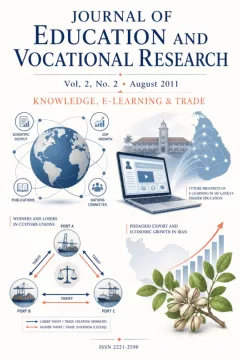
The use of Information and Communication Technology (ICT) in higher education has created totally a new environment which is fundamentally different from the traditional learning methods. The objectives of the study were to get the view of the University Grants Commission (UGC) about e-learning system and to investigate the possibilities of formalizing its implementation in the universities in future. As it is an exploratory study, the case study method was deemed appropriate. The result of the study shows that the UGC is favorable on the implementation of a campus-wide e-learning system in all universities. Though there is no formal policy on the embarkation of e-learning mode so far, it encourages the universities to adopt the system. This paper has also highlighted the possible areas for the early implementation of the e-learning mode and other requirements that should be considered for the future adoption of e-learning system.
Keywords
- E-learning Search this journal for E-learning (opens in a new tab)
- Dual Mode Search this journal for Dual Mode (opens in a new tab)
- Higher Education Search this journal for Higher Education (opens in a new tab)
- Adoption Search this journal for Adoption (opens in a new tab)
- ICT Search this journal for ICT (opens in a new tab)
References
- Appana, S. (2008). A Review of Benefits and Limitations of Online Learning in the Context of the Student, the Instructor and the Tenured Faculty. International Journal on E-Learning, 7(1), 5-22.
- Aydin, C. H. & Tasci, D. (2005). Measuring Readiness for e-Learning: Reflections from an Emerging Country. Educational Technology & Society, 8(4), 244-257.
- Bates, T. (2001). International Distance Education: Cultural and Ethical Issues. Distance Education, 22 (1), 122136.
- Bennett, J. & Bennett, L. (2003). A Review of Factors that Influence the Diffusion of Innovation When Structuring a Faculty Training Program. The Internet and Higher Education, 6 , 53-63.
- Bingimlas, K. A. (2009). Barriers to the Successful Integration of ICT in Teaching and Learning Environments: A Review of the Literature. Eurasia Journal of Mathematics, Science & Technology Education, 5 (3), 235-245.
- Bourlova, T. & Bullen, M. (2005). The Impact of E-learning on the Use of Campus Instructional Space.In R.W.H. Lau et al. (Eds . ): ICWL 2005 (397-405). Berlin, Heidelberg: Springer-Verlag Berlin Heidelberg.
- Cancannon, F., Flynn, A. & Campbell, M. (2005). What Campus-based Students Think about the Quality and Benefits of e-learning? British Journal of Educational Technology, 36 (3), 501–512.
- Cheung, W. & Huang, W. (2005). Proposing a Framework to Assess Internet Usage in University Education: An Empirical Investigation from a Student’s Perspective. British Journal of Educational Technology, 36 (2), 237–253.
- Cresswell, J. W. (2003). Research Design: Qualitative, Quantitative, and Mixed Methods Approaches (2nd Ed.). Thousand Oaks, CA: Sage.
- Dawes, L. (2001). What Stops Teachers Using New Technology? In M. Leask (Ed.), Issues in Teaching Using ICT (61-79). London: Routledge.
- Denzin, N. K. & Lincoln, Y. S (Ed.). (2005). The Sage Handbook of Qualitative Research (3rd ed.). Thousand Oaks, CA: Sage.
- Eynon, R. (2008). The U of the World Wide Web in Learning and Teaching in Higher Education: Reality and Rhetoric. Innovations in Education and Teaching International, 45 (5), 15-23.
- Hanna, N. G. (2008). Transforming Government and Empowering Communities: The Sri Lankan Experience with e-Developmen t . Washington, D.C: The World Bank.
- Haynes, P., Saintas, P., Stanier, S., Palmer, H., Thomas, N., Reast, G., Barlow, J. & Maillarder, F. (2004). Responding to Technological Change: IT skill and the Academic Teaching Profession. Active Learning in Higher Education, 5 (2), 152-165.
- Mahdizadeh, H., Biemans, H. & Mulder, M. (2008). Determining Factors of the Use of E-learning Environments by University Teachers. Computers & Education, 51, 142–154.
- Mandinach, E. B. (2005). The Development of Effective Evaluation Methods for E-Learning: A Concept Paper and Action Plan. Teachers College Record, 107(8), 1814-1836.
- MOE. (2004). TheDevelopment of Education, National Report. Retrieved December 12, 2010, from http://www.ibe.unesco.org/International/ICE47/English/Natreps/reports/srilanka.pdf.
- Nanayakkara, G. L. S., Wijesuriya.G. E. & Damayanthi, P. V. (2006). Study on the Characteristics of G.C.E (A/L) Qualified Youth Not Currently Studying. Retrieved December 18, 2010, from http://www.nodes.lk/rp.html.
- Rainford, S. (n.d). E-Sri Lanka: An Integrated Approach to E-Government Case Study. Retrieved December 27, 2010, from http://www.apdip.net/projects/e-government/capblg/casestudies/SriLankaRainford.pdf.
- Sambrook, S. (2003). E-learning in Small Organizations. Education + Training , 45(8/9), 506-516.
- Shraim, K. & Khlaif, Z. (2010). An E-learning Approach to Secondary Education in Palestine: Opportunities and Challenges. Information Technology for Development, 16 (3), 159-173.
- Thowfeek, M. H., & Hussin, H. (2008). Instructors’ Perspective on E-Learning Adoption in Sri Lanka: A Preliminary Investigation. Communications of the IBIMA, 6, 124-129.
- Vaughan, N. (2007). Perspectives on Blended Learning in Higher Education. International Journal on E- Learning, 6 (1), 81-94.
- Zhang, P., & Aikman, S. (2007). Attitudes in ICT Acceptance and Use.In J. Jacko (Ed.), Human-Computer Interaction (1021-1130). Berlin, Heidelberg: Springer-Verlag Berlin Heidelberg.
Downloads
No downloads have been recorded for this article yet. Figures appear here once readers begin downloading the full text.
How to Cite
Share this article
License
Copyright (c) 2011 Mohamed Hussain Thowfeek, Azizah Jaafar (Author)

This work is licensed under a Creative Commons Attribution 4.0 International License.
Author (s) should affirm that the material has not been published previously. It has not been submitted and it is not under consideration by any other journal. At the same time author (s) need to execute a publication permission agreement to assume the responsibility of the submitted content and any omissions and errors therein. After submission of revised paper in the light of suggestions of the reviewers, the editorial team edits and formats manuscripts to bring uniformity and standardization in published material.
This work will be licensed under Creative Commons Attribution 4.0 International (CC BY 4.0) and under condition of the license, users are free to read, copy, remix, transform, redistribute, download, print, search or link to the full texts of articles and even build upon their work as long as they credit the author for the original work. Moreover, as per journal policy author (s) hold and retain copyrights without any restrictions.
Keywords
- E-learning Search this journal for E-learning (opens in a new tab)
- Dual Mode Search this journal for Dual Mode (opens in a new tab)
- Higher Education Search this journal for Higher Education (opens in a new tab)
- Adoption Search this journal for Adoption (opens in a new tab)
- ICT Search this journal for ICT (opens in a new tab)
Section
Published
Submissions
Have research to publish? Journal of Education and Vocational Research welcomes submissions.
Make a Submission