Abstract
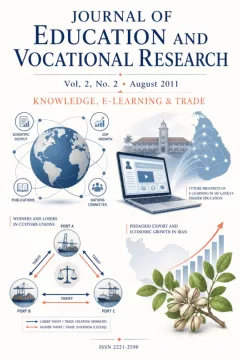
In the context of a Competitive Ricardian Model (CRM), one can ask whether it is possible to relate winners and losers from a CU based on comparative advantage considerations. This was pursued by Venables (2003), who showed that careful consideration of a country’s comparative advantage – with the rest of the world relative to that with its partners in the CU- yields predictions about winners and losers. Starting from initial tariff equilibrium, in a 3 country model with a continuum of goods, he shows that a country with ‘extreme’ comparative advantage will be more vulnerable to trade diversion. In this experiment, the 3 x 3 Competitive Ricardian Model (CRM) in two scenarios multiple import tariffs and a customs union. We fully characterise the equilibrium under both. Starting from a tariff distorted situation, we find that when a customs union is formed there is an increase in trade flows among members; a rise in individual consumption of some goods; a clear terms of trade effect and the existence of trade diversion. Our experimental results support the simulation findings of Venables (2003), who showed that countries which have ‘extreme’ comparative advantage in a customs union will generally be more vulnerable to trade diversion.
Keywords
References
- Brander, J. A. & Spencer, B. J. (1985). Export Subsidies and International Market Share Rivalry. Journal of International Economics , 18, 83-100.
- Chen, K. Y. & Plott, C. R. (2002). Information Aggregation Mechanisms: Concept, Design and Implementation for a Sales Forecasting Problem. Social Science Working Paper 1131, California Institute of Technology
- Engelman, D. & Normann, H. T. (2003). An Experimental Test of Strategic Trade Policy. Center for Economic Research and Graduate Education, Working Paper, 212.
- Goodfellow, J. & Plott, C. R. (1990). An Experimental Examination of the Simultaneous Determination of Input Prices and Output Prices. Southern Economic Journal , 56, 969-983.
- Jones, R. W. (1961). Comparative Advantage and the Theory of Tariffs: A Multi-Country, Multi-Commodity Model. Review of Economic Studies , 28, 161-175.
- Lian, P. & Plott, C. R. (1998). General Equilibrium, Markets, Macroeconomics and Money in a Laboratory Experimental Environment. Economic Theory , 12, 21-76.
- Noussair, C. N., Plott, C. R. & Riezman, R. G. (1995). An Experimental Investigation of the Patterns of International Trade. American Economic Review , 85, 462-491.
- Noussair, C. N., Plott, C. R. & Riezman, R. G. (2007). Production, Trade, Exchange Rates and Equilibration in Large Experimental Economies. European Economic Review , 51, 49-76.
- Noussiar, C. N. & Powell, O. (2008). Peak and Valleys: Experimental Asset Markets with Non-Monotonic Fundamentals. Discussion paper 2008-49, Tilburg University.
- Nowbutsing, B. M. (2011). Fragility of Comparative in Higher Dimensions: An Experimental Investigation. Journal of Economics and Behavioural Studies , 2, 151–170.
- Plott, C. R. (1991). A Computerized Laboratory Market System and Research Support Systems for the Multiple Unit Double Auction. Working Paper, 783, California Institute of Technology.
- Plott, C. R. & Gray, P. (1990). The Multiple Unit Double Auction. Journal of Economic Behavior and Organization, 13, 245-258.
- Venables, A. J. (2003). Winners and Losers from Regional Integration Agreements. Economic Journal , 113, 747- 761.
- Viner, J. (1950). The Customs Union Issues, New York: Carnegie Endowment for International Peace.
Downloads
No downloads have been recorded for this article yet. Figures appear here once readers begin downloading the full text.
How to Cite
Share this article
License
Copyright (c) 2011 Baboo M Nowbutsing (Author)

This work is licensed under a Creative Commons Attribution 4.0 International License.
Author (s) should affirm that the material has not been published previously. It has not been submitted and it is not under consideration by any other journal. At the same time author (s) need to execute a publication permission agreement to assume the responsibility of the submitted content and any omissions and errors therein. After submission of revised paper in the light of suggestions of the reviewers, the editorial team edits and formats manuscripts to bring uniformity and standardization in published material.
This work will be licensed under Creative Commons Attribution 4.0 International (CC BY 4.0) and under condition of the license, users are free to read, copy, remix, transform, redistribute, download, print, search or link to the full texts of articles and even build upon their work as long as they credit the author for the original work. Moreover, as per journal policy author (s) hold and retain copyrights without any restrictions.
Keywords
Section
Published
Submissions
Have research to publish? Journal of Education and Vocational Research welcomes submissions.
Make a Submission