Abstract
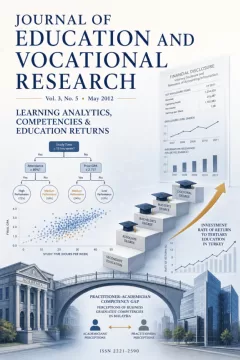
Most scholars, professionals, parents, governments, and societies strongly believe that education, especially tertiary education, provides important economic and social benefits to everyone involved. Furthermore, tertiary education is recently considered as an important investment. Students usually think of higher education in more personal terms, therefore they tend to pay less attention to the broader societal benefits, however tertiary education received immediately after secondary school can have considerable positive influence in countries’ economic development, further business growth, expansion to international markets and increase in living standards. Robert B. Zoellick, President of the World Bank Group 2010, said: “Improved learning leads to better jobs, greater productivity, and higher incomes in every society. ”1 This paper examines the IRR on tertiary education to first degrees, master’s degrees, and PhDs in Turkey using previously published data. The purposes of this research are to study and identify whether or not increase in tertiary education leads to increase in wages. Knowledge and advanced skills are critical determinants of a country's economic growth and standard of living as learning outcomes are transformed into goods and services, greater institutional capacity, a more effective public sector, a stronger civil society, and a better investment climate2
Keywords
References
- Baum, S. & Payea, K. (2004). College Board: Education Pays 2004. The Benefits of Higher Education for Individuals and Society. www.collegeboard.com
- Bircan, F. (2004). Essays on Education in Turkey: Private Tutoring and Returns to Schooling. Ph.D. Thesis under preparation. Department of Economics, Middle East Technical University
- Commentary. (2010). On Issues of Higher Education and Research. The University of Auckland, 6.
- Committee for Economic Development. (1998). America’s Basic Research: Prosperity through Discovery. Available online: http://ced.issuelab.org/research/listing/americas_basic_research.
- Education at a Glance, OECD. (2009). OECD indicators. 13, 42, 137, 208, 218, 223,
- Ischinger, B. (2009). Director for Education, OECD, 2009. Education at a glance 2009: OECD indicators
- Joronen, K. & Astedt, K. P. (2005). Family Contribution to Adolescent Subjective Well-being . Int J Nurs Pract ., 11, 125-133.
- Kelly, G. P. & Elliott, C. M. (1982). Women are Education in the Third World: Comparative Perspectives. State University of New York Press, Albany. ISBN 0-87395-619-2, p. 70
- MoNE – Ministry of Higher Education. (2012). National Education Statistics 2011-2012. Available online: http://www.meb.gov.tr/
- Mandelson, L. (2009). Universities Value to Economy Increase – UUK Report. Available online: www.universitiesuk.ac.uk/Newsroom
- Resnick, M., Bearman, P. S. & Blum R. W. (1997). Protecting Adolescents from Harm: Findings from the National Longitudinal Study on Adolescent Health . JAMA , 278, 823-832
- Reinherz, H. Z., Giaconia, R. M. & Paradis, A. D. (2007). Family Matters: The Importance of Family Social Support, Feeling Valued and Family Cohesion in Promoting Positive Adolescent Development . Boston: Simmons Longitudinal Study, Simmons College School of Social Work.
- Trostel, P. A. (2008). High returns: Public investment in higher education . Federal Reserve Bank of Boston. Spring 2008. Available online: www.bos.frb.org/commdev/c&b/2008.
- Taskinsoy, J. (2012). The Return of Investment on Tertiary Education in Malaysia. Presented at the ICEIM 2012 – International Conference on Education and Information Management Potential for Business Innovation (June 15-17, 2012).
- Taskinsoy, J. (2008). The Effects of Higher Education on Wages: Evidence from Turkey. Istanbul Aydin University , 3(12). Turkish Statistical Institute (TurkStat). Available online: http://www.turkstat.gov.tr
- Trostel, P. A. (2008). High returns: Public investment in higher education . Federal Reserve Bank of Boston Spring 2008. Available online: www.bos.frb.org/commdev/c&b/2008. U.S. Census Bureau, 2004, PINC–03 UNESCO; United Nations Human Development Program; UNESCO Institute of Statistics; UNESCO Institute for Statistics
- World Bank Report. (2010). ‘Education Year in Review 2010. Available online: http://go.worldbank.org/JVGUHPQLC0
- World Bank Report. (2007). Tertiary Education (Higher Education). Available online: http://go.worldbank.org/HBEGA0G2P0
Downloads
No downloads have been recorded for this article yet. Figures appear here once readers begin downloading the full text.
How to Cite
Share this article
License
Copyright (c) 2012 John Taskinsoy (Author)

This work is licensed under a Creative Commons Attribution 4.0 International License.
Author (s) should affirm that the material has not been published previously. It has not been submitted and it is not under consideration by any other journal. At the same time author (s) need to execute a publication permission agreement to assume the responsibility of the submitted content and any omissions and errors therein. After submission of revised paper in the light of suggestions of the reviewers, the editorial team edits and formats manuscripts to bring uniformity and standardization in published material.
This work will be licensed under Creative Commons Attribution 4.0 International (CC BY 4.0) and under condition of the license, users are free to read, copy, remix, transform, redistribute, download, print, search or link to the full texts of articles and even build upon their work as long as they credit the author for the original work. Moreover, as per journal policy author (s) hold and retain copyrights without any restrictions.
Keywords
Section
Published in
 Vol. 3 No. 5 (2012)
Learning Analytics, Competencies & Education Returns
View issue contents
Published
Submissions
Have research to publish? Journal of Education and Vocational Research welcomes submissions.
Make a Submission