Abstract
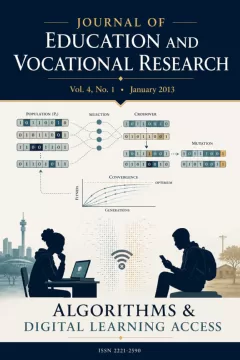
Genetic algorithm is a well-known heuristic search algorithm, typically used to generate valuable solutions to optimization and search problems. The most important operation in a genetic algorithm is crossover, as it has the greatest effect on its convergence rate. Therefore, in order to achieve the most optimal results in a reasonable time, one has to decide on the crossover type, as well as make a selection of a crossover point. In order to explore the effect of the crossover point selection methods on the convergence rate, we conducted experiments based on different crossover point selection criteria, whereby the results indicate the high importance of controlling the randomization of the crossover point selection range.
Keywords
- Crossover Search this journal for Crossover (opens in a new tab)
- Convergence Rate Search this journal for Convergence Rate (opens in a new tab)
- Genetic Algorithm Search this journal for Genetic Algorithm (opens in a new tab)
- Optimization Problems Search this journal for Optimization Problems (opens in a new tab)
References
- Goldberg, D. (1989). Genetic Algorithms in Search, Optimization and Machine Learning, Addison-Wiley Publishing Company, Massachusetts, Mass, USA.
- http://www.iwr.uni-heidelberg.de/groups/comopt/software/TSPLIB95/. Heidelberg University.
- Moscato, P. (1989). On genetic crossover operators for relative order preservation, Caltech Concurrent Computation program, Report C3P 778.
Downloads
No downloads have been recorded for this article yet. Figures appear here once readers begin downloading the full text.
How to Cite
Share this article
License
Copyright (c) 2013 Younis Elhaddad (Author)

This work is licensed under a Creative Commons Attribution 4.0 International License.
Author (s) should affirm that the material has not been published previously. It has not been submitted and it is not under consideration by any other journal. At the same time author (s) need to execute a publication permission agreement to assume the responsibility of the submitted content and any omissions and errors therein. After submission of revised paper in the light of suggestions of the reviewers, the editorial team edits and formats manuscripts to bring uniformity and standardization in published material.
This work will be licensed under Creative Commons Attribution 4.0 International (CC BY 4.0) and under condition of the license, users are free to read, copy, remix, transform, redistribute, download, print, search or link to the full texts of articles and even build upon their work as long as they credit the author for the original work. Moreover, as per journal policy author (s) hold and retain copyrights without any restrictions.
Keywords
- Crossover Search this journal for Crossover (opens in a new tab)
- Convergence Rate Search this journal for Convergence Rate (opens in a new tab)
- Genetic Algorithm Search this journal for Genetic Algorithm (opens in a new tab)
- Optimization Problems Search this journal for Optimization Problems (opens in a new tab)
Section
Published
Submissions
Have research to publish? Journal of Education and Vocational Research welcomes submissions.
Make a Submission