Articles

  • Article 1 in this issue

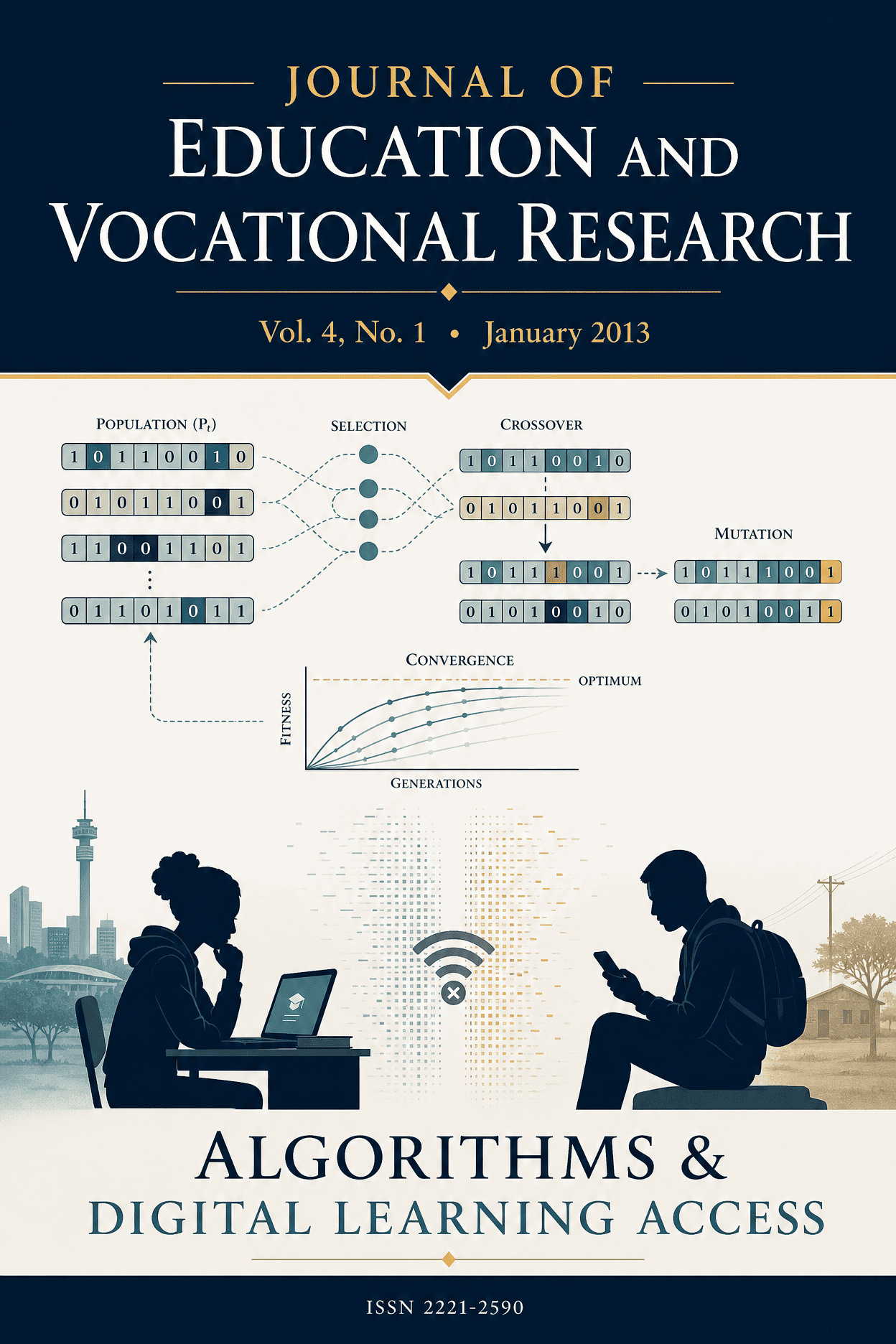
    An Experimental Study of the Genetic Algorithm Convergence

    • Author: Younis Elhaddad

    Genetic algorithm is a well-known heuristic search algorithm, typically used to generate valuable solutions to optimization and search problems. The most important operation in a genetic algorithm is crossover, as it has the greatest effect on its convergence rate. Therefore, in order to achieve the most optimal results in a reasonable time, one has to decide on the crossover type, as well as make a selection of a crossover point. In order to explore the effect of the crossover point selection methods on the convergence rate, we conducted experiments based on different crossover point selection criteria, whereby the results indicate the high importance of controlling the randomization of the crossover point selection range.

    Pages 1-4

    PDF - An Experimental Study of the Genetic Algorithm Convergence (opens in a new tab)
  • Article 2 in this issue

    Digital Inequality amongst University Students in the Tshwane Region

    • Author: Wilfried Ndiaye Kassangoye, Johan de Jager, Robert Rugimbana

    Whilst the main objective of this paper is to investigate the digital divide amongst the university students in the Tshwane region of South Africa, the purpose is to determine a generalisable profile that would characterize their Internet usage behaviour. The research design consisted of a descriptive design. The convenience sampling method was applied and the research instrument was a structured questionnaire, which was employed to collect the final data amongst a total of 300 university students (selected from two universities in South Africa, TUT and UP by way of self-administration questionnaires. Male and female students were almost equally distributed. The significance of the results obtained was then tested through analytical tools embedded in the computer software STATA 11. The analytical tools were used to quantitatively analyze the data, out of which different inferences were drawn. The main findings were that the university students in the Tshwane region can be profiled on the basis of the results obtained over and above specific situational and personal characteristics, provides important opportunities for marketers for better understanding the needs and expectations of the university students; and by extension, to those of the youth market, since the sample elements belonged to the 18 to 34 years old age group. A proper segmentation would present an important mean by which marketers can keep in touch with their consumers’ expectations.

    Pages 5-10

    PDF - Digital Inequality amongst University Students in the Tshwane Region (opens in a new tab)