Abstract
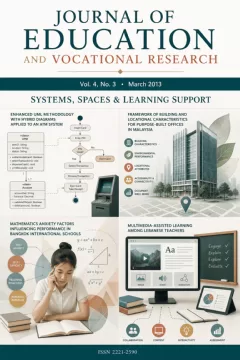
The development of purpose-built office market in Malaysia is primarily resolved by a supplydemand market. Since the office market in Malaysia has displayed significance improvement due to increasing level of competitiveness, many characteristics of purpose-built office have appeared and become prominent during the process of assessment. These characteristics were generally used as indicators in property valuation, building performance as well as office market appraisal. Based on these characteristics, property market participants can evaluate their property proficiently based on their requirements, especially in decision making during business planning, investment or property management. Technology growth and national policy also gave contribution factors on revealing newly characteristics of purpose-built office such as green building, intelligent building and sustainable development model. The purpose of this article is to identify suitable characteristics of purpose-built office that can be used in Malaysia. Integral to achieving this objective, exploration on purpose built office characteristics in a global and local context will be reconsidered. As a result, a building and locational framework of purpose-built office’s characteristics in Malaysia will be diagnosed and verified appropriately.
Keywords
- Purpose-built Office Search this journal for Purpose-built Office (opens in a new tab)
- Building Search this journal for Building (opens in a new tab)
- Locational Search this journal for Locational (opens in a new tab)
- Characteristics Search this journal for Characteristics (opens in a new tab)
- Framework Search this journal for Framework (opens in a new tab)
References
- Adnan, M. Y. & Daud, M. N. (2008). Identifying the Potential Criteria and Sub-Criteria for Classification of Office Buildings in Malaysia, International Real Estate Research Symposium 2008, Kuala Lumpur.
- Bird, R. (1996). Defining Quality in New Zealand Office Developments Relative to International Standards. BOMA New Zealand, Auckland.
- Darus, M. Z., Hashim, N. A., Salleh, E., Haw, L. C., Rashid, A. K. A. & Abdul Manan, S. N. (2009). Development of Rating System For Sustainable Building In Malaysia. WSEAS Transactions on Environment and Development , 3(5).
- Duntavs, A. (2006). Colliers International Baltic Commercial. Real Estate Market Overview 2006, Gauja Hall.
- Safian, E. E. M. (2010). Model klasifikasi bagi pejabat binaan khas di kawasan segi tiga emas Kuala Lumpur, UTHM, Master thesis.
- Safian, E. E. M., Bagdad, M., & Nawawi, A. H. (2011). The characteristics of purpose built offices in Malaysia: a review of issues (No. 39422). University Library of Munich, Germany.
- NAPIC. (1994). National Property Information Centre. 1994 Property Market Report. Kuala Lumpur, Malaysia: Valuation and Property Services Department.
- NAPIC. (2007). National Property Information Centre. 2007 Property Market Report. Kuala Lumpur, Malaysia: Valuation and Property Services Department.
- NIBS. (2009). Get Energized about High Performance Building - Apr 02 2009.
- Rahardjati, R., Khamidi, M. F. & Idrus, A. (2010). The Level of Importance of Criteria and Sub Criteria in Green Building Index Malaysia. In: International Conference on Sustainable Building and Infrastructure (ICSBI 2010), 15-17 June 2010, Kuala Lumpur Convention Centre.
- Rahim & Co. (2009). The Klang Valley Office Market – An indication of Trends 1993-2008, Rahim & Co., Kuala Lumpur.
Downloads
No downloads have been recorded for this article yet. Figures appear here once readers begin downloading the full text.
How to Cite
Share this article
License
Copyright (c) 2013 Edie Ezwan Mohd Safian, Abdul Hadi Nawawi (Author)

This work is licensed under a Creative Commons Attribution 4.0 International License.
Author (s) should affirm that the material has not been published previously. It has not been submitted and it is not under consideration by any other journal. At the same time author (s) need to execute a publication permission agreement to assume the responsibility of the submitted content and any omissions and errors therein. After submission of revised paper in the light of suggestions of the reviewers, the editorial team edits and formats manuscripts to bring uniformity and standardization in published material.
This work will be licensed under Creative Commons Attribution 4.0 International (CC BY 4.0) and under condition of the license, users are free to read, copy, remix, transform, redistribute, download, print, search or link to the full texts of articles and even build upon their work as long as they credit the author for the original work. Moreover, as per journal policy author (s) hold and retain copyrights without any restrictions.
Keywords
- Purpose-built Office Search this journal for Purpose-built Office (opens in a new tab)
- Building Search this journal for Building (opens in a new tab)
- Locational Search this journal for Locational (opens in a new tab)
- Characteristics Search this journal for Characteristics (opens in a new tab)
- Framework Search this journal for Framework (opens in a new tab)
Section
Published
Submissions
Have research to publish? Journal of Education and Vocational Research welcomes submissions.
Make a Submission