Abstract
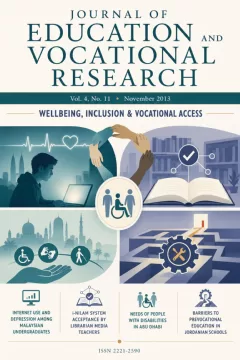
This study used a set of questionnaire to investigate the Internet use and depression level in a sample of Malaysian undergraduate students, which identified 12 cases as pathological Internet use (PIU) in a total sample of 90 students using Beard and Wolf’s (2001) criterion. Students with PIU spent significantly longer time on Internet and experienced extremely higher level of depression (M=42.83, SD=11.86) than their non-PIU counterparts (M=26.26, SD=14.79), which is in the severe level. The gender difference on depression was also detected in this study but not for time spent online. Lastly, this study found that students with PIU would like to spent more time on SNS, browsing with no specific purpose, and online media viewing, while students with increasing level of depression would accelerate the time spent online, especially on SNS, browsing with no specific purpose, and instant messaging. The same Internet application (SNS and browsing with no specific purpose) chose by students with PIU and high level of depression implied that there may be close association on developing depression and PIU related to usage of SNS and browsing with no specific purpose.
Keywords
References
- Antony, M. M., Bieling, P. J., Cox, B. J., Enns, M. W. & Swinson, R. P. (1998). Psychometric properties of the 42-item and 21-item versions of the Depression Anxiety Stress Scales in clinical groups and a community sample. Psychological Assessment, 10, 176–181.
- Azim, D. H. B. F., Zam, N. A. B. M. & Rahman, W. R. A. (2009). Internet Addiction between Malaysian Male and Female undergraduate Human Sciences Students of The International Islamic University Malaysia. The 6th International Postgraduate Research Colloquium, p58-74. Srinakharinwirot University in Bangkok, Thailand.
- Beard, K. W. & Wolf, E. M. (2001). Modification in the proposed diagnostic criteria for Internet addiction. Cyberpsychology and Behavior, 4, 377–383.
- Brown, T. A., Chorpita, B. F. & Korotitsch, W. & Barlow, D. H. (1997). Psychometric Properties of the Depression Anxiety Stress Scales (DASS) in Clinical Samples. Behaviour Research and Therapy, 35(1), 79-89.
- Cao, F. L., Su, L. Y., Liu, T. Q. & Gao, X. P. (2007). The relationship between impulsivity and Internet addiction in a sample of Chinese adolescents. European Psychiatry, 22, 466-471. doi: 10.1016/j.eurpsy.2007.05.004
- Caplan, S. E. (2002). Problematic Internet use and psychosocial well-being: development of a theorybased cognitive-behavioral measurement instrument. Computers in Human Behavior, 18, 553–575.
- Chang, M. K. & Man Law, S. P. (2008). Factor structure for Young’s Internet Addiction Test: A confirmatory study. Computers in Human Behavior, 24, 2597–2619.
- Chou, C., Chou, J. & Tyan, N. N. (1999). An exploratory study of Internet addiction, usage and communication pleasure—The Taiwan’s case. Int. J. Educ. Telecommun, 5(1), 47–64.
- Davis, R. A. (2001). A cognitive-behavioral model of pathological Internet use. Computers in Human Behavior, 17, 187–195.
- Durkee, T., Kaess, M., Carli, V., Parzer, P., Wasserman, C., Floderus, B., Apter, A., Balazs, J., Barzilay, S., Bobes, J., Brunner, R., Corcoran, P., Cosman, D., Cotter, P., Despalins, R., Graber, N., Guillemin, F., Haring, C., Kahn, J. P., Mandelli, L., Marusic, D., Mészáros, G., Musa, G. J., Postuvan, V., Resch, F., Saiz, P.A., Sisask, M., Varnik, A., Sarchiapone, M., Hoven, C. W. & Wasserman, D. (2012). Prevalence of pathological internet use among adolescents in Europe: demographic and social factors. Addiction, 107(12), 2210–2222. doi: 10.1111/j.1360-0443.2012.03946.x
- Frangos, C. C., Frangos, C. C. & Kiohos, A. P. (2010). Internet addiction among Greek university students: Demographic associations with the phenomenon, using the Greek version of Young’s internet addiction test. International Journal of Economic Sciences and Applied Research, 3(1), 49–74.
- Gencer, S. L. & Koc, M. (2012). Internet Abuse among Teenagers and Its Relations to Internet Usage Patterns and Demographics. Educational Technology & Society, 15(2), 25–36.
- Goldberg, I. (1996). Interne addiction. Electronic message posted to Research Discussion List. Research @ PsyCom.net World Wide Wbe, http://www. cmhc. com/mlists/research/ and http://wwwusr.rider.edu/~suler/psycyber/supportgp.html
- Griffiths, M. D. (1998). Internet addiction: Does it really exist? In Gackenbach, J. (ed.), Psychology and the Internet: Intrapersonal, Interpersonal, and Transpersonal Implications, Academic Press, New York.
- Guan, N. C. Isa, S. M. Hashim, A. H. Pillai, S. K. & Singh, M. K. H. (2012). Validity of the Malay Version of the Internet Addiction Test: A Study on a Group of Medical Students in Malaysia. Asia-Pacific Journal of Public Health, 10(1).
- Hardie, E. & Tee, M. Y. (2007). Excessive Internet use: The role of personality, loneliness and social support networks in Internet addiction. Australian Journal of Emerging Technologies and Society, 5(1), 34–47.
- Henry, J. D. & Crawford, J. R. (2005). The Short-form Version of the Depression Anxiety Stress Scales (DASS-21): construct validity and normative data in a large non-clinical sample. The British Journal Of Clinical Psychology, 44(2), 227-39. The British Psychological Society.
- Johansson, A. & Götestam, K. G. (2004). Internet addiction: characteristics of a questionnaire and prevalence in Norwegian youth (12-18 years). Scandinavian Journal of Psychology, 45, 223-229.
- Kim, J. LaRose, R. & Peng, W. (2009). Loneliness as the Cause and the Effect of Problematic Internet Use: The Relationship between Internet Use and Psychological Well-being. Cyber Psychology & Behavior, 12(4), 451-455. DOI: 10.1089=cpb.2008.0327
- Kim, K., Ryub, E. J., Chon, M. Y., Yeunb, E. J., Choic, S. Y., Seod, J. S. & Nam B. Y. (2006). Internet addiction in Korean adolescents and its relation to depression and suicidal ideation: A questionnaire survey. International Journal of Nursing Studies, 43, 185–192.
- Lai, C. M., Mak, K. K., Watanabe, H., Ang, R. P., Pang, J. S. & Ho, R. C. M. (2013) Psychometric Properties of the Internet Addiction Test in Chinese Adolescents. J.Pediatr. Psychol., 3, 1-14. doi: 10.1093/jpepsy/jst022
- Li, H. H., Wang, J. Q. & Wang, L. (2009). A Survey on the Generalized Problematic Internet Use in Chinese College Students and its Relations to Stressful Life Events and Coping Style. Int J Ment Health Addiction, 7(2), 333–346. DOI 10.1007/s11469-008-9162-4.
- Li, S. M. & Chung, T. M. (2006). Internet function and Internet addictive behavior. Computers in Human Behavior, 22, 1067–1071.
- Ling, C. S., Ramadass S., Altaher, A. & Arjuman, N. C. (2011). Malaysian Internet Surfing Addiction (MISA): Factors Affecting the Internet Use and Its Consequences. 2011 International Conference on Computer Applications and Industrial Electronics (ICCAIE 2011).
- Lovibond, S. H. & Lovibond, P. F. (1995). Manual for the Depression Anxiety Stress Scales (2nd ed.). Sydney: Psychology Foundation.
- Lu, X. (2011). Parenting Stress and Psychological Distress among Mothers of Children with Autism in Johor Bahru and Hangzhou. Unpublished Master dissertation, Universiti Tekonologi Malayisa, Johor, Malaysia.
- Lu, X., Watanabe, J., Liu, Q. B., Uji, M., Shono, M. & Kitamura, T. (2011). Internet and Mobile Phone Textmessaging Dependency: Factor Structure and Correlation with Dysphoric mood among Japanese Adults. Computers in Human Behavior, 27, 1702-1709.
- Morrison, C. M. & Gore, H. (2010). The Relationship between Excessive Internet Use and Depression: A Questionnaire-Based Study of 1319 Young People and Adults. Psychopathology, 43, 121-126. DOI: 10.1159/000277001.
- Pay-Ling H., Wu, P. L., Chen, S. H. & Chang, Y. W. (2007). A Study of the Internet Addiction Model for Northern Taiwanese High School Students. Bulletin of Educational Psychology, 38(3), 355-373
- Rahmat, H. (2004). Internet Addiction, Locus of Control, and Social Isolation among Malaysian Adolescents. Thesis of Master degree. International Islamic University Malaysia.
- Siomos, K. E., Dafouli, E. D., Braimiotis, D. A., Mouzas, O. D., Angelopoulos, N. V. (2008). Internet Addiction among Greek adolescent Students. Cyber Psychology & Behavior, 11, 653-657.
- Thomee, S., Eklo, F. M., Gustafsson, E., Nilsson, R. & Hagberg, M. (2007). Prevalence of perceived stress, symptoms of depression and sleep disturbances in relation to information and communication technology (ICT) use among young adults: an explorative prospective study. Computers in Human Behavior, 23, 1300–1321.
- Whang, L. S., Lee, S. & Chang, G. (2003). Internet Over-Users’ Psychological Profiles: A Behavior Sampling Analysis on Internet Addiction. Cyberpsychology & Behavior, 6(2), 143-150.
- Yang, S. C. & Tung, C. J. (2007). Comparison of Internet addicts and non-addicts in Taiwanese high school. Computers in Human Behavior, 3, 2379–2396.
- Yen, J. Y., Ko, C. H., Yen, C. F., Wu, H. Y. & Yang, M. J. (2007). The comorbid psychiatric symptoms of Internet addiction: Attention deficit and hyperactivity disorder (ADHD), depression, social phobia, and hostility. Journal of Adolescent Health, 41(1), 93–98.
- Young, K. (1998). Internet addiction: The emergence of a new clinical disorder. Cyber Psychology and Behavior, 3, 237–244.
Downloads
No downloads have been recorded for this article yet. Figures appear here once readers begin downloading the full text.
How to Cite
Share this article
License
Copyright (c) 2013 Lu Xi, Yeo Kee Jiar (Author)

This work is licensed under a Creative Commons Attribution 4.0 International License.
Author (s) should affirm that the material has not been published previously. It has not been submitted and it is not under consideration by any other journal. At the same time author (s) need to execute a publication permission agreement to assume the responsibility of the submitted content and any omissions and errors therein. After submission of revised paper in the light of suggestions of the reviewers, the editorial team edits and formats manuscripts to bring uniformity and standardization in published material.
This work will be licensed under Creative Commons Attribution 4.0 International (CC BY 4.0) and under condition of the license, users are free to read, copy, remix, transform, redistribute, download, print, search or link to the full texts of articles and even build upon their work as long as they credit the author for the original work. Moreover, as per journal policy author (s) hold and retain copyrights without any restrictions.
Keywords
Section
Published
Submissions
Have research to publish? Journal of Education and Vocational Research welcomes submissions.
Make a Submission