Abstract
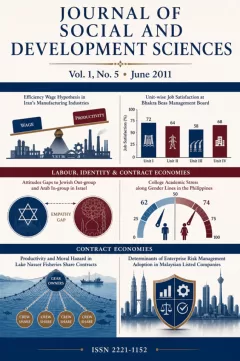
As part of an international research project on reservoir fisheries productivity in developing countries, this paper examines contractual relations in the Lake Nasser fishery, seeking to understand why so many seemingly redundant contract types coexist and what effect they have on productivity. Based on the results of a socio-economic survey conducted in the fishery and drawing on the literature on agricultural sharecropping and share remuneration systems in fisheries, the paper analyses the roles of the different contracts observed in the Lake Nasser fishery. In particular, it discusses the incentives, limitations, and opportunities that these contracts offer to the different groups of actors (gear owners, license owners, crew members), and shows how these arrangements influence and shape the fishing strategies, capital mobilisation, and ultimately labour productivity of those different groups. While the debate on share contracts generally seeks to assess their efficiency relative to other types of contracts, this paper argues that the relevant question is not how efficient the contracts are, but what functions are served by the various co-existing contracts, and why different actors may choose each type. While the standard explanations of risk management and the impossibility of close supervision seem to provide some insight into this, it is also clear that the actors in the fishery use these contracts to mobilise capital and combine productive resources with other actors. This interlinking is a key function of the contracts, and the diversity of resource endowments and needs of the different actors helps explain the diversity of contract types.
Keywords
- Small Scale Fisheries Search this journal for Small Scale Fisheries (opens in a new tab)
- Contracts Search this journal for Contracts (opens in a new tab)
- Sharecropping Search this journal for Sharecropping (opens in a new tab)
- Incentives Search this journal for Incentives (opens in a new tab)
- Risk Management Search this journal for Risk Management (opens in a new tab)
References
- Alexander, P. (1982). Sri Lankan fishermen - Rural capitalism and peasant society. Canberra: Australian National University Press.
- Anderson, L. G. (1982). The share system in open-access and optimally regulated fisheries. Land Economics, 58 (4), 435-449.
- Bardhan, P. K., & Srinivasan, T. N. (1971). Cropsharing tenancy in agriculture: A theoretical and empirical analysis. American Economic Review, 61 (1), 48-64.
- Barranaia, A. (2000). Harvesting, transporting, processing and marketing of fish. In J. F. Craig (Ed.), Sustainable Fish Production in Lake Nasser: Ecological Basis and Management Policy (95-97). Penang: ICLARM.
- Bell, C. (1977). Alternative theories of share-cropping: Some tests using evidence from Northeast India. Journal of Development Studies, 13 (4), 317-346.
- Béné, C. (1997). Control of skippers' fishing strategies and crew labour by companies: Role of the remuneration system. Aquatic Living Resources, 10 (3), 127-136.
- Béné, C., Bandi, B., & Durville, F. (2008). Liberalization reform, 'neo-centralism', and black market: The political dis-economy of Lake Nasser fishery development. Water Alternatives, 1 (2), 219-235.
- Bhaduri, A. (1983). Cropsharing as a labor process. In T. Byers (Ed.), Sharecropping and Sharecroppers (85-93). London: Frank Cass.
- Binswanger, H., & McIntire, J. (1987). Behavioral and material determinants of production relations in land-abundant tropical agriculture. Economic Development and Cultural Change, 36 (1), 73-99.
- Binswanger, H., & Rosenzweig, M. (1986). Behavioural and material determinants of production relations in agriculture. Journal of Development Studies, 22 (3), 503-539.
- Braverman, A., & Srinivasan, T. N. (1981). Credit and sharecropping in agrarian societies. Journal of Development Economics, 9 (3), 289-312.
- Braverman, A., & Stiglitz, J. (1982). Sharecropping and the interlinking of agrarian markets. American Economic Review, 72 (4), 695-715.
- Cheung, S. (1969). The theory of share tenancy. Chicago: University of Chicago Press.
- Crul, R., & Roest, F. (1995). Current status of fisheries and fish stocks of the four largest African reservoirs: Kainji, Kariba, Nasser/Nubia and Volta. CIFA Technical Paper No. 30. Rome: Food and Agriculture Organisation.
- ENCC. (2006). Egyptian Competitiveness Report 2005-2006. Cairo: Egyptian National Competitiveness Council.
- Firth, R. (1966). Malay fishermen, their peasant economy. London: Routledge & Kegan Paul.
- IFAD. (2005). Arab Republic of Egypt - Country programme evaluation. Report 1658-EG. International Fund for Agricultural Development, Cairo.
- Johnson, G. (1950). Resource allocation under share contracts. Journal of Political Economy , 58 , 111-123.
- Kruseman, G., & Vullings, W. (2007). Rural development policy in Egypt towards 2025. Wageningen: Alterra.
- Laffont, J. J., & Matoussi, M. S. (1995). Moral hazard, financial constraints and sharecropping in El Oulja. The Review of Economic Studies, 62 (3), 381-399.
- Latif, A. (1974). Fisheries of Lake Nasser. Aswan: Lake Nasser Development Authority.
- Marshall, A. (1890). Principles of economics. London: Macmillan.
- McConnell, K., & Price, M. (2006). The lay system in commercial fisheries: Origin and implications. Journal of Environmental Economics and Management , 51 (3), 295-307.
- McGoodwin, J. (2001). Understanding the cultures of fishing communities - A key to fisheries management and food security. FAO Fisheries Technical Paper No.401, Rome: Food and Agriculture Organisation.
- Mohieldin, M. S., & Wright, P. W. (2000). Formal and informal credit markets in Egypt. Economic Development and Cultural Change, 48 (3), 657-670.
- Newberry, D. (1977). Risk sharing, sharecropping, and uncertain labour markets. Review of Economic Studies , 44 (3), 585-594.
- Newbery, D., & Stiglitz, J. (1979). Sharecropping, risk sharing, and the importance of imperfect information. In J. A. Roumasset, J.-M. Boussard, & I. Singh (Eds.), Risk, Uncertainty and Agricultural Development (311-341). New York: Southeast Asian Regional Center for Graduate Study and Research in Agriculture, Agricultural Development Council.
- Pearce, R. (1983). Sharecropping: Towards a Marxist view. In T. Byers (Ed.), Sharecropping and Sharecroppers (42-70). London: Frank Cass.
- Platteau, J. P., & Balland, J. M. (1989). Income sharing through work spreading arrangement: An economic analysis with specific reference to small-scale fishing. Namur, Belgium: Cahier de la Faculté des Sciences Economiques et Sociales, Facultés Universitaires.
- Platteau, J.-P., & Nugent, J. (1992). Share contracts and their rationale: Lessons from marine fishing. Journal of Development Studies, 28 (3), 386-422.
- Plourde, C., & Smith, J. B. (1989). Crop sharing in the fishery and industry equilibrium. Marine Resource Economics, 6 (3), 179-193.
- Rashed, D. (2005, 31 March - 6 April 2005). Fishing for investments. Al Ahram (Issue 736).
- Reid, J. (1987). On the theory of sharecropping: Occam's razor and economic analysis. History of Political Economy, 19 (4), 551-569.
- Reid, J. (1976). Sharecropping and agricultural uncertainty. Economic Development and Cultural Change, 24 (3), 549-576.
- Roumasset, J., & Uy, M. (1987). Agency costs and the agricultural firm. Land Economics, 63 (3), 290-302.
- Schickele, R. (1941). Effects of tenure systems on agricultural efficiency. Journal of Farm Economics, 23 (1), 185-207.
- Smith, A. (1776). An inquiry into the nature and causes of the wealth of nations.
- Stiglitz, J. (1974). Incentives and risk sharing in sharecropping. Review of Economic Studies, 41 (2), 219255.
- Sutinen, J. G. (1979). Fishermen's remuneration systems and implications for fisheries development. Scottish Journal of Political Economy , 26 (2), 147-162.
- Taslim, M. (1992). A survey of theories of cropshare tenancy. The Economic Record , 68 (3), 254-275.
- UNDP. (2004). Egypt human development report 2004. Cairo: United Nations Development Program & Institute of National Planning.
- Zeller, M., & Sharma, M. (1998). Rural finance and poverty alleviation. Washington, DC: International Food Policy Research Institute.
- Zoeteweij, H. (1956). Fishermen's remuneration. In R. Turvey, & J. Wiseman (Eds.), The Economics of Fisheries (18-41). Rome: FAO.
Downloads
No downloads have been recorded for this article yet. Figures appear here once readers begin downloading the full text.
How to Cite
Share this article
License
Copyright (c) 2011 Cambria Finegold, Christophe Béné, Mohamed Shehata, Olfat Anwar Habib (Author)

This work is licensed under a Creative Commons Attribution 4.0 International License.
Author (s) should affirm that the material has not been published previously. It has not been submitted and it is not under consideration by any other journal. At the same time author (s) need to execute a publication permission agreement to assume the responsibility of the submitted content and any omissions and errors therein. After submission of revised paper in the light of suggestions of the reviewers, the editorial team edits and formats manuscripts to bring uniformity and standardization in published material.
This work will be licensed under Creative Commons Attribution 4.0 International (CC BY 4.0) and under condition of the license, users are free to read, copy, remix, transform, redistribute, download, print, search or link to the full texts of articles and even build upon their work as long as they credit the author for the original work. Moreover, as per journal policy author (s) hold and retain copyrights without any restrictions.
Keywords
- Small Scale Fisheries Search this journal for Small Scale Fisheries (opens in a new tab)
- Contracts Search this journal for Contracts (opens in a new tab)
- Sharecropping Search this journal for Sharecropping (opens in a new tab)
- Incentives Search this journal for Incentives (opens in a new tab)
- Risk Management Search this journal for Risk Management (opens in a new tab)
Section
Published
Submissions
Have research to publish? Journal of Social and Development Sciences welcomes submissions.
Make a Submission