Abstract
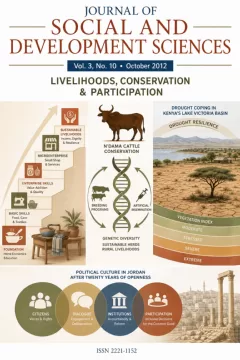
Regular access to genetically superior bulls from an open nucleus breeding system is an impetus for N’Dama cattle utilization and conservation. However, shortage in the number of bulls that could be distributed to the farmers for subsequent breeding remains a challenge in some countries of West Africa. In this regard, the potential benefit of artificial insemination (AI) and the roles of national policy were assessed. The open nucleus-breeding scheme of International Trypanotolerance Center (ITC) in the Gambia was used as a case study and the research questions were answered with literature review, focus group discussion, and Likert-scale questionnaire. Introduction of AI into the breeding scheme of N’Dama cattle can create higher selection intensity and promote a wider dissemination of genetic gain made at the nucleus. With improved AI techniques, a better use of improved N’Dama bulls can be achieved. Notwithstanding, there are concerns about low pregnancy rate, quality of the semen, inadequate knowledge of AI technicians, and the regular availability of quality bulls. For the Gambian national policy, the environmental component is the most relevant for conservation of N’Dama cattle. This can be buttressed with more flexibility and a clearer communication of the objectives through workshops and local media.
Keywords
- N'Dama Search this journal for N'Dama (opens in a new tab)
- Breeding Search this journal for Breeding (opens in a new tab)
- Conservation Search this journal for Conservation (opens in a new tab)
- Artificial Insemination Search this journal for Artificial Insemination (opens in a new tab)
- Policy Search this journal for Policy (opens in a new tab)
References
- De-Vaus, D. A. (2002). Surveys in Social Research. Allen &Unwin, Crows Nest, Australia, 379.
- Dempfle, L. & Jaitner, J. (2000). Case Study About the N’Dama Breeding Programme at the International Trypanotolerance Centre (ITC) in The Gambia. Paper presented at the Workshop on Developing Breeding Strategies for Lower Input Animal Production Environments, Bella, Italy.
- Floyd, J. F. (2009). Survey Research Methods. Thousand Oaks, USA: Sage Publications.
- Gardner, P. L. (1995). Unidimensionality and Internal Consistence Revisited. Research in Science Education, 25, 238-289.
- Gliem, J. A. & Gliem, R. R. (2003). Calculating, Interpreting, and Reporting Cronbach’s Alpha Reliability Coefficient for Likert-Type Scales. Retrieved from http://hdl.handle.net/1805/344
- Hardeman, W., Johnston, M., Johnston, D. W., Bonetti, D., Wareham, N. J. & Kinmonth, A. L. (2002). Application of the Theory of Planned Behaviour in Behaviour Change Interventions: A systematic Review. Psychology & Health, 17(2), 123-158.
- Kahi, A. K. & Rewe, T. O. (2008). Biotechnology in livestock production: Overview of possibilities for Africa. African Journal of Biotechnology, 7(25), 4984-4991.
- Likert, R. (1932). A technique for the Measurement of Attitudes. Archives of Psychology, 22(140), 1-55.
- Mattioli, R. C., Pandey, V. S., Murray, M. & Fitzpatrick, J. C. (2000). Immunogenetic Influences on Tick Resistances in African Cattle with Particular Reference to Trypanotolerant N’Dama (Bos taurus) and Trypanosusceptible Gobra Zebu (Bos indicus) Cattle. Acta Tropics, 75(3), 93-103.
- Nicolaos, E. S. (2003). The Art of Questionnaire Construction: Some Important Considerations for Manufacturing Studies. Integrated Manufacturing Systems, 14(3), 221-237.
- Notter, D. R. (2004). Conservation Strategies for Animal Genetic Resources. Food and Agriculture Organization Background Study Paper No. 22. Retrieved August 13, 2011, from ftp://ftp.fao.org/docrep/fao/meeting/015/j3568e.pdf
- Nunnally, J. C. & Bernstein, I. H. (1994). Psychometric Theory (3rd ed.). New York: McGraw-Hill.
- Rubin, A. & Babbie, E. R. (2009). Research Methods for Social Work (2nd ed.). Belmont, CA: Brooks/Cole.
- Spector, P. (1992). Summated Rating Scale Construction. Thousand Oaks, USA: Sage Publications Inc.
- Tabachnick, B. G. & Fidell, L. S. (2001). Using Multivariate Statistics (4th ed.). Boston, MA: Allyn & Bacon.
- Van-Arendonk, J. A. M. (2011). The role of reproductive technologies in breeding schemes for livestock populations in developing countries. Livestock Production Science, 136, 29-37.
- Weber, R. P. (1990). Basic Content Analysis. Newbury Park, CA: Sage Publications Inc.
- Wong, L. P. (2008). Focus Group Discussion: A Tool for Health and Medical Research. Singapore Medical Journal, 49(3), 256-261.
Downloads
No downloads have been recorded for this article yet. Figures appear here once readers begin downloading the full text.
How to Cite
Share this article
License
Copyright (c) 2012 Olaniyan, Olawale Festus, Hiemstra, Sipke-Joost (Author)

This work is licensed under a Creative Commons Attribution 4.0 International License.
Author (s) should affirm that the material has not been published previously. It has not been submitted and it is not under consideration by any other journal. At the same time author (s) need to execute a publication permission agreement to assume the responsibility of the submitted content and any omissions and errors therein. After submission of revised paper in the light of suggestions of the reviewers, the editorial team edits and formats manuscripts to bring uniformity and standardization in published material.
This work will be licensed under Creative Commons Attribution 4.0 International (CC BY 4.0) and under condition of the license, users are free to read, copy, remix, transform, redistribute, download, print, search or link to the full texts of articles and even build upon their work as long as they credit the author for the original work. Moreover, as per journal policy author (s) hold and retain copyrights without any restrictions.
Keywords
- N'Dama Search this journal for N'Dama (opens in a new tab)
- Breeding Search this journal for Breeding (opens in a new tab)
- Conservation Search this journal for Conservation (opens in a new tab)
- Artificial Insemination Search this journal for Artificial Insemination (opens in a new tab)
- Policy Search this journal for Policy (opens in a new tab)
Section
Published
Submissions
Have research to publish? Journal of Social and Development Sciences welcomes submissions.
Make a Submission