Abstract
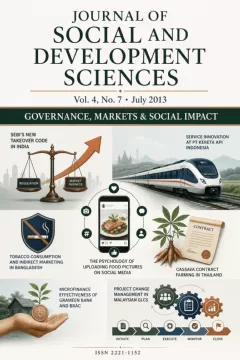
Microcredit is the most effective and successful way to let the poor having access to credit. Research to study its impact on alleviating poverty among the poor is numerous. However, unlike others, our study examines the effectiveness of Grameen Bank and BRAC, the two major micro-financers in alleviating poverty among the most disadvantaged people in Bangladesh. Hitherto, a study of this nature in which two Bangladesh’s micro-financers operating in four districts are surveyed and appraised side by side is hardly at one’s disposal. As such, this study can be considered as pioneering in its attempt. Our study has revealed the followings: (i) the poor are the direct beneficiary of the existing micro-finance institutions in Bangladesh. Nevertheless, some of them, especially those who have accounts in both banks, are having problem to repay the loans. Therefore, a mechanism has to be devised to limit each person to enjoy one loan at a time. In addition, a high percentage of the poor in Bangladesh is looking forward to making loans from interest-free banks; and, (ii) the services rendered by both micro-financers to the poor are still no better than the conventional banks. In fact, more than 50.0 per cent of the respondents have shown their dissatisfaction with the services extended to them. To address this problem, it is highly recommended for both micro financers to improve their services by way of making it mandatory for their staff to undergo relevant training programs.
Keywords
- Micro-finance Institutions Search this journal for Micro-finance Institutions (opens in a new tab)
- Poverty Search this journal for Poverty (opens in a new tab)
- Grameen Bank Search this journal for Grameen Bank (opens in a new tab)
- BRAC Search this journal for BRAC (opens in a new tab)
- Collateral Search this journal for Collateral (opens in a new tab)
References
- Adams, D. W. & Von Pischke, J. (1992). Microenterprise credit programs: Déjà vu. World Development , 20(10), 1463-1470.
- Buckley, G. (1997). Microfinance in Africa: Is it either the problem or the solution? World Development , 25(7), 1081-1093.
- Faruqee, R. & Khalily, B. (2011). Multiple Borrowing by MFI Clients: Current Status and Implications for Fututre of Microfinance. Dhaka: Institute of Microfinance (InM).
- Harper, M. (2003). Microfinance: evolution, achievements and challenges, ITDG.
- Hossain, M. (1988). Credit for alleviation of rural poverty: The Grameen Bank in Bangladesh, International Food Policy Research Institute Washington, DC.
- Hulme, D. (2000). Impact assessment methodologies for microfinance: theory, experience and better practice. World Development , 28(1), 79-98.
- Maes, J. P. & Reed, L. R. (2012). State of the microcredit summit campaign report 2012. Microcredit Summit Campaign: Washington, DC.
- Montgomery, H. & Weiss, J. (2004). Great expectations: Microfinance and poverty reduction in Asia and Latin America, Asian Development Bank Institute.
- Morduch, J. (1999). The microfinance promise. Journal of economic Literature , 37(4), 1569-1614.
- Olivares-Polanco, F. (2005). Commercializing microfinance and deepening outreach? Empirical evidence from Latin America. Journal of Microfinance/ESR Review , 7(2), 47-69.
- Osmani, S. (2011). Asset Accumulation and Poverty Dynamics in Rural Bangladesh: The Role of Microcredit, Working Paper. Dhaka: Institute of Microfinance.
- Schuler, S. R. & Hashemi, G. (1997). The influence of women's changing roles and status in Bangladesh's fertility transition: evidence from a study of credit programs and contraceptive use. World Development , 25(4) 563-575.
- Shahidur, R. (1998). Fighting Poverty with Micro Credit: Experience in Bangladesh, University Press Limited, Dhaka.
- Yunus, M. (2003). Banker to the Poor: Micro-Lending and the Battle Against World Poverty PublicAffairs, New York, 2003, ISBN 978-1-58648-198-8.
Downloads
No downloads have been recorded for this article yet. Figures appear here once readers begin downloading the full text.
How to Cite
Share this article
License
Copyright (c) 2013 Naziruddin Abdullah, Md Shah Jalal Uddin (Author)

This work is licensed under a Creative Commons Attribution 4.0 International License.
Author (s) should affirm that the material has not been published previously. It has not been submitted and it is not under consideration by any other journal. At the same time author (s) need to execute a publication permission agreement to assume the responsibility of the submitted content and any omissions and errors therein. After submission of revised paper in the light of suggestions of the reviewers, the editorial team edits and formats manuscripts to bring uniformity and standardization in published material.
This work will be licensed under Creative Commons Attribution 4.0 International (CC BY 4.0) and under condition of the license, users are free to read, copy, remix, transform, redistribute, download, print, search or link to the full texts of articles and even build upon their work as long as they credit the author for the original work. Moreover, as per journal policy author (s) hold and retain copyrights without any restrictions.
Keywords
- Micro-finance Institutions Search this journal for Micro-finance Institutions (opens in a new tab)
- Poverty Search this journal for Poverty (opens in a new tab)
- Grameen Bank Search this journal for Grameen Bank (opens in a new tab)
- BRAC Search this journal for BRAC (opens in a new tab)
- Collateral Search this journal for Collateral (opens in a new tab)
Section
Published
Submissions
Have research to publish? Journal of Social and Development Sciences welcomes submissions.
Make a Submission