Articles

  • Article 1 in this issue

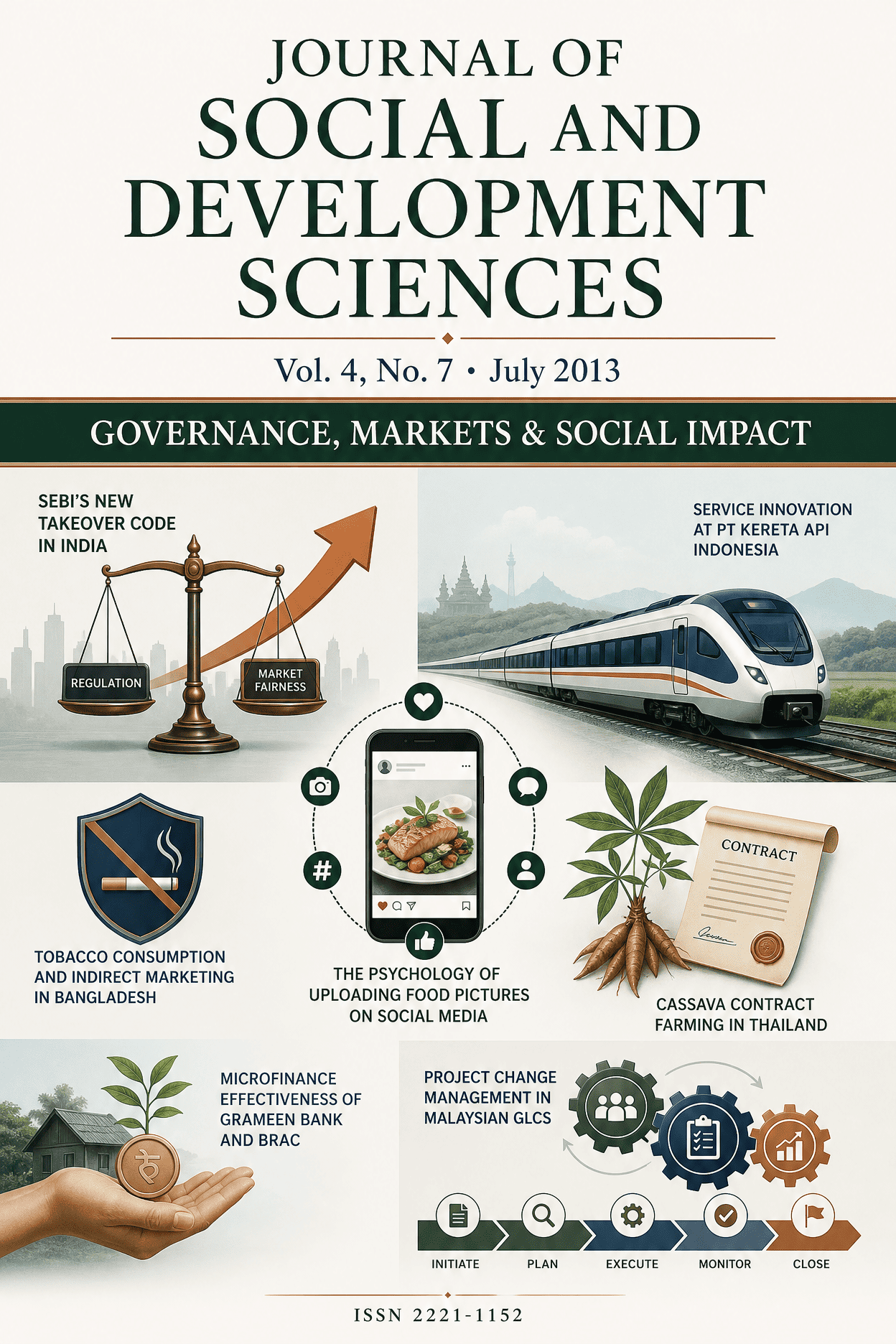
    The New Takeover Code by the Securities and Exchange Board of India

    • Author: Varsha Das, Aishwarya Mishra

    Merger & Acquisition in India have been governed by the age-old takeover rules. It seems that now, the Securities and Exchange Board of India (SEBI) has realized that these rules need to be revamped to keep them in line with the ever-changing global scenario. On September 2011, the SEBI amended the new set of takeover rules i.e.; the SEBI (Substantial Acquisition of Shares and Takeovers) Regulations, 2011. The main purpose is to prevent hostile takeovers and at the same time, provide some more opportunities of exit to innocent shareholders who do not wish to be associated with a particular acquirer. With these rules coming into force, both promoter and public shareholders of a listed company would now get the same price for their shares being purchased by an acquirer. In another shareholder-friendly move, SEBI has scrapped the noncompete fee or control premium, which were being paid to only the promoters earlier and could have been as much as 25% of the public offer price. The SEBI has successfully done one part of the reform process by preparing the new takeover code, the other part requires it successful implementation.

    Pages 303-307

    PDF - The New Takeover Code by the Securities and Exchange Board of India (opens in a new tab)
  • Article 2 in this issue

    Service Innovation in Public Sector : A Case Study on PT. Kereta Api Indonesia

    • Author: Grisna Anggadwita, Wawan Dhewanto

    Innovation is an important key for an organization to win the market competition, both in aspects of organization, culture, and business to produce an excellence service and product. Service innovation has been developed to respond quickly the demand of society that increasingly aware of the importance of quality service. PT. Kereta Api Indonesia (KAI) as one of the Indonesian state-owned companies engaged in public transportation made a breakthrough by launching a service product innovation, purchasing system of train tickets and new trains. This paper analyzes the types of service product innovation, success factors of innovation, and explore the barriers of innovation. This study used qualitative methods based on review of the innovation management literature and semi-structured interviews. The role of leadership has an important influence in shaping the behavior of the organization. These organizational learning concepts are used to gain a dynamic of service innovation, it suggests that the company should still perform improvement processes in developing service innovation to meet the challenges faced.

    Pages 308-315

    PDF - Service Innovation in Public Sector : A Case Study on PT. Kereta Api Indonesia (opens in a new tab)
  • Article 3 in this issue

    The Psychological Effect of Uploading Food Picture on Social Media to Willingness to Dine Out

    • Author: Novia Dwi Resti, Mustika Sufiati Purwanegara

    Lately, people like to capture food picture and post to social media. They share, recommend and critic the food and restaurant to other social media users. Based on exploratory research findings, this phenomenon is assumed having a relation with personality traits, self-concepts and perception of social media users. This paper aims to investigate the effect of restaurant attractiveness, personality, selfconcepts, self-control, and perception to willingness to dine out. Qualitative studies are carried out to get the indicators for designing questionnaires and afterward the questionnaires are distributed by survey. Sample size for qualitative research is 12 respondents who like to post food picture on social media and 102 social media users in Indonesia as respondents for survey. Collected data are analyzed using multivariate analysis. The finding shows that restautant attractiveness, self-concepts, and consumer perception have positive effect to consumer’s willingness to dine out after looking at the posted food picture on social media. Implication of this research can help manager of restaurant or cafe to plan marketing program based on consumer personality and other psychological concepts.

    Pages 316-324

    PDF - The Psychological Effect of Uploading Food Picture on Social Media to Willingness to Dine Out (opens in a new tab)
  • Article 4 in this issue

    An analysis of Factors Contributing to the Increase of Tobacco Consumption in Bangladesh despite Restrictive Anti-Smoking Policies

    • Author: Ahmed Tariful Mursalin, Khan Muhammad Saqiful Alam, Iftekhar Mahfuz

    This paper examines an emerging issue rising up in a developing economy like Bangladesh “Indirect Marketing of Tobacco Products”. This indirect marketing activity is currently moving under the radar of various government monitoring cells. As a result, there is an increase in the number of both underage and legal smokers in the country. The health risks due to the consumptions of the tobacco related products are now one of the widely discussed topics. Worldwide tobacco products are highly discouraged by both medical experts and governments. Governments in both developed and developing countries heavily regulated “Above the Line Marketing Activities” (ATL) utilized by the tobacco companies. Therefore, tobacco companies now employ “Below the Line Marketing Activities” to promote their products. Such activities include point of sale merchandizing, retailer advocacy and various discounting mechanisms. Tobacco companies in Bangladesh also employ such activities to advertise their brand portfolio. Although from a legal point of view, these marketing efforts are only employed to encourage the consumers to switch brands. However, the ripple effect of such marketing activities, growth of cigarette selling outlets (side effects of socio-economic condition of Bangladesh) and inefficiency in rigorous implementation of tobacco laws are encouraging underage/matured population of the country to become occasional smokers, who later on develop habitual smoking despite the restrictive anti-smoking laws. In this research, primary analysis is done through set questionnaires in the Sample Retail Universe (556 retailers randomly chosen from various parts of Bangladesh) along with “Retail Audit” data used to obtain the industry trend analysis. A strong positive correlation can be observed between the industry growth and the different parameters used in the study such as effects of Below the Line Marketing Activity, growth of cigarette selling retail universe and weak implementation anti-smoking policies by the government. The research gives us an insight into the true picture of tobacco industry’s surge with respect to the tobacco consumer behavior and the remedies needed to close the gap.

    Pages 325-331

    PDF - An analysis of Factors Contributing to the Increase of Tobacco Consumption in Bangladesh despite Restrictive Anti-Smoking Policies (opens in a new tab)
  • Article 5 in this issue

    Cassava Smallholders’ Participation in Contract Farming in Nakhon Ratchasrima Province, Thailand

    • Author: Siros Tongchure, Nam Hoang

    The most important raw materials for bio-ethanol in Thailand are cassava, sugar cane and molasses. However, cassava has been promoted as a feed stock for ethanol due to the minimal inputs for planting, high productivity and all-year planting and harvesting. The most important factor influencing ethanol using cassava production is the price of cassava feedstock. Contract farming could decrease production costs, increase efficiency in markets, provide lower interest rates, decrease risk management and create symmetric information for cassava smallholders. The scope of this study includes cassava cultivation and factors influencing contract participation using logit analysis. Results from a survey consisting of 130 non-contractors and 127 contractors showed there was a verbal communication between farmers and agricultural cooperatives and written contractual agreement between agricultural cooperatives and processors. In addition, contract participation is significantly influenced by gender of household head, education of household members, number of agricultural groups, input costs, machinery costs, incomes and credit access.

    Pages 332-338

    PDF - Cassava Smallholders’ Participation in Contract Farming in Nakhon Ratchasrima Province, Thailand (opens in a new tab)
  • Article 6 in this issue

    The Effectiveness of Micro-Finance Institutions in Alleviating Poverty: The Case of Bangladesh’s Grameen Bank and BRAC

    • Author: Naziruddin Abdullah, Md Shah Jalal Uddin

    Microcredit is the most effective and successful way to let the poor having access to credit. Research to study its impact on alleviating poverty among the poor is numerous. However, unlike others, our study examines the effectiveness of Grameen Bank and BRAC, the two major micro-financers in alleviating poverty among the most disadvantaged people in Bangladesh. Hitherto, a study of this nature in which two Bangladesh’s micro-financers operating in four districts are surveyed and appraised side by side is hardly at one’s disposal. As such, this study can be considered as pioneering in its attempt. Our study has revealed the followings: (i) the poor are the direct beneficiary of the existing micro-finance institutions in Bangladesh. Nevertheless, some of them, especially those who have accounts in both banks, are having problem to repay the loans. Therefore, a mechanism has to be devised to limit each person to enjoy one loan at a time. In addition, a high percentage of the poor in Bangladesh is looking forward to making loans from interest-free banks; and, (ii) the services rendered by both micro-financers to the poor are still no better than the conventional banks. In fact, more than 50.0 per cent of the respondents have shown their dissatisfaction with the services extended to them. To address this problem, it is highly recommended for both micro financers to improve their services by way of making it mandatory for their staff to undergo relevant training programs.

    Pages 339-348

    PDF - The Effectiveness of Micro-Finance Institutions in Alleviating Poverty: The Case of Bangladesh’s Grameen Bank and BRAC (opens in a new tab)
  • Article 7 in this issue

    Project implementation success and Change Management practices in Malaysian Government-linked companies (GLCs)

    • Author: Saeed Salem Basamh, Md Najibul Huq, Abdul Rahman Ahmad Dahlan

    The purpose of this research is to address the practices of project change management in the context of Government-Linked Companies (GLCs) in Malaysia, focusing on Project Managers (PMs), Project Team Members (PTMs), Change Managers (CMs) and any other Top Managers involved in a project. Also, checking the validity of a number of critical success factors from Project Implementation Profile (PIP) in the context of GLCs in Malaysia. PIP is a comprehensive managerial tool that was introduced by Pinto and Slevin. Later Belout and Gauvereau have enhanced and re-tested it in their study. Government-linked companies were previously government agencies or public enterprises established to provide services for social purposes. The Malaysian Government considers the importance of the Government-linked companies’ (GLCs) role. Critical success factors (or CSFs) are the actions and processes that can be controlled or affected by management to achieve the goals set by an organization. Many studies has been conducted on Malaysian government-linked companies, but few focused on examining the validity of the critical success factors in these companies where these factors will lead to successful project implementation and assess in change management.

    Pages 349-355

    PDF - Project implementation success and Change Management practices in Malaysian Government-linked companies (GLCs) (opens in a new tab)