Abstract
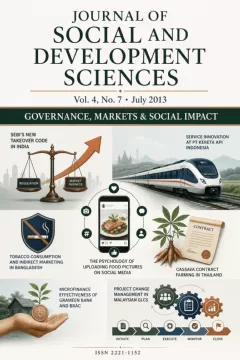
The purpose of this research is to address the practices of project change management in the context of Government-Linked Companies (GLCs) in Malaysia, focusing on Project Managers (PMs), Project Team Members (PTMs), Change Managers (CMs) and any other Top Managers involved in a project. Also, checking the validity of a number of critical success factors from Project Implementation Profile (PIP) in the context of GLCs in Malaysia. PIP is a comprehensive managerial tool that was introduced by Pinto and Slevin. Later Belout and Gauvereau have enhanced and re-tested it in their study. Government-linked companies were previously government agencies or public enterprises established to provide services for social purposes. The Malaysian Government considers the importance of the Government-linked companies’ (GLCs) role. Critical success factors (or CSFs) are the actions and processes that can be controlled or affected by management to achieve the goals set by an organization. Many studies has been conducted on Malaysian government-linked companies, but few focused on examining the validity of the critical success factors in these companies where these factors will lead to successful project implementation and assess in change management.
Keywords
- Change Management Search this journal for Change Management (opens in a new tab)
- Government-linked Companies Search this journal for Government-linked Companies (opens in a new tab)
- Malaysia Search this journal for Malaysia (opens in a new tab)
- Project Implementation Profile Search this journal for Project Implementation Profile (opens in a new tab)
- Critical Success Factors Search this journal for Critical Success Factors (opens in a new tab)
References
- Aggarwal, H. (2010). Critical Success Factors in IT Alignment in Public Sector Petroleum Industry of India. Complexity , 21(21), 22.
- Aldhfayan, F. (2008). Analysis on the role of standardized project management on project performance. Retrieved April 18, 2013 from http://www.strategicstandards.com/files/2008/ProjectManagement08.pdf
- Asemi, A. & Jazi, M. D. (2010). A Comparative Study of Critical Success Factors (CSFs) in Implementation of ERP in Developed and Developing Countries. International Journal , 2(5), 99-110.
- Bavec, C. (2009). On the creative climate and innovativeness at the country level. Proceedings of Rijeka Faculty of Economics. J. Econ. Bus , 27(1), 9-30.
- Belohlav, J. A. (1997). Managing Transitions. Quality Progress , 30(4), 93-96.
- Belout, A. & Gauvreau, C. (2004). Factors influencing project success: the impact of human resource management. International journal of project management , 22(1), 1-11.
- Bhatti, T. R. (2005, September). Critical success factors for the implementation of enterprise resource planning (ERP): empirical validation. In The Second International Conference on Innovation in Information Technology (p. 110).
- Buchanan, D. A. & Huczynski, A. (1985). Organizational behavior: an introductory text. Prentice-Hall International.
- Chomsky, N. (2013). Some notes on economy of derivation and representation. Anuario del Seminario de FilologíaVasca Julio de Urquijo, 53-82.
- Crawford, J. K. (2002). The strategic project office: A guide to improving organization performance.
- Fortune, J. & White, D. (2006). Framing of project critical success factors by a systems model. International Journal of Project Management , 24(1), 53-65.
- Graetz, F. (2000). Strategic change leadership. Management decision , 38(8), 550-564.
- Habib, Z. (2009). The Critical Success Factors in implementation of Software Process Improvement Efforts: CSFs, Motivators & Obstacles. rapport nr: Report/Department of Applied Information Technology 2009: 056.
- Hammond III, J. S. (1979).A practitioner-oriented framework for implementation. The Implementation of Management Science , 35-62.
- Higgins, J. M. & Mcallaster, C. (2004). If you want strategic change, don't forget to change your cultural artifacts. Journal of Change Management , 4(1), 63-73.
- Hussein, R., Abdul Karim, N. S., Mohamed, N. & Ahlan, A. R. (2007). The influence of organizational factors on information systems success in e-government agencies in Malaysia. The Electronic Journal of Information Systems in Developing Countries , 29(2).
- Jones, J., Aguirre, D. & Calderone, M. (2004). 10 Principles of Change Management. Strategy+ Business , 1-5.
- Khang, D. B. & Moe, T. L. (2008). Success criteria and factors for international development projects: A life‐cycle‐based framework. Project Management Journal , 39(1), 72-84.
- Khazanah National. (2013). Frequently asked questions. Retrieved April 18, 2013from http://www.khazanah.com.my/faq.htm
- Kotter, J. P. (1995). Leading change: Why transformation efforts fail. Harvard business review , 73(2), 5967.
- Kumar, V., Maheshwari, B. & Kumar, U. (2002). ERP systems implementation: best practices in Canadian government organizations. Government Information Quarterly , 19(2), 147-172.
- Laframboise, D., Nelson, R. L. & Schmaltz, J. (2002). Managing resistance to change in workplace accommodation projects. Journal of Facilities Management , 1(4), 306-321.
- Lewin, K. (1951). Field theory in social science. Harper & Row, New York.
- Lind, M. R. & Culler, E. The Relationship between Information Technology Critical Success Factors and Project Performance. In The Proceedings of the Conference on Information Systems Applied Research 2009, v 2 (Washington DC): §2362. ISSN: 0000-0000.
- Lindblom, C. K. (1994, April).The implications of organizational legitimacy for corporate social performance and disclosure. In Critical perspectives on accounting conference, New York.
- Nahar, N., Lyytinen, K., Huda, N. & Muravyov, S. V. (2006). Success factors for information technology supported international technology transfer: Finding expert consensus. Information & management , 43(5), 663-677.
- Norhayati, M. A. & Siti-Nabiha, A. K. (2009). A case study of the performance management system in a Malaysian government linked company. Journal of Accounting & Organizational Change , 5(2), 243-276.
- Ogunlana, S. O. (2009). Construction professionals' perception of critical success factors for large-scale construction projects. Construction Innovation: Information, Process, Management , 9(2), 149-167.
- Peter, F. (2003). Applying the Slevin-Pinto project implementation profile to an information systems project. Project Management Journal , 34(3), 32.
- ProSci. (1998). Best Practices in Managing Change. Retrieved April 15, 2013 from http://www.prosci.com.
- Rockart, J. F. (1979). Chief executives define their own data needs. Harvard business review , 57(2), 81.
- Slevin, D. P. & Pinto, J. K. (1986). The project implementation profile: new tool for project managers. Project Management Journal , 17(4), 57-70.
- Syn, T. W. (2002). Centre on Regulation and Competition.
- Trader-Leigh, K. E. (2002). Case study: identifying resistance in managing change. Journal of Organizational Change Management , 15(2), 138-155.
- Turner, J. R. & Müller, R. (2005). The project manager's leadership style as a success factor on projects: a literature review. Project management journal , 36(2), 49-61.
- vonUrffKaufeld, N., Chari, V. & Freeme, D. (2009). Critical Success Factors for Effective IT Leadership. In Proceedings of the 2nd European Conference on Information Management and Evaluation (p. 433). Academic Conferences Limited.
- Yu, A. T., Shen, Q., Kelly, J. & Hunter, K. (2006). Investigation of critical success factors in construction project briefing by way of content analysis. Journal of Construction Engineering and management , 132(11), 1178-1186.
Downloads
No downloads have been recorded for this article yet. Figures appear here once readers begin downloading the full text.
How to Cite
Share this article
License
Copyright (c) 2013 Saeed Salem Basamh, Md Najibul Huq, Abdul Rahman Ahmad Dahlan (Author)

This work is licensed under a Creative Commons Attribution 4.0 International License.
Author (s) should affirm that the material has not been published previously. It has not been submitted and it is not under consideration by any other journal. At the same time author (s) need to execute a publication permission agreement to assume the responsibility of the submitted content and any omissions and errors therein. After submission of revised paper in the light of suggestions of the reviewers, the editorial team edits and formats manuscripts to bring uniformity and standardization in published material.
This work will be licensed under Creative Commons Attribution 4.0 International (CC BY 4.0) and under condition of the license, users are free to read, copy, remix, transform, redistribute, download, print, search or link to the full texts of articles and even build upon their work as long as they credit the author for the original work. Moreover, as per journal policy author (s) hold and retain copyrights without any restrictions.
Keywords
- Change Management Search this journal for Change Management (opens in a new tab)
- Government-linked Companies Search this journal for Government-linked Companies (opens in a new tab)
- Malaysia Search this journal for Malaysia (opens in a new tab)
- Project Implementation Profile Search this journal for Project Implementation Profile (opens in a new tab)
- Critical Success Factors Search this journal for Critical Success Factors (opens in a new tab)
Section
Published
Submissions
Have research to publish? Journal of Social and Development Sciences welcomes submissions.
Make a Submission