Abstract
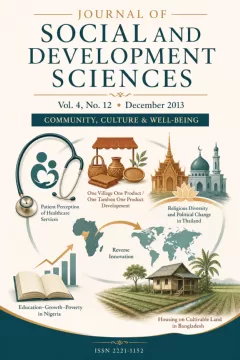
Thailand continues to undergo a process of political modernization, moving from a feudal to a fully-fledged and modernized capitalist society. This is a process that has involved numerous missteps and backward turns – most recently the 2006 military coup and the 2010 massacres – and the dissolution of previously existing cultural and social bonds. Marketization of all regions of the country has brought about changes in land ownership, social relations and gender relations but has not, as yet, brought about changes in religious beliefs or in the relationships between people of different belief systems. The majority Buddhist philosophy has been invigorated by emphasis placed on figures such as the goddess Guan Yin, who is eminently appropriate for the age of plenty, while animist hill tribes people incorporate new ways of life into a flexible and accommodating belief system. Only in the southern provinces bordering Malaysia, where the majority of people are ethnic Malay Muslims, is there a division between people based on religion. A faction of people in the border regions have been agitating for autonomous rule or, at least, an end to unfair and unpleasant treatment by high-handed representatives of the Thai state and their mandate to enforce the longstanding triumvirate of Thai language, Buddhist belief and respect for the monarchy as defining characteristics of citizens. Agitation has led to acts of terrorism and suppression including atrocities on both sides. These divisions are not reflected in any other part of the country, although plenty of other symptoms of division are.
Keywords
References
- Aphornsuvan, T. (2008). Origins of Malay Muslim ‘Separatism’ in Southern Thailand, in Michael J. Montesano and Patrick Jory, eds., Thai South and Malay North: Ethnic Interactions on a Plural Peninsula (Singapore: NUS Press, 2008), 91-123.
- Jitpirornsiri, S. & McCargo, D. (2008). New Governance Proposals for Thailand’s Southern Region. Contemporary Southeast Asia , 30(3), 403-28.
- Kitiarsa, P. (2012). Mediums, Monks, and Amulets: Thai Popular Buddhism Today (Chiang Mai: Silkworm Books).
- Kuanpoonpol, P. (1990). Court Brahmans of Thailand and the Celebration of the Brahmanic New Year. Indo-Iranian Journal , 33(1), 31-51.
- Scupin, R. (1998). Muslim Accommodation in Thai Society. Journal of Islamic Studies , 9(2), 229-58.
- Syukai, I. (1985). History of the Malay Kingdom of Patani (Athens, OH: Ohio University), translated by Conner Bailey and John N. Miksic.
Downloads
No downloads have been recorded for this article yet. Figures appear here once readers begin downloading the full text.
How to Cite
Share this article
License
Copyright (c) 2013 Petcharat Lovichakorntikul, John Walsh (Author)

This work is licensed under a Creative Commons Attribution 4.0 International License.
Author (s) should affirm that the material has not been published previously. It has not been submitted and it is not under consideration by any other journal. At the same time author (s) need to execute a publication permission agreement to assume the responsibility of the submitted content and any omissions and errors therein. After submission of revised paper in the light of suggestions of the reviewers, the editorial team edits and formats manuscripts to bring uniformity and standardization in published material.
This work will be licensed under Creative Commons Attribution 4.0 International (CC BY 4.0) and under condition of the license, users are free to read, copy, remix, transform, redistribute, download, print, search or link to the full texts of articles and even build upon their work as long as they credit the author for the original work. Moreover, as per journal policy author (s) hold and retain copyrights without any restrictions.
Keywords
Section
Published
Submissions
Have research to publish? Journal of Social and Development Sciences welcomes submissions.
Make a Submission