Articles

  • Article 1 in this issue

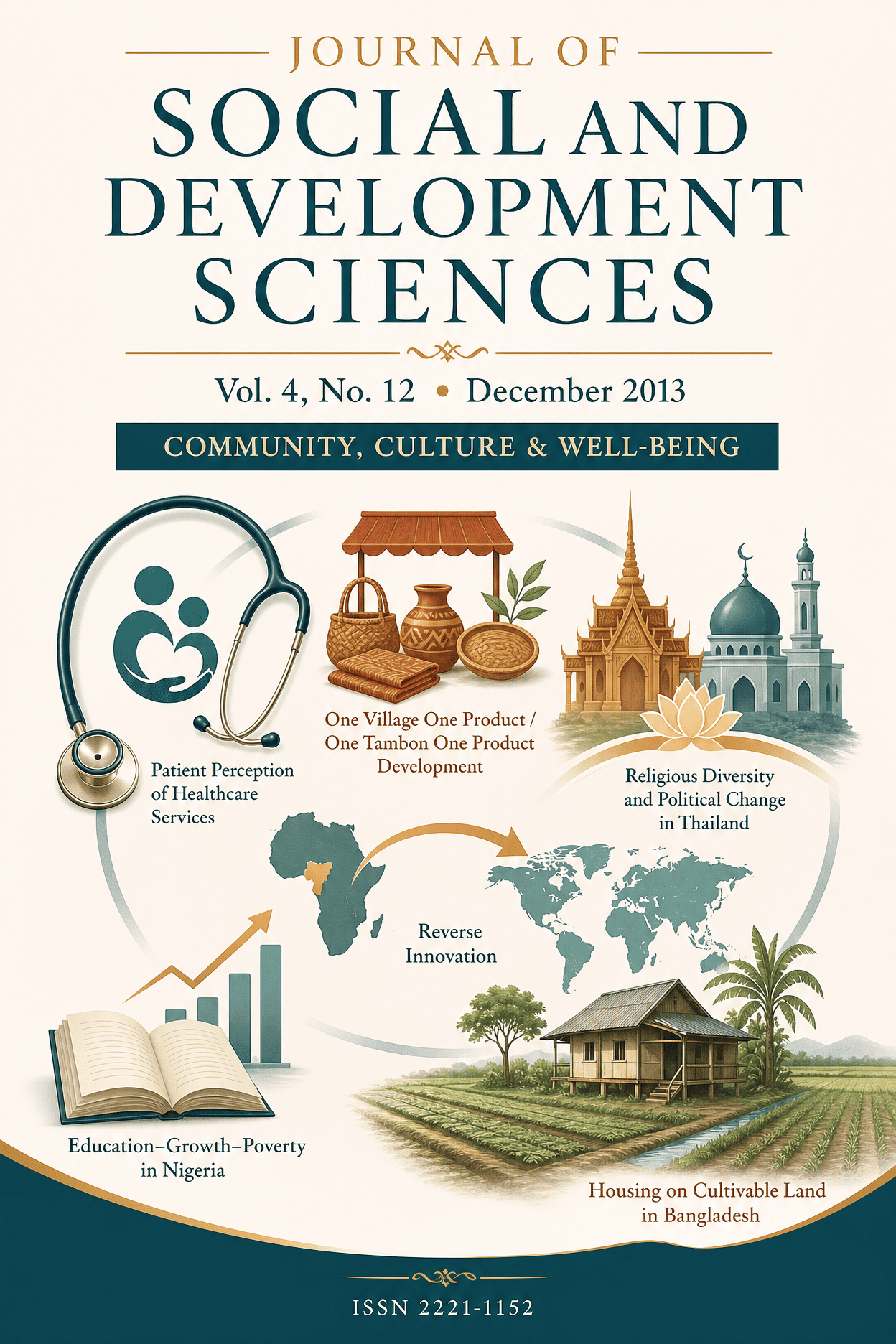
    Patient Perception of Health Care Services: A Comparative Study

    • Author: Rashmi Ananth Pai, Jayashree S. Bhat

    Assessment of patient satisfaction is a measurement that obtains information or ratings from patients about their perception of the services being provided from an organization, hospital, physician, or healthcare provider and plays an increasingly important role toward accountability among health care providers. The present study aimed at comparing the patient’s perception of services being provided in the government and private sectors. 120 patients (60 from each sector) natively from Karnataka, India with knowledge of English participated in this study. Subjects were asked to rate their experiences before, during and after consultation. A checklist to rate the patient satisfaction was developed. The checklist comprised of 11 questions covering the most important domains pertaining to patient satisfaction about the health care services provided. Obtained responses were statistically compared using independent t test. Significant differences in the satisfaction levels of the subjects in the government and the private set ups were seen at p< 0.05 (t=2.921, 118). In government sector patients were better satisfied with certain aspects like the cost factor, information provided about the problem and guidance regarding intervention whereas the patients in the private sector were better satisfied with the orientation to the department, information furnished about the problem, comfort and privacy during the testing procedure.

    Pages 526-528

    PDF - Patient Perception of Health Care Services: A Comparative Study (opens in a new tab)
  • Article 2 in this issue

    One Village One Product (OVOP) in Japan to One Tambon One Product (OTOP) in Thailand: Lessons for Grass Root Development in Developing Countries

    • Author: Nguyen Thi Anh Thu

    Following the 1997 Asian Financial Crisis, Thailand’s economy which did rely on external capital and resources suffered from an imbalanced economic growth. As a solution to the economic restructuring process, endogenous development concept proved to be an alternative development paradigm which prioritizes the community development, human empowerment in the transformation of local resources. Accordingly, One Tambon One Product (OTOP) was designed to unlock grass-root potentials by generating income through developing local products in a national, regional, and global scale. This initiative was first developed under the name of One Village One Product (OVOP) by local people in the poorest Oita Prefecture, Japan in 1961. The aim of the paper is to compare two development models of OVOP and OTOP. The comparative study draws useful lessons from the experience of OTOP for future applications of the OVOP model in developing economies. The paper finds that there are inevitable differences in terms of administration, finance management, human resource management, and marketing promotion management between bottom-up OVOP in Japan and top-down OTOP because of social diversity, political culture, and economic capability in Thailand. The paper contributes to provide a comparative study into models of sustainable development in the context of increasing gap between the urban and rural in globalization.

    Pages 529-537

    PDF - One Village One Product (OVOP) in Japan to One Tambon One Product (OTOP) in Thailand: Lessons for Grass Root Development in Developing Countries (opens in a new tab)
  • Article 3 in this issue

    Religious Diversity and Political Change in Thailand

    • Author: Petcharat Lovichakorntikul, John Walsh

    Thailand continues to undergo a process of political modernization, moving from a feudal to a fully-fledged and modernized capitalist society. This is a process that has involved numerous missteps and backward turns – most recently the 2006 military coup and the 2010 massacres – and the dissolution of previously existing cultural and social bonds. Marketization of all regions of the country has brought about changes in land ownership, social relations and gender relations but has not, as yet, brought about changes in religious beliefs or in the relationships between people of different belief systems. The majority Buddhist philosophy has been invigorated by emphasis placed on figures such as the goddess Guan Yin, who is eminently appropriate for the age of plenty, while animist hill tribes people incorporate new ways of life into a flexible and accommodating belief system. Only in the southern provinces bordering Malaysia, where the majority of people are ethnic Malay Muslims, is there a division between people based on religion. A faction of people in the border regions have been agitating for autonomous rule or, at least, an end to unfair and unpleasant treatment by high-handed representatives of the Thai state and their mandate to enforce the longstanding triumvirate of Thai language, Buddhist belief and respect for the monarchy as defining characteristics of citizens. Agitation has led to acts of terrorism and suppression including atrocities on both sides. These divisions are not reflected in any other part of the country, although plenty of other symptoms of division are.

    Pages 538-541

    PDF - Religious Diversity and Political Change in Thailand (opens in a new tab)
  • Article 5 in this issue

    Education, Economic Growth & Poverty Rate in Nigeria: Any Nexus?

    • Author: Ehigiamusoe, Uyi Kizito

    Education is seen as a veritable tool for the socio-political and economic emancipation of any country from the shackles of ignorance, poverty, unemployment and low economic growth. But despite the enormous increase in education expenditure and literacy rate in Nigeria in the past two decades, noninclusive growth and high poverty rate still permeate all facets of human endeavour. In this light, the paper examines the interrelationships among education, economic growth and poverty in Nigeria. The study adopts econometrics methodology as the analytical tool using secondary data from 1980-2012. Evidence from the study suggests that though a long-run relationship exists among education, economic growth and poverty rate in Nigeria, but neither total education expenditure nor literacy rate cause changes in poverty rate in Nigeria. While government expenditure on education was found to have a positive and significant impact on economic growth (both in the short-run and in the long-run), literacy rate has positive but insignificant impact on growth. This could be due to high rate of unemployed school leavers, weak institutional mechanism, obsolete school curricula, shortage of critical infrastructure, and brain drain syndrome which characterize the country. The paper therefore recommended an increase in budgetary allocation to education as well as a review of the school curricula with a view to making the educational system more responsive to growth and poverty reduction in Nigeria. Government should also create the enabling environment for the creation of jobs through the provision of critical infrastructure which accelerate the development of small scale enterprises. This will provide gainful employment for school leavers and make them contribute more to inclusive growth and poverty reduction in Nigeria.

    Pages 544-553

    PDF - Education, Economic Growth & Poverty Rate in Nigeria: Any Nexus? (opens in a new tab)
  • Article 6 in this issue

    Rationalizing the Choice of Housing on Cultivable Land: Is Cash-Return the Only Determinant?

    • Author: Zobayer Ahmed, Pronab Kumar Saha

    Society faces numerous problems due to high population growth where housing along with other settlements is a notable concern. Horizontal expansion of housing on cultivable land in rural area reduces the availability of land for cultivation. The study is a combination of both quantitative and qualitative in nature based on primary data, carried out in a village in Comilla, an eastern district of Bangladesh during April 2012. The study finds that the households receive returns both in cash as well as in kind from new homesteads made on cultivable land. The cash benefit received by households at new place is Tk. 156238.14 on an average per year in 2011 price and on an average the cash investment per year in 2011 price (inflation adjusted) for housing is Tk. 213108.1818 (weighted average). This clearly indicates a cash loss from housing on cultivable land from household’s perspective. However, statistically the cash investment for housing in rural area is not significantly different from the cash return received by the households at 5% level of significance. Thus it becomes an important question whether the household’s choice of making new home on cultivable land is a rational choice or not. Further, the amount of money each household spent for housing could have been used for a higher cash return through some alternative investments. The study reveals, households derive positive utility (non cash returns) from new homes notwithstanding cash loss and other investment options forgone. The study further argues that if the government or any authority is to take some steps regarding the declining trend of cultivable land in rural areas, the perspectives of the households must be considered with great attention.

    Pages 554-564

    PDF - Rationalizing the Choice of Housing on Cultivable Land: Is Cash-Return the Only Determinant? (opens in a new tab)