Abstract
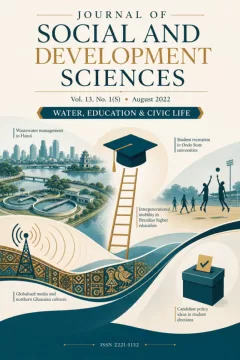
Hanoi is known as the City of Lakes because there are some one hundred natural or manmade watercourses within its territory. However, in common with all of Vietnam, more than 60% of the city’s water resources derive from beyond the country’s borders. Much of that water is polluted, both within Hanoi and downstream because wastewater is discharged directly into the Nhue and Day rivers via the Nhat Tuu and Ba sewers, among other channels. International attempts to revive the To Lich River in the city, notorious for its black color and unwholesome smell, have proved to have only limited success. There is some scope for new materials to improve filtration effects and experiments in this area continue. Rapid urbanization in Hanoi has been intensified by the sudden decision to increase the city’s size so that it became comparable to the southern capital of Ho Chi Minh City. This has led to large areas of industrial land being incorporated into municipal water management systems. One possible means of relieving the pressure on these systems would be to employ approaches derived from the soft path of water management. To date, most scientific investigation of these issues depends almost entirely on technocratic approaches to water management issues and the attempt to force technical solutions to deal with social issues. Consequently, this paper investigates the possibility of understanding how Hanoi residents interact with current wastewater management approaches and how their needs might be better met in the future.
Keywords
References
- An, C. J. (2015). Multi-Soil-Layering Systems for Wastewater Treatment in Small and Remote Communities. Journal of Environmental Informatics. https://doi.org/10.3808/jei.201500328
- Anh, P. (2019). Food Safety, Air Pollution Top Social Concerns in Vietnam. VN Express. ARUP. (2017). Analysis of the water sector.
- Brix, H. & Arias, C. A. (2005). The use of vertical flow constructed wetlands for on-site treatment of domestic wastewater: New Danish guidelines. Ecological Engineering , 25(5), 491–500. https://doi.org/10.1016/j.ecoleng.2005.07.009
- Chadde, S. (1998). A great lakes wetlands flora (2nd ed.).
- DANIERE, A. G. & TAKAHASHI, L. M. (1999). Poverty and Access: Differences and Commonalities across Slum Communities in Bangkok. Habitat International , 23(2), 271–288. https://doi.org/10.1016/S01973975(98)00052-6
- Farahbakhshazad, N. & Morrison, G. M. (1997). Ammonia Removal Processes for Urine in an Up-flow Macrophyte System. Environmental Science & Technology , 31(11), 3314–3317. https://doi.org/10.1021/es970359w
- Gleick, P. H. (2002). Water management: soft water paths. Nature , 418(6896), 373–373. https://doi.org/10.1038/418373a
- Global Water Partnership. (2006). Local action through area water partnerships.
- Hai, V. (2019, November 19). Hanoi Plans Wastewater Discharge Fee in Pollution Fight. VN Express . https://e.vnexpress.net/news/news/hanoi-plans-wastewater-discharge-fee-in-pollution-fight4014135.html
- Hanoi Tap Water ‘Safe for Consumption after Contamination Episode: City Leader. (2019, October 22). Tuoi Tre News.
- Harvey, D. (2005). The ‘New’ Imperialism: Accumulation by Dispossession. Socialist Register , 40, 63–87.
- Kadlec, R. H. & Knight, R. L. (1996). Treatment Wetlands. CRC Press.
- Kadlec, R. H. & Wallace, S. (2009). Treatment Wetlands (2nd ed.). CRC Press.
- Kerkvliet, B. J. T. (2005). The Power of Everyday Politics: How Vietnamese Peasants Transformed National Policy. Cornell University Press.
- Libralato, G., Volpi Ghirardini, A. & Avezzù, F. (2012). To centralize or to decentralize: An overview of the most recent trends in wastewater treatment management. Journal of Environmental Management , 94(1), 61–68. https://doi.org/10.1016/j.jenvman.2011.07.010
- Lincoln, M. (2008). Report from the field: street vendors and the informal sector in Hanoi. Dialectical Anthropology , 32(3), 261–265. https://doi.org/10.1007/s10624-008-9062-9
- Loan, D. (2019, October 21). Fragmented Hanoi Water Supply System Cannot Respond to Crises, Former Official Says. VN Express.
- Luanmanee, S., Attanandana, T., Masunaga, T. & Wakatsuki, T. (2001). The efficiency of a multi-soil-layering system on domestic wastewater treatment during the ninth and tenth years of operation. Ecological Engineering , 18(2), 185–199. https://doi.org/10.1016/S0925-8574(01)00077-5
- Ma, L., He, F., Sun, J., Huang, T., Xu, D., Zhang, Y. & Wu, Z. (2015). Effects of flow speed and circulation interval on water quality and zooplankton in a pond–ditch circulation system. Environmental Science and Pollution Research , 22(13), 10166–10178. https://doi.org/10.1007/s11356-015-4195-2
- Mahmood, Q., Pervez, A., Zeb, B. S., Zaffar, H., Yaqoob, H., Waseem, M., Zahidullah. & Afsheen, S. (2018). Corrigendum to “Natural Treatment Systems as Sustainable Eco technologies for the Developing Countries.” BioMed Research International, 2018, 1–2. https://doi.org/10.1155/2018/4761769
- Matamoros, V. & Bayona, J. M. (2013). Removal of Pharmaceutical Compounds from Wastewater and Surface Water by Natural Treatments, 409–433. https://doi.org/10.1016/B978-0-444-62657-8.00012-4
- McGee, T. C. (1967). The Southeast Asian City. Harper Collins. Ministry of Health. (2017). Health statistics yearbook.
- Ministry of Natural Resources and Environment. (2017). Report on the current state of the environment in 2016. Chapter 3: Water environment.
- Moreno, C., Farahbakhshazad, N. & Morrison, G. M. (2002). Ammonia removal from oil refinery effluent in vertical up flow macrophyte column systems. Water, Air, and Soil Pollution , 135(1/4), 237–247. https://doi.org/10.1023/A:1014753817216
- Nga, N. T. H. (2014). Application ash soil and laterite for water treatment.
- Nguyen, T. H. C. (2017). Access to and Usage of Clean Water in Peri-Urban Vietnam: A Case Study of Gia Lam District, Hanoi. RCSD.
- Odendaal, P. E. (2002). Integrated Water Resources Management (IWRM), with special reference to sustainable Urban Water Management.
- Paruch, A. M., Mæhlum, T., Eltun, R., Tapu, E. & Spinu, O. (2019). Green wastewater treatment technology for agritourism business in Romania. Ecological Engineering , 138, 133–137. https://doi.org/10.1016/j.ecoleng.2019.07.005
- Sato, K., Masunaga, T. & Wakatsuki, T. (2005). Water Movement Characteristics in a Multi-Soil-Layering System. Soil Science and Plant Nutrition , 51(1), 75–82. https://doi.org/10.1111/j.17470765.2005.tb00009.x
- Sen. (2019, June 11). World Bank Sounds Warning about Vietnam’s Gloomy Water Situation. VN Express.
- Singh, R. & Kumar, S. (2017). Green Technologies and Environmental Sustainability. Springer International Publishing. https://doi.org/10.1007/978-3-319-50654-8
- Turner, S. & Oswin, N. (2015). Itinerant livelihoods: Street vending-scrapes and the politics of mobility in upland socialist Vietnam. Singapore Journal of Tropical Geography , 36(3), 394–410. https://doi.org/10.1111/sjtg.12114
- Wolff, G. & Gleick, P. H. (2002). The Soft Path for Water. In P. H. Gleick (Ed.), The World’s Water 2002–2003 , 3, 1–32. Island Press.
- Wright-Contreras, L., March, H. & Schramm, S. (2017). Fragmented landscapes of water supply in suburban Hanoi. Habitat International , 61, 64–74. https://doi.org/10.1016/j.habitatint.2017.02.002
Downloads
No downloads have been recorded for this article yet. Figures appear here once readers begin downloading the full text.
How to Cite
Share this article
License
Copyright (c) 2022 Nguyen Thi Thu Trang, John Walsh, Robert McClelland (Author)

This work is licensed under a Creative Commons Attribution 4.0 International License.
Author (s) should affirm that the material has not been published previously. It has not been submitted and it is not under consideration by any other journal. At the same time author (s) need to execute a publication permission agreement to assume the responsibility of the submitted content and any omissions and errors therein. After submission of revised paper in the light of suggestions of the reviewers, the editorial team edits and formats manuscripts to bring uniformity and standardization in published material.
This work will be licensed under Creative Commons Attribution 4.0 International (CC BY 4.0) and under condition of the license, users are free to read, copy, remix, transform, redistribute, download, print, search or link to the full texts of articles and even build upon their work as long as they credit the author for the original work. Moreover, as per journal policy author (s) hold and retain copyrights without any restrictions.
Keywords
Section
Published
Submissions
Have research to publish? Journal of Social and Development Sciences welcomes submissions.
Make a Submission