Abstract
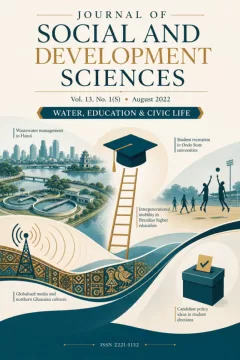
The paper aims to analyze the levels of educational intergenerational mobility of students graduating from higher education in the years 2004 and 2018 and to identify the characteristics associated with the chances of higher levels of educational intergenerational mobility. The paper's main contribution is to provide evidence regarding how public policies contributed to intergenerational mobility. Moreover, the results highlight the persistent inequalities, which are often veiled by apparently positive results that do not conform to the real conditions necessary to break the cycle of poverty between generations. We use data from the Brazilian National Student Performance Exam (ENADE) and estimate an Ordered Probit. The study innovates in the use of data from university graduates, construction of mobility levels, calculation of mobility in relation to the father and the mother separately and controlling for the effect of higher education expansion policies. The results show that greater chances of intergenerational mobility in relation to parents are linked to the following conditions: being a woman; being over 24; a lower income family; not white or yellow; financially helping the family; studying in private institutions; having a scholarship or a Fies loan; being a ‘quota student’ and being a distance learning.
Keywords
- Education Search this journal for Education (opens in a new tab)
- Higher Education Search this journal for Higher Education (opens in a new tab)
- Intergenerational Mobility Search this journal for Intergenerational Mobility (opens in a new tab)
- Ordered Probit Search this journal for Ordered Probit (opens in a new tab)
- Public Policies Search this journal for Public Policies (opens in a new tab)
References
- Athias, L. & Matos, G. (2013). Mobilidade social. Características étnico-raciais da população: classificações e identidades. Rio de Janeiro, RJ: IBGE, 161-192.
- Aydemir, A. B. & Yazici, H. (2019). Intergenerational education mobility and the level of development. European Economic Review , 116(C), 160-185.
- Behrman, J. R., Gaviria, A., Székely, M., Birdsall, N. & Galiani, S. (2001). Intergenerational mobility in Latin America [with comments]. Economia , 2(1), 1-44.
- Black, S. E. & Devereux, P. J. (2011). Recent Developments in Intergenerational Mobility. Handbook of Labor Economics , 4B, 1487-1541.
- Borges, G. F. S. & Ribeiro, E. A. (2019). A expansão da educação superior brasileira a partir dos anos 90: democratização ou massificação? Revista Triângulo , 12(1), 103-118.
- Carvalhaes, F. & Ribeiro, C. A. C. (2019). Estratificação horizontal da educação superior no Brasil: Desigualdades de classe, gênero e raça em um contexto de expansão educacional. Tempo Social , 31, 195-233.
- Carvalho, M. & Waltenberg, F. D. (2015). Desigualdade de oportunidades no acesso ao ensino superior no Brasil: uma comparação entre 2003 e 2013. Economia Aplicada , 19, 369-396.
- Chancel, L., Piketty, T., Saez, E. & Zucman, G. (2022). World Inequality Report.
- Chaves, V. L. J., Pará, U. F. d., Amaral, N. C. & Goiás, U. F. d. (2016). Política de expansão da educação superior no Brasil - o prouni e o fies como financiadores do setor privado. Educação em Revista , 32, 49-72. https://doi.org/10.1590/0102-4698162030
- Checchi, D. (2006). The economics of education: Human capital, family background and inequality. Cambridge University Press.
- Cheema, A. R., Awan, R. U. & Iqbal, M. (2019). Determinants of Education Achievements in Pakistan. Pakistan Business Review , 20(2), 477-492.
- Chen, N., Chen, H. C. & Lin, S. Y. (2019). Effect of education–occupation mismatch on happiness. International Journal of Social Economics , 47(1), 86-110.
- Cyrenne, P. & Grant, H. (2009). University decision making and prestige: An empirical study. Economics of Education Review , 28(2), 237-248.
- Dias Lopes, A. (2017). Affirmative action in Brazil: how students’ field of study choice reproduces social inequalities. Studies in Higher Education , 42(12), 2343-2359.
- Durlauf, S. N. (2002). Groups, Social Influences and Inequality: a Memberships Theory Perspective on Poverty Traps. University of Wisconsin, department of economics.
- Emran, M. S. & Shilpi, F. J. (2019). Economic approach to intergenerational mobility: Measures, methods, and challenges in developing countries [Working Paper]. https://doi.org/http://hdl.handle.net/10419/211326
- Ferreira, S. G. & Veloso, F. A. (2003). Mobilidade intergeracional de educação no Brasil. Pesquisa e planejamento econômico , 33(3), 481-513.
- Ferreira, S. G. & Veloso, F. A. (2006). Intergenerational Mobility of Wages in Brazil, 26(2), 181-211. https://doi.org/https://bibliotecadigital.fgv.br/ojs/index.php/bre/article/view/1576
- Garcia, V. L. & Junior, P. M. C. (2015). Educação à distância (EAD), conceitos e reflexões [Capítulos]. Medicina (Ribeirão Preto) , 48(3), 209-2013. https://doi.org/https://www.revistas.usp.br/rmrp/article/view/104295
- Gonçalves, M. B. C., Silveira Neto, R. d. M. & Pernambuco, U. F. d. (2013). Persistência intergeracional de educação no Brasil: o caso da Região Metropolitana do Recife. Estudos Econômicos (São Paulo) , 43(1), 435-463. https://doi.org/10.1590/S0101-41612013000300001
- Hasenbalg, C. (2003). A transição da escola ao mercado de trabalho. In (pp. 147-172): Topbooks Rio de Janeiro.
- Herrington, C. M. (2015). Public education financing, earnings inequality, and intergenerational mobility. Review of Economic Dynamics , 18(4), 822-842.
- INEP. (2019). Microdados do Enade. https://www.gov.br/inep/pt-br/acesso-a-informacao/dadosabertos/microdados/enade
- Junior, J. L. d. S. N., Ramalho, H. M. d. B. & Silva, E. K. d. (2013). Transmissão intergeracional de educação e mobilidade de renda no Brasil. Revista Economia e Desenvolvimento , 12(2).
- Lam, D. (1999). Generating extreme inequality: Schooling, earnings and intergenerational transmission of human capital in South Africa and Brazil. Report 99–439. Population Studies Center.
- Lee, H. & Lee, J. W. (2021). Patterns and determinants of intergenerational educational mobility: evidence across countries. Pacific Economic Review , 26(1), 70-90.
- Li, Z. & Zhong, H. (2017). The impact of higher education expansion on intergenerational mobility: Evidence from China. Economics of Transition , 25(4), 575-591.
- Longo, F. V. & Vieira, J. M. (2017). Educação de mãe para filho: fatores associados à mobilidade educacional no Brasil. Educação & Sociedade , 38, 1051-1071.
- Mahlmeister, R., Ferreira, S. G., Veloso, F., Menezes-Filho, N. & Komatsu, B. K. (2019). Revisitando a mobilidade intergeracional de educação no Brasil. Revista Brasileira de Economia , 73, 159-180.
- Marteleto, L., Marschner, M. & Carvalhaes, F. (2016). Educational stratification after a decade of reforms on higher education access in Brazil. Research in Social Stratification and Mobility , 46, 99-111.
- Neidhöfer, G., Serrano, J. & Gasparini, L. (2018). Educational inequality and intergenerational mobility in Latin America: A new database. Journal of Development Economics , 134, 329-349.
- Niquito, T. W., Ribeiro, F. G. & Portugal, M. S. (2018). Impacto da criação das novas universidades federais sobre as economias locais. Planejamento e políticas públicas, (51).
- Nogueira, C. M. M., Nonato, B. F., Ribeiro, G. M. & Flontino, S. R. D. (2017). Promessas e limites: o SISU e sua implementação na Universidade Federal de Minas Gerais. Educação em Revista, 33. https://doi.org/10.1590/0102-4698161036
- OECD. (2018). A Broken Social Elevator? How to Promote Social Mobility. OECD.
- Paschoal, I. P. (2005). Mobilidade intergeracional de educação no Brasil [Universidade de São Paulo].
- Pero, V. & Szerman, D. (2022). Mobilidade intergeracional de renda no Brasil. Pesquisa e planejamento econômico , 38(1), 1-36.
- Pfeffer, F. T. (2007). Intergenerational educational mobility in comparative perspective: persistent inequality in educational attainment and its institutional context. Center for Demography and Ecology, University of Wisconsin.
- Ramalho, H. M. d. B. & Junior, J. L. S. N. (2018). Intergenerational mobility of education and coresidence decision between adult children and parents in Brazil, 36(69), 231-266. https://doi.org/https://www.seer.ufrgs.br/index.php/AnaliseEconomica/article/view/52942
- Salata, A. (2018). Higher education in Brazil in the last years: reduction in inequalities of access? Tempo Social , 30(2), 219-253.
- Tansel, A. (2002). Determinants of school attainment of boys and girls in Turkey: individual, household and community factors. Economics of education review , 21(5), 455-470.
- Vinhais, H. E. F. (2013). Estudo sobre o impacto da expansão das universidades federais no Brasil [Universidade de São Paulo].
Downloads
No downloads have been recorded for this article yet. Figures appear here once readers begin downloading the full text.
How to Cite
Share this article
License
Copyright (c) 2022 Luana dos Santos Fraga, Tatiane Pelegrini, Izete Pengo Bagolin (Author)

This work is licensed under a Creative Commons Attribution 4.0 International License.
Author (s) should affirm that the material has not been published previously. It has not been submitted and it is not under consideration by any other journal. At the same time author (s) need to execute a publication permission agreement to assume the responsibility of the submitted content and any omissions and errors therein. After submission of revised paper in the light of suggestions of the reviewers, the editorial team edits and formats manuscripts to bring uniformity and standardization in published material.
This work will be licensed under Creative Commons Attribution 4.0 International (CC BY 4.0) and under condition of the license, users are free to read, copy, remix, transform, redistribute, download, print, search or link to the full texts of articles and even build upon their work as long as they credit the author for the original work. Moreover, as per journal policy author (s) hold and retain copyrights without any restrictions.
Keywords
- Education Search this journal for Education (opens in a new tab)
- Higher Education Search this journal for Higher Education (opens in a new tab)
- Intergenerational Mobility Search this journal for Intergenerational Mobility (opens in a new tab)
- Ordered Probit Search this journal for Ordered Probit (opens in a new tab)
- Public Policies Search this journal for Public Policies (opens in a new tab)
Section
Published
Submissions
Have research to publish? Journal of Social and Development Sciences welcomes submissions.
Make a Submission