Articles

  • Article 1 in this issue

    Virtual Applications and Real Problem: Education and Higher Education in Iran

    • Author: Mohamed Tavakol

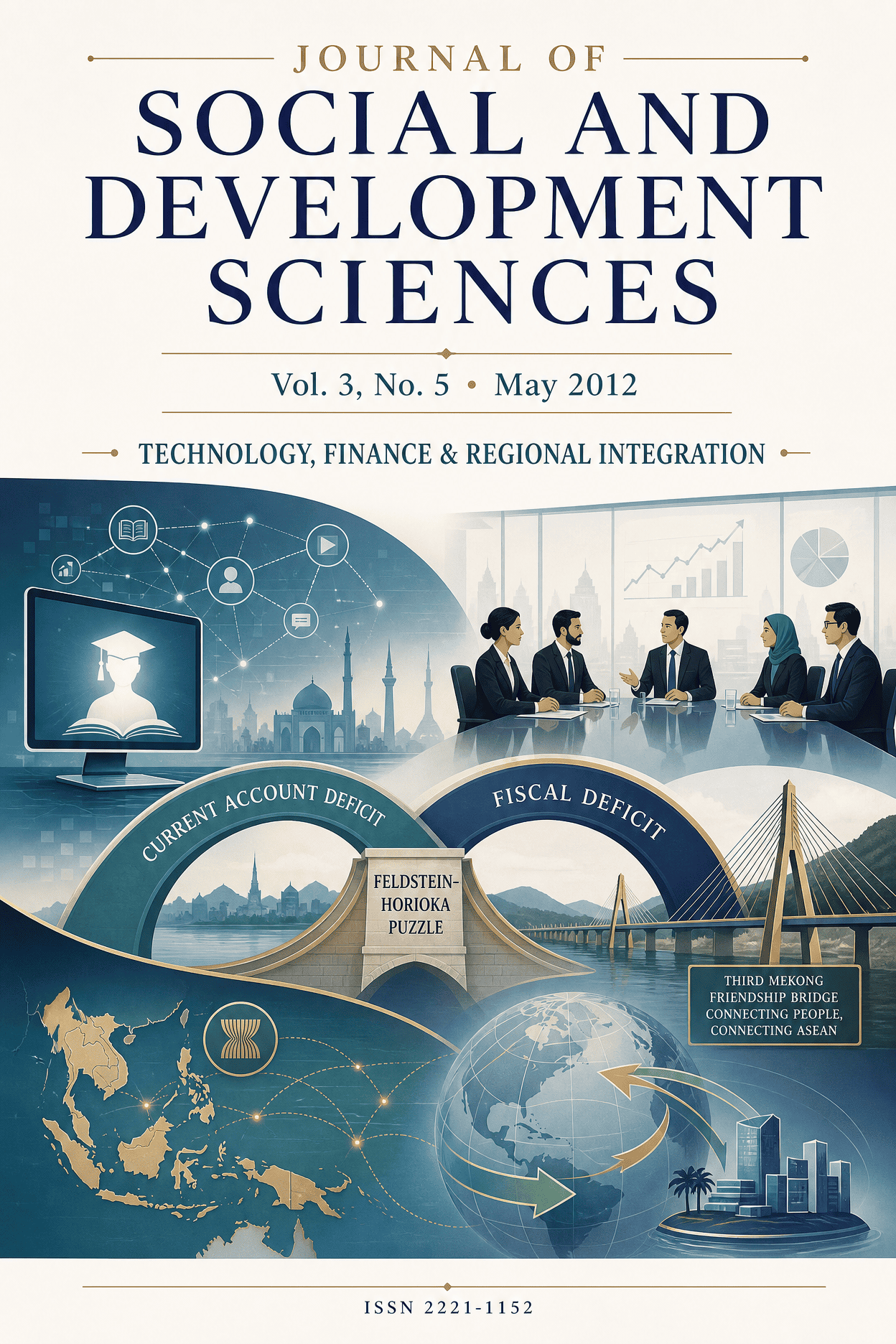
    Important aspects of Education and Higher Education such as Flexibility, Access, Relevance, Privatization, Human Resources, National Development, Innovation, and Globalization are all subject to a radical transformation as a result of substantial changes and new circumstances occurred and are occurring with the introduction into and application of information technologies (IT) in this realm. It was justifiably expected that these transformations would also occur in the Iranian Education and especially Higher Education. The paper, after outlining the new expectations from and challenges in Education and Higher Education throughout the world and the rise of new perspectives for them, will focus on major developments in virtual Education and Higher Education in Iran—considering the framework of recent socio-economic demands and expectations. Based on a descriptive method, and with the use of available official data, though critically, an overview of e-learning in Iran will be portrayed and its recent developments, quantitatively and qualitatively, resulted from the introduction of IT into the pre-university and university systems (as an important part of national TAKFA plan and its aftermath) would be reviewed, and the achievements and shortcomings during the last ten years analyzed and discussed. It will be demonstrated in this paper that the aptitude for and expectation from virtual education is very high in the country. The paper tries to shed light on why the gap between what is realized and what is expected is so deep.

    Pages 152-160

    PDF - Virtual Applications and Real Problem: Education and Higher Education in Iran (opens in a new tab)
  • Article 2 in this issue

    Gender Diversity and Firm Performance: Evidence from Pakistan

    • Author: Hammad Hassan Mirza, Shahid Mahmood, Sumaira Andleeb, Farzana Ramzan

    Gender diversity and firm performance, is among the new but challenging topics of research in management sciences. Many researchers have studied the role of gender diversity in enhancing firms’ performance in developed economies (see for example, Dwyer et. al, 2003; and Kang et al, 2010). Existing literature on this subject is rare in emerging economies and to the best of author’s knowledge; this is the first study on relationship of gender diversity and firm’s performance in Pakistani context. Present study focuses on the impact of presence of female directors on corporate performance using a sample of 395 listed nonfinancial companies of Karachi Stock Exchange (KSE) Pakistan from 2004 to 2009. Estimated results indicate that ratio of female directors is negatively related with firm performance.

    Pages 161-166

    PDF - Gender Diversity and Firm Performance: Evidence from Pakistan (opens in a new tab)
  • Article 3 in this issue

    Twin Deficits and Feldstein-Horioka Puzzle in the Case Iran

    • Author: Farzane Bagheri, Salma Keshtkaran, Fatemeh Daroghe Hazrati

    The main purpose of this study is to examine the relationship between budget deficit and current account deficit in Iran's economy through twin deficits and Feldstein-Horioka puzzle. To achieve this goal, Engel-Granger and seemingly unrelated regressions are used during "1971-2007". The results indicate that there exists a long run equilibrium link between budget deficit and current account deficit. There is a one–way causality relationship from the budget deficit toward the current account deficit .Testing the validity of the Feldstein-Horioka puzzle indicates a low level of international capital mobility for Iran.

    Pages 167-171

    PDF - Twin Deficits and Feldstein-Horioka Puzzle in the Case Iran (opens in a new tab)
  • Article 4 in this issue

    Nakhon Phanom, The Third Mekong Friendship Bridge and the ASEAN Economic Community

    • Author: Pornsakol Na Srito, John Walsh

    This paper reports on research conducted in Nakhon Phanom Province in Northeastern Thailand among business-owners and other individuals about prospective and actual changes in economic and social conditions resulting from the opening of the Third Mekong Friendship Bridge and the ASEAN Economic Community, due to be launched in 2015. Qualitative research conducted with 35 key informants revealed that there had been few changes cause so far and little intention to change any more than necessary. Most respondents were waiting for the state to take a lead in information provision and in facilitating the ability to make changes. It is found that the Bridge has had some impact upon land prices and the labor market but that these changes remain limited because of the comparatively low level of usage of the Bridge.

    Pages 172-179

    PDF - Nakhon Phanom, The Third Mekong Friendship Bridge and the ASEAN Economic Community (opens in a new tab)
  • Article 5 in this issue

    Micro and Macroeconomic Approaches Regarding Foreign Direct Investments Throughout Offshore Entities

    • Author: Alexandru Trifu, Ecaterina Pojoga

    Offshore companies represent a key-link of the current operations of the multinationals, banking institutions and, even, of the small and medium enterprises (SME) and are able to perform complicated tasks in a special business environment. These jurisdictional entities offer, mainly, fiscal benefits, comparative with other types of jurisdictional entities. The advantages are targeting the enterprises or companies which establish their social headquater, or to individuals who are resident in these territories. The final scope is represented by attracting the expanding companies, by attracting capital and stimulating the rise of the necessary activities to ensure economic and social balance, so desirable in the economic games of win-win type. Therefore, we are in the presence of fine plaition of micro approach with macroeconomic one. On the first side, the desire of transnationals to obtain profits with less efforts and investments and, on the other hand, globalization (influenced by these entities) pursuit the shrinkage of all markets and businesses all around the world, inclusive using the offshores centers (or ,,fiscal paradises”). These institutions of free market are actioning both on the developed and developing countries. The last ones are affected by the imposibility of tax collect to the national budget and in the infrastructure investments. At the same time, using offshore companies in offshore zones, the multinationals gain neloial competitive advantages over the other companies, unable to spread theirs economic power and influence. We may speak about a sound offshore industry , which has turned into global business and range of activities. We try to underline the importance of the general development process in the actual world and, first of all, the direct connection beteen investments and offshore activities, in the benefit of either parties. It is an organic liaison between investments and offshore entities, including transitional hard developing countries as Romania.

    Pages 180-183

    PDF - Micro and Macroeconomic Approaches Regarding Foreign Direct Investments Throughout Offshore Entities (opens in a new tab)