Articles

  • Article 1 in this issue

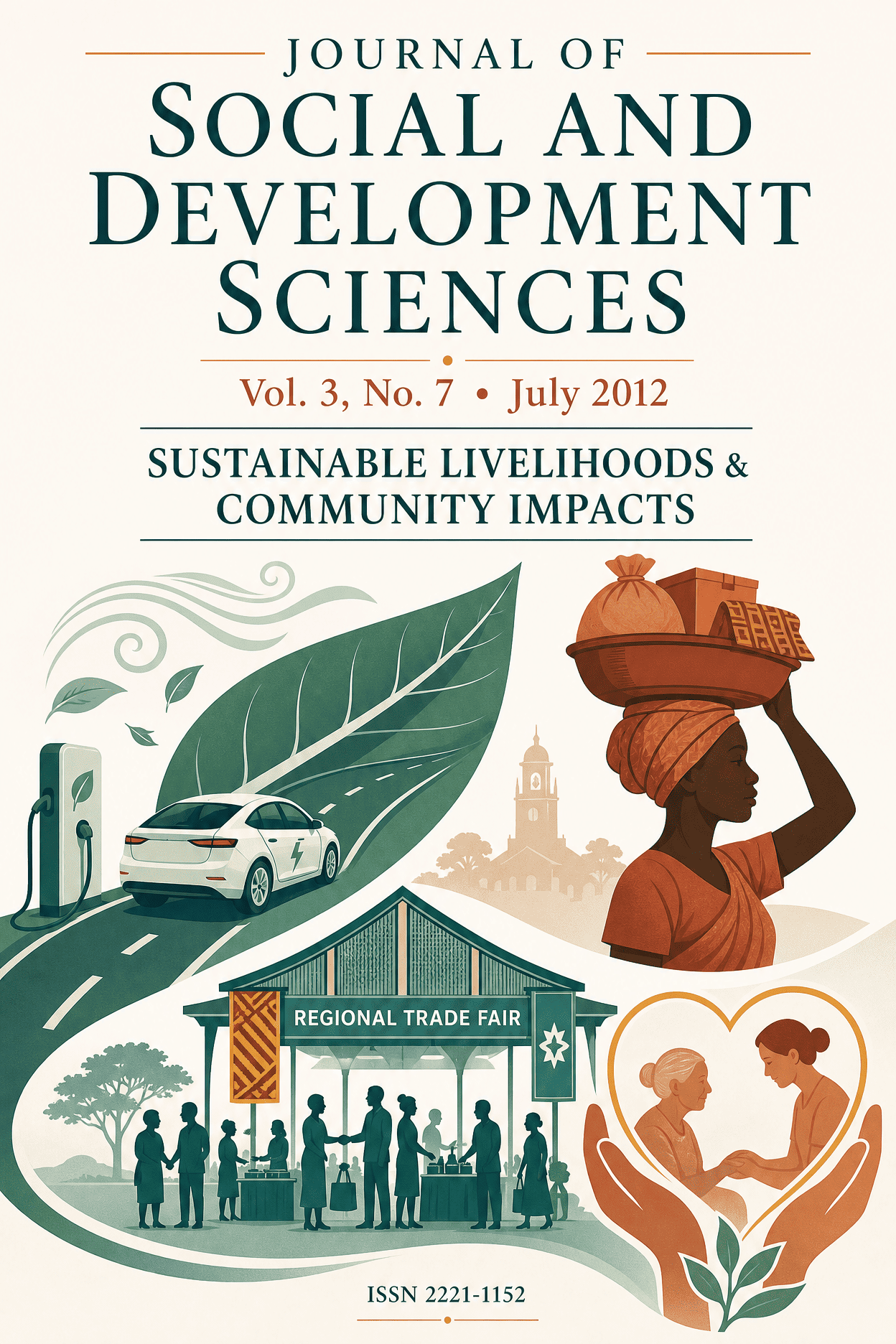
    Green Transportation a More Eco-efficient Option

    • Author: Shamsalsadat Zahedi

    Due to our lifestyle and way of using energy, especially in transportation systems, increase in green house emissions has become a threatening reality at present time and its impacts will be worse in the near future. Green transportation system aims to maintain a pollution free environment with lesser emissions and less impact on human health and on the natural environment. An eco-efficient transportation system means improving environmental quality, efficiency, and profitability by reducing unnecessary inputs and outputs in production and operation processes of transportation system. According to World Business Council on Sustainable Development, eco-efficiency is being achieved by the delivery of competitively priced goods and services that satisfy human needs and bring quality of life, while progressively reducing ecological impacts and resources intensity throughout the life cycle, to a level at least in line with the Earth’s estimated carrying capacity. Eco-efficiency is a bridge between economy and the environment and is about increasing resource productivity and decreasing environmental pressure. Green transportation depends heavily on the energy linked to vehicle movements. Energy efficiency is affected by vehicle design, road infrastructure and operations. Every one of these factors should be reviewed from eco-efficiency perspective and environmental issues should become a prominent element in green transportation strategies, operations and technologies. Article will end with some recommendations towards green transportation, which is more eco- efficient option.

    Pages 223-228

    PDF - Green Transportation a More Eco-efficient Option (opens in a new tab)
  • Article 2 in this issue

    The Living Conditions of Female Head Porters in the Kumasi Metropolis, Ghana

    • Author: Theresa Yaaba Baah-Ennumh, Owusu Amponsah, Martina Owusu Adoma

    Migration of the economically active population from northern to southern Ghana is an old age phenomenon sustained by the incessant perception of abundant job opportunities in the south. Recently, young girls and women who migrate to work as head porters have dominated the phenomenon. The purpose of this paper was to examine the reasons for their continuous migration to the Kumasi Metropolis and the conditions under which they live and work. Complementary data from 100 head porters and five institutions revealed that most of the head porters were children (under age 18) living in harsh and hazardous conditions which include poor housing, health care delivery, nutrition, and water and sanitation. The authors conclude that the relentless desire of young girls and women to work as head porters in the south and the associated poor living conditions could be minimised if youth policies are implemented with direct focus on capacity building for the head porters. The long-term remedy to the menace, the authors maintain, lies with socioeconomic development of the rural-supplying areas to bridge the development gap between the urban and rural areas.

    Pages 229-244

    PDF - The Living Conditions of Female Head Porters in the Kumasi Metropolis, Ghana (opens in a new tab)
  • Article 3 in this issue

    Residents’ Perceptions of Socio-economic Impacts of a Regional Trade Fair in Ghana

    • Author: Mensah, Christopher

    The growing trade fair economy has motivated studies relating to trade fair planning, effectiveness, and evaluation, among others. However, limited studies have explored residents’ perception of socio-economic impacts of trade fairs on communities. Since residents’ negative attitude can affect sustainability of trade fairs, it is important for organisers to understand residents’ perception of the socio-economic impacts of such events. The present study investigated residents’ perceptions of the impacts of a regional trade fair in Ghana. Through a quantitative research design, a questionnaire survey of 447 residents of How as undertaken through a convenience sampling technique in public places and houses. Kruscal-Wallis One-Way ANOVA tests indicate that perceptions of residents did not vary by gender. The results further confirm the inconsistency of socio-demographic variables in explaining residents’ perception of event impacts. There was significant difference between age groups on some statements while others showed no difference. Generally, residents were positive toward the impacts of the fair.

    Pages 245-253

    PDF - Residents’ Perceptions of Socio-economic Impacts of a Regional Trade Fair in Ghana (opens in a new tab)
  • Article 4 in this issue

    Gender, Elder Care and Care Workers in Thai Governmental Home for the Aged

    • Author: Boontarika Narknisorn

    Thai government discouraged formal care. Research on care workers and care work in Thai governmental homes for the aged was limited and unvoiced. This research aimed to investigate gender, elder care and care workers in Thai governmental home for the aged by exploring (1.) gender and care workers, (2.) how elder care was performed, (3.) care workers’ work condition and (4.) care workers’ techniques were observation, focus group interview and in-depth interview with all care workers in one Thai governmental home for the aged and interview with key informants. Identifying themes and content analysis was applied. The results showed that there were more female than male care workers. Care work especially demanding for same sex of care workers and older persons for personal care. Since there were high numbers of older persons, care work demanded work that is more physical. Care work was not a professional work and attracted more women who were unemployed or had low level of education. Care work was linked to unpaid or low paid work. Since Thai government discouraged formal care, more care workers experienced poor work condition and dissatisfaction due to double disadvantages of under valuation of care work and formal care. There were more dissatisfied care workers who expressed poor working condition as no advancement, inadequate salary and benefits, poor coordination among departments, conflicts among coworkers, which affected personal goals, family life and health of care workers. However, satisfied care workers expressed mental and spiritual fulfillment as love, care, attachment, life meaning and morality that could overcome negative aspects of care work. Research, policy, practical implications and recommendations were to create more awareness of gender and care work that links to care workers’ work condition and satisfaction in formal care in Thailand.

    Pages 254-263

    PDF - Gender, Elder Care and Care Workers in Thai Governmental Home for the Aged (opens in a new tab)