Articles

  • Article 1 in this issue

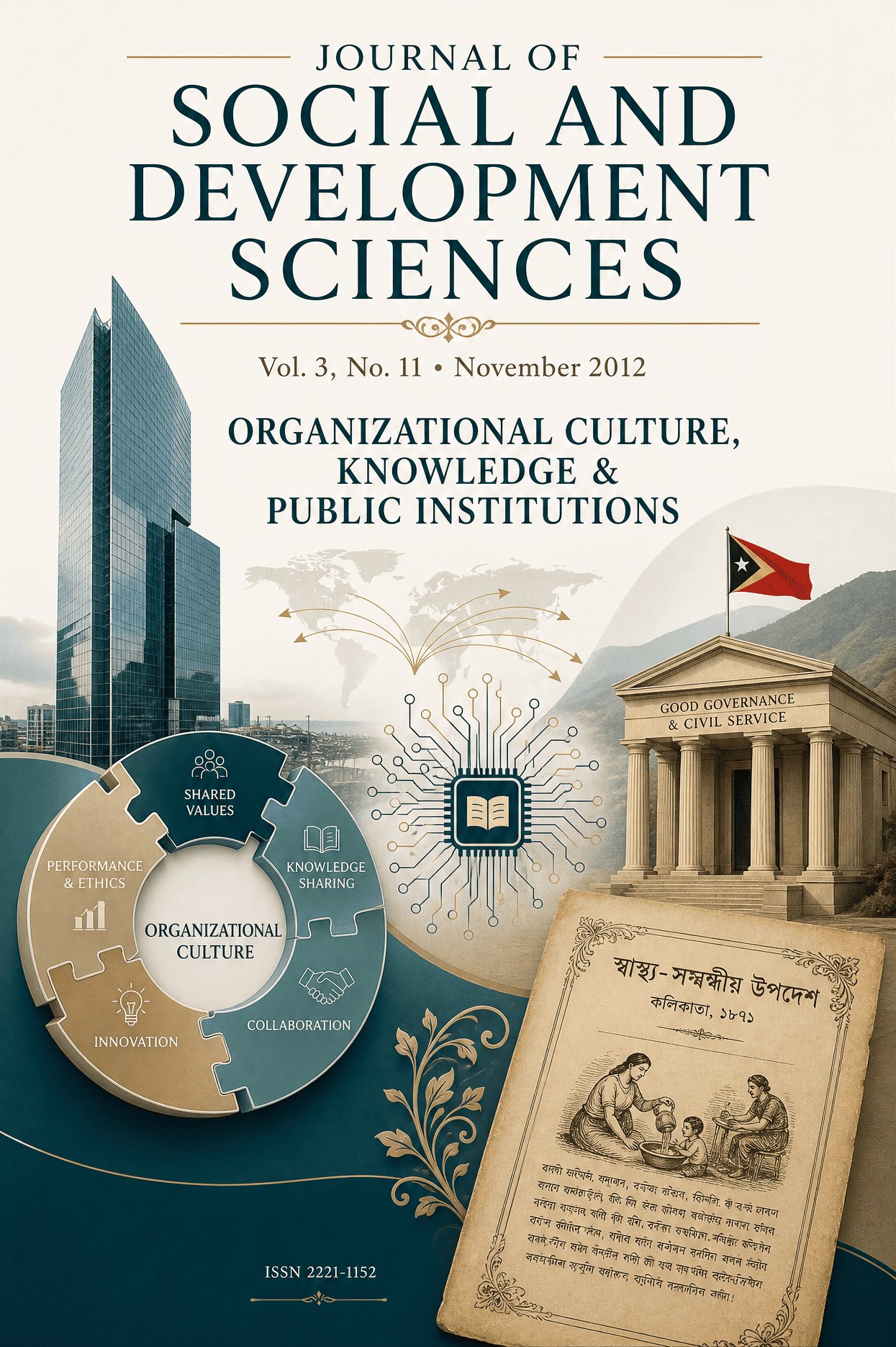
    Analysis of a Large Company’s Global Activity Sustained by the Organizational Culture

    • Author: Alexandru Trifu

    Organization's strategic position has to be understood in relation to the external environment, its internal resources, the employees’ skills, desires, and influences endogenous and exogenous. But, above all, the competition and the programs applied have to be different from that activities or services of the competitors. Market research provides the firm with information regarding the markets or market segments with the best prospects, the price levels accepted by the market, the ways of distributing the products on the market, promotional actions, etc. Equally important for grounding the strategy are the macroeconomic forecasts, the field projections, and the policies of the bodies regulating and supervising insurances. This provides the guidance of the organization’s development in accordance with the main macroeconomic developments foreshadowed for the following period. The quality of the global activity is given by the nature of the organizational culture, a powerful instrument for performing the management and getting the appropriate results. I think that Petrom is the most suitable enterprise (firm) for the analyze, being the largest company in Southeast Europe, whose market penetration force and market sustainability are largely due to the European management implemented by OMV, as Petrom is part of the OMV structure. At the same, in this period, it is capable to get down the prices, in order to keep the clients, but maintaining the efficiency of the main activity.

    Pages 360-364

    PDF - Analysis of a Large Company’s Global Activity Sustained by the Organizational Culture (opens in a new tab)
  • Article 2 in this issue

    Intellectual Capital of Enterprises and Its Role in the Integral Process

    • Author: Tatiana Belyakova

    In August 2012 Russia entered the World Trade organization (WTO) and took all the obligations on establishment of this organization according to the Marrakesh agreement. As a participant of the international trade system, Russia obtains a legitimate access to a very much unified legal space and international legal protection guaranteed by WTO norms, which should finally promote development of Russian foreign trade and Russian interests abroad. Thus, annually, within the framework of the world trade, economic participant benefit from application of simplified customs procedures $ 900 bn. Within Russia, according to the data of the Economic Cooperation and Development organization, this benefit may be $18 bn. concerning protection of rights of intellectual property, the Russian Federation has not taken any additional obligations, – and During the period of negotiations the national legislative base was brought in line with the WTO norms. This article is going to consider questions of creation and usage of the intellectual capital in export-oriented innovative enterprises related to development of science and high-technology production, exportation of developed technologies and high-tech products.

    Pages 365-369

    PDF - Intellectual Capital of Enterprises and Its Role in the Integral Process (opens in a new tab)
  • Article 3 in this issue

    Good Governance and Building a Civil Service in a Fragile State: The Case of Timor Leste

    • Author: Shaun Goldfinch, Karl DeRouen

    Newly independent Timor Leste provides a unique case study of the difficulties of developing a civil service in a fragile state. We show the UN and other bodies have attempted to develop a reasonably traditional Weberian legal/rational type civil service, but that many difficulties remain.

    Pages 370-373

    PDF - Good Governance and Building a Civil Service in a Fragile State: The Case of Timor Leste (opens in a new tab)
  • Article 4 in this issue

    Revisiting Health in Colonial Bengal: A Literary Overview (1880 -1930)

    • Author: Tinni Goswami Bhattacharya

    The essential theme of this paper is to highlight the condition of health and hygiene in the British Bengal from the perspective of official documents and vernacular writings, with special emphasis on the journals and periodicals. The fatal effects of the epidemics like malaria and cholera, the insanitary condition of the rural Bengal and the cultivated indifference of the British Raj made the lives of the poor natives miserable and ailing. The authorities had a tendency to blame the colonized for their illiteracy and callousness, which became instrumental for the outbreak of the epidemics. On the other, in the late 19th and the beginning of the 20th , the vernacular literature played the role of a catalyst in awakening health awareness, highlighting the issues related with ill health, insanitation and malnourishment. More importantly, it became an active link between the society and culture on the one hand, and health and people on the other. The present researcher wants to highlight these opposite trajectories of mentalities with a different connotation. The ideologies of the Raj and the native political aspirations often reflected in the colonial writings, where the year 1880 was considered as a landmark in the field of public health policies. On the other, the dichotomy between the masters and the colonized took a prominent shape during 1930s. Within these fifty years; the health of the natives witnessed many upheavals grounded on the social, economic and cultural tensions.

    Pages 374-377

    PDF - Revisiting Health in Colonial Bengal: A Literary Overview (1880 -1930) (opens in a new tab)