Articles

  • Article 1 in this issue

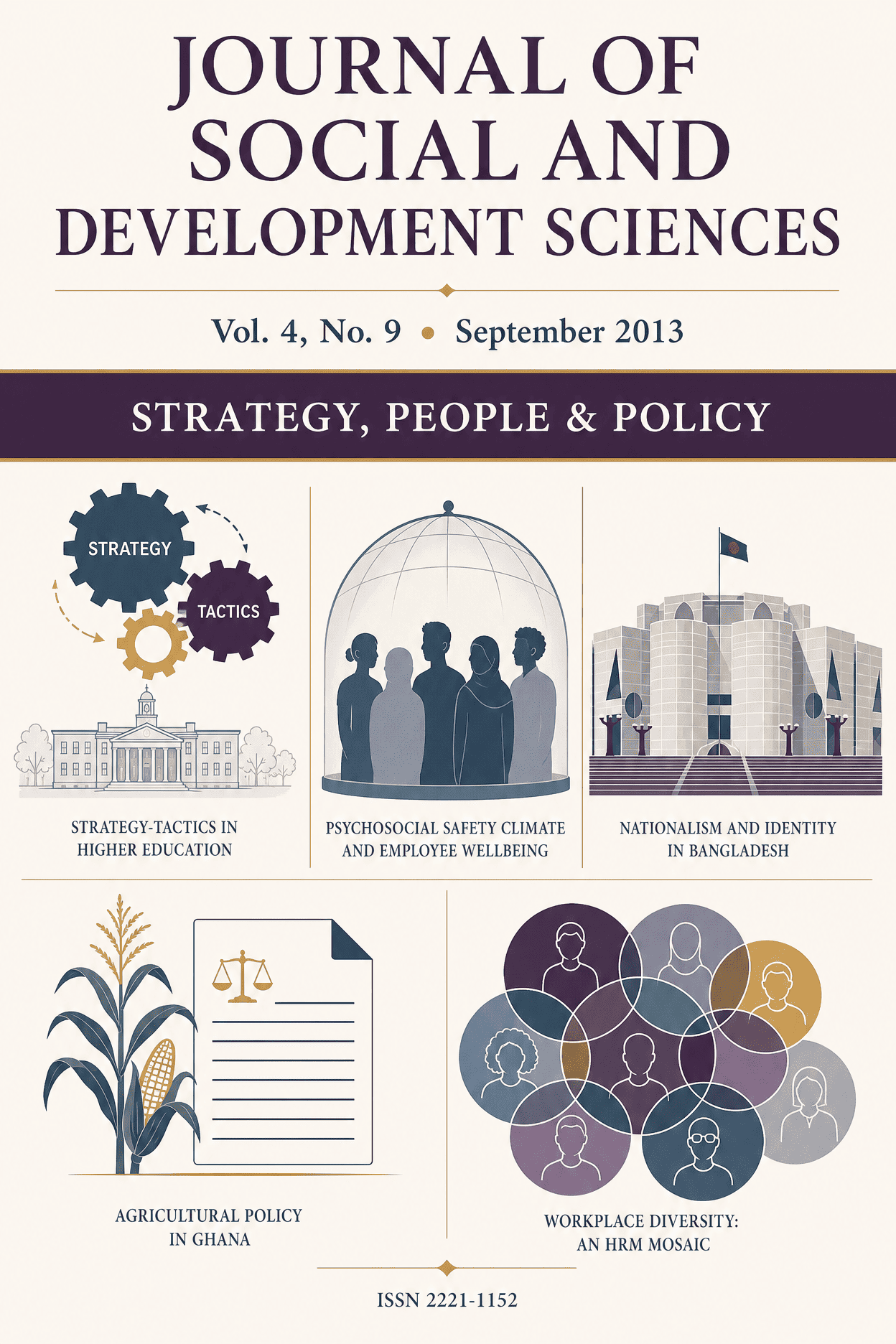
    Tactics Supporting the Strategies in Today’s World

    • Author: Alexandru Trifu

    The complexity, the variety and the permanent dynamism of today’s world (including economic domain) involve a continue flexibility and folding of the enterprise mission to these changing realities. The diagnosis of a firm’s activitiy represents the starting point in designing, funding and implementation of strategic-tactical solutions, in order to improve the general activity and the viability and economic-financial and managerial effectiveness of the firm (company, organization). In the present analysis we are focused exactly on the duality or the binomial strategy-tactics , because if the strategy means the hard of the activity, viability and sustainability of an entity and, even, of a country, tactics are viewed as the soft moves, instruments and manoeuvres, in order to help strategy to overpass each stage in order to reach the desired goal or goals (ends). The tactics have to be aligned to and compatible with the chosen and approved strategies. The case of practise is from higher education domain, with the completition strategy-tactics within an university entity. As in each case of business activity, the final goal is to win, to gain profit and to sale safety on the waves of globalization and changing world.

    Pages 402-406

    PDF - Tactics Supporting the Strategies in Today’s World (opens in a new tab)
  • Article 2 in this issue

    Psychosocial Safety Climate in Organization: An Overview of Theoretical and Empirical Development

    • Author: Nor Hidayah Binti Abd Radzaz, Siti Fatimah Bahari

    Psychosocial safety climate (PSC) is a new aspect to be considered in organization in order to overcome work stress issues among employees. The critical study of PSC which build from the foundation of work of psychological safety and safety climate pioneered in 2010 by Maureen F. Dollard and Arnold B Bakker in Australia. The features of climate specifically expected to affect psychological health. New construct of PSC was defined as shared perception of organizational policies, practices and procedures to protect employees’ psychological safety and health. Previous studies stated that there are four main elements in PSC which are management commitment, management priority, management and employee participation involvement in stress prevention and organizational communication. It is believed that PSC could be a potential contributor in achieving organization’s aim for more positive psychological health environment among employees. Therefore, this paper aims to explicate the theoretical development of PSC and identify the impact on work stress among employees.

    Pages 407-411

    PDF - Psychosocial Safety Climate in Organization: An Overview of Theoretical and Empirical Development (opens in a new tab)
  • Article 3 in this issue

    The Duality of Jatio Sangsad Bhaban and the Notion of Nationalism

    • Author: Bayezid Ismail Choudhury, Peter Armstrong

    Jatio Sangsad Bhaban or Nation Assembly Building or Capitol Complex of Bangladesh, is an iconic building designed by American architect Louis. I. Kahn. It is regarded as the national emblem and the national identity of Bangladesh. It has assumed a symbolic role in the nationalist movement of the Bangladeshi people which lead to the emergence of independent Bangladesh. Drawing on Peter Alter’s theory of nationalism, this paper will argue that his construct of the dual positive and negative character of nationalism aptly fits the role the Jatio Sangsad Bhaban has played from its outset, representing as his four aspects of nationalism: oppression, and at the same time emancipation, the repository of danger, and opportunity.

    Pages 412-424

    PDF - The Duality of Jatio Sangsad Bhaban and the Notion of Nationalism (opens in a new tab)
  • Article 4 in this issue

    Policy Initiatives and Agricultural Performance in Post-independent Ghana

    • Author: Samuel Asuming-Brempong, John K. M. Kuwornu

    The central role agriculture plays in the development of Ghana’s economy has been recognized by several authors, particularly because Ghana’s economy is basically agrarian. Nevertheless, the contributions agriculture can make to economic development depend on the policy environment within which agriculture thrives. Several policies, both general and specific to agriculture, which have been pursued under various governments have either promoted or mitigated against the performance of agriculture in Ghana. This paper reviews the various policies under which Ghana's agricultural sector has operated since independence, and provides a synthesis of the major existing policies and recent changes and how these have affected the agricultural sector. The analysis shows that the socialist model of the 1960s contrasted sharply with the liberalized market approach of the 1980s and 1990s, particularly under structural adjustment. These differing policy orientations have had significant effects on agricultural performance in Ghana, and the roles of agriculture at different periods. For instance, the policy effects of agricultural activities on the environment, such as the promotion of export commodities, the exploitation of timber and forest resources, mining, and indiscriminate sale and use of agro-chemicals in Ghana have been negative. On the other hand, promotion of cash and export crops through government policy incentives have improved rural incomes for farmers that cultivate such crops, and helped to reduce poverty among this group. In general, the policy effects on agriculture in Ghana have been mixed.

    Pages 425-434

    PDF - Policy Initiatives and Agricultural Performance in Post-independent Ghana (opens in a new tab)
  • Article 5 in this issue

    Integrated Approach to Workplace Diversity through Human Resource Management

    • Author: Sunday Samson Babalola, Lilita Marques

    Today’s organisations are facing challenges of equity control, market size, and workplace diversity despite increase in profitability due to globalisation and technological advancements. This called for efficient utilization of human resource management (HRM) as its focus is on people management with the strategic proactive approach to workplace diversity. The paper calls for improve role of HRM and organisational management in creating conducive work environment, accurate and expansion of selection criteria for workplace diversity that include stable attributes such as emotional intelligence and dispositional factors such as task and people oriented and being culturally flexible. It conclude by advocating for HRM integrative approach to diversity as it synthesizes the literature and proposes key areas needed to management diversity.

    Pages 435-445

    PDF - Integrated Approach to Workplace Diversity through Human Resource Management (opens in a new tab)