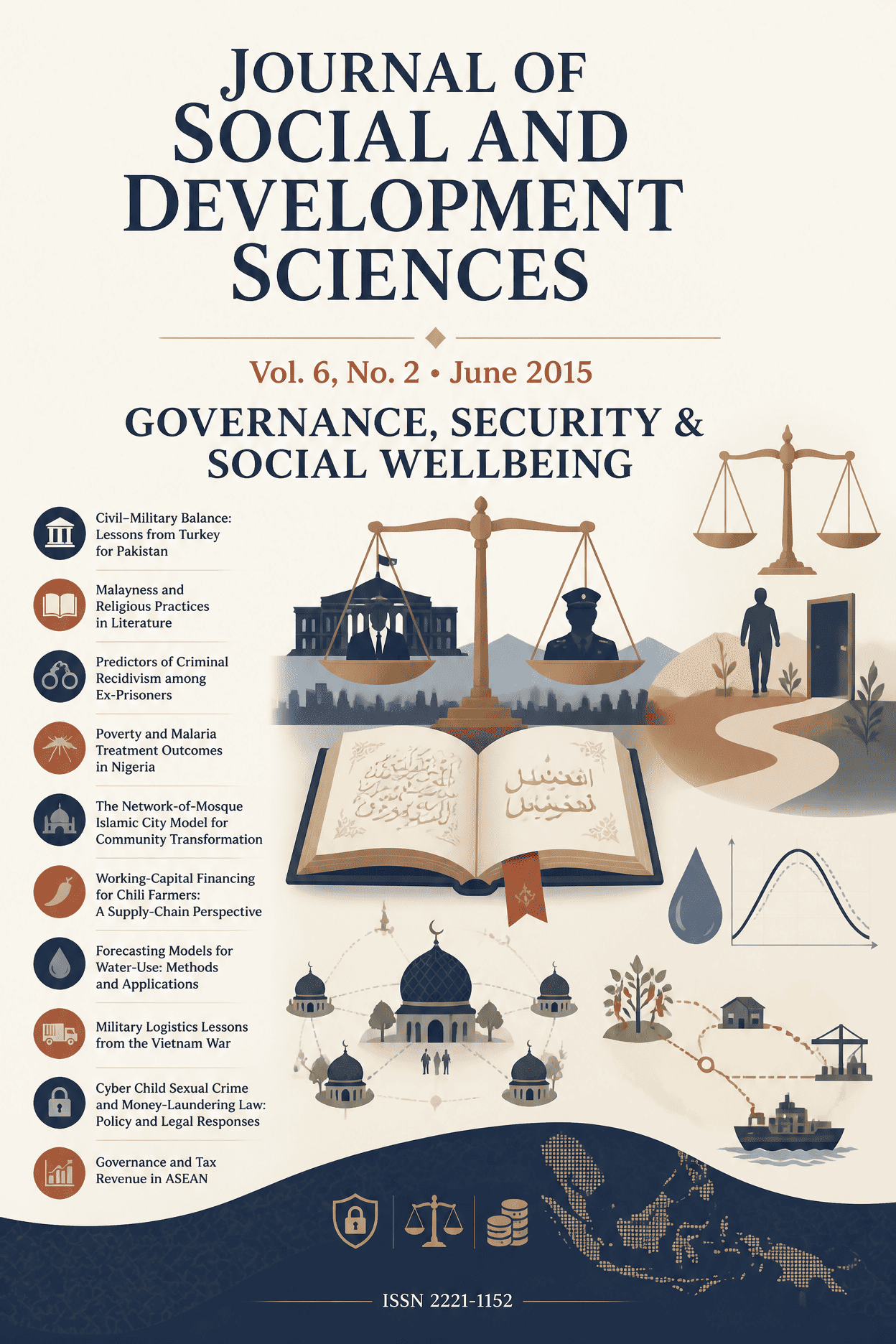
Articles

  • Article 1 in this issue

    Rectifying the Civil-Military Imbalance – What Pakistan Can Learn From the Turkish Experience

    • Author: Maheen Saleem Khosa

    Historically, in both Pakistan and Turkey, the military has been deeply involved in the politics of the state. Civilian governments have had to contend with the influence of the military in politics and have often been undermined and overthrown. However, the Prime Minister-ship of Recep Tayyip Erdogan is often quoted as an example in Pakistan of how to successfully rectify the imbalance between the civilian governments and the military. This paper discusses the Turkish experience and what Pakistan can learn from it – its successes, pitfalls and applicability to the Pakistani milieu. The paper considers whether Mr. Erdogan has truly succeeded in recalibrating the civilian-military equation and whether the Pakistani political scene allows for similar results. A particular point of resonance is the trial of former coup leaders in Turkey and the current trial in Pakistan of General (retd.) Pervez Musharraf (who led the last coup) for treason. It is an open question whether these trials undermine military influence or breed greater motivation to intervene (especially where they are seen not to be fair) and in what circumstances? Pakistan stands at a critical juncture with a recent, historic civilian transition of power. The Turkish experience therefore provides valuable lessons.

    Pages 6-14

    PDF - Rectifying the Civil-Military Imbalance – What Pakistan Can Learn From the Turkish Experience (opens in a new tab)
  • Article 2 in this issue

    An Analysis of Religious Practices using Paradigm of Malayness in Burgess’ Beds in the East

    • Author: Nurhanis Sahiddan, Rosima Alias, Mardian Shah Omar, Thaharah Hilaluddin

    Burgess’ (1917-1993) trilogy of novels, The Malayan Trilogy (1964), is probably one of the most underestimated English literary texts on the Malay World. It has been suggested that the third novel of the trilogy, Beds in the East (1959), depicts the everyday practices of the Muslim Malay characters that go against their religion, Islam, through their conversations with other Muslim Malay characters and nonMuslim characters in the novel. In this study, I utilise one of the elements under the paradigm of Malayness in literature as proposed by Ida, which is Islam. According to this concept, the paradigm of Malayness consists of everyday-defined social realities, or the six elements, the Malay language, Islam, the Malay rulers, adat /culture, ethnicity and identity. From a close textual reading of the novel, my findings show that the Malay characters in the trilogy are portrayed as wayward Muslims in their beliefs and practices. It is hoped that these findings will contribute to the on-going study on Malay Muslims, discourse and the paradigm of Malayness in literature. These findings could also be utilised by foreign students in studying the Malay culture and the Malay language.

    Pages 15-19

    PDF - An Analysis of Religious Practices using Paradigm of Malayness in Burgess’ Beds in the East (opens in a new tab)
  • Article 3 in this issue

    Prison, Stigma, Discrimination and Personality as Predictors of Criminal Recidivism: Preliminary Findings

    • Author: Aminu Musa Ahmed, Abd Halim B. Ahmad

    Criminal recidivism as a contemporary and global phenomenon has been explained and analysed from different perspectives. The aim of this study is to determine the predictors of criminal recidivism using four main constructs as predictors: prison; stigma; discrimination; and personality among the ex-prisoners in metropolitan Kano-Nigeria. Data was gathered using qualitative method (indepth interviews) from the ex-prisoners and analysed using narrative analysis method. The results from the qualitative analysis revealed that prison, stigma and discrimination were found to have effects on criminal recidivism as the respondents revealed base on their experiences and it is also revealed that such predictors if experienced can give a room for further reoffending whereas personality as predictor was found not have much impact on recidivism among the ex-prisoners in metropolitan Kano-Nigeria. Thus, it was concluded that three (prison, stigma and discrimination) out of the four constructs used can predicts and determine criminal recidivism among the ex-prisoners in metropolitan Kano-Nigeria.

    Pages 20-29

    PDF - Prison, Stigma, Discrimination and Personality as Predictors of Criminal Recidivism: Preliminary Findings (opens in a new tab)
  • Article 4 in this issue

    The Role of Poverty and Household Economic Conditions to the Treatment of Malaria in Zamfara State North West Nigeria

    • Author: Ahmad Yahaya Maigemu, Kalthum Bt Haji Hassan

    Malaria in Nigeria and Africa remains most important health problem. It remains a vital public health fear of our time. This paper seeks to focus on the role of poverty and economic factor to the treatment of malaria among peoples of Zamfara state in North West Nigeria. Poverty and economic factors are obviously connected to health threat, as well as the threat for malaria. It is now well recognized all over the world that malaria cases of morbidity and death rates are honestly linked with poverty and economic status of the society. Qualitative research was used for this to interview participant of the research in order to seek their perception and experiences about malaria and economic problems. Semi-structure interview was used as instrument for this study. Interview was conducted with 10 respondents that participated in the study. Finding of this study shows that poverty and economic situation and the people’s background not only play a critical role to the contribution of malaria but as sole reasons dictating the prevalence of the disease within the community

    Pages 30-36

    PDF - The Role of Poverty and Household Economic Conditions to the Treatment of Malaria in Zamfara State North West Nigeria (opens in a new tab)
  • Article 5 in this issue

    Developing Islamic City through Network-of-Mosque (NoM)

    • Author: Ammar Ihsan Nasution, Abdul Rahman Ahmad Dahlan, Ammar Ihsan Nasution, Muhammad Iqbal Husaini, Mohamed Hassan Ahmed

    Learning from the history, our prophet used mosque to provide many activities and served as community centre for the purpose of society welfare. Today, we can find the mosque everywhere but its function were limited and only used for religious and spiritual purposes. Thus, this conceptual program will develop the Islamic City through Network of Mosque. Network of Mosque can be used to create centre for transformation which can provide the services to the society. These services will include community classes, zakat collection and distribution, halal certification, and eating place for the hungry and needy. This conceptual program introduces to improve the quality of service through strategic partnership between government, industry, and society which will result to raise the entrepreneurs and lead to the prosperity. This program offers Quadruple Helix Model (QHM) which involves the Government, Academia, Industry, and Citizen as the main actor for this program. Nine blocks of Business Model Canvas (BMC) framework and Literature Review used as the methodology for this paper. To achieve its goals, this program collaborates and synergize with the Whole of Government (WoG). The findings of this paper show that the Mosque can facilitate and serve the society better by harnessing Network of Mosque, which guide to the developing Islamic City.

    Pages 37-45

    PDF - Developing Islamic City through Network-of-Mosque (NoM) (opens in a new tab)
  • Article 6 in this issue

    The Analysis of Working Capital Financing Sources (A Study on Large Red Chili Farmers in Sempu District, Banyuwangi Regency)

    • Author: Isti Fadah, Muhammad Abdul Gofur

    Large red chili farming is a farming that has an important role in Indonesian economic development. The appropriate selection of working capital financing sources will be able to maximize the business profit for farmers. Therefore, it is important to carry out an effort in order to increase the profit and to minimize the risk of loss. The purpose of this article is to find out the working capital financing sources of large red chili farmers based on their perspectives. The type of research applied is descriptive qualitative. The selection of the informants is conducted by using purposive snowball method. The data analysis method consists of four steps: data collection, data reduction, data presentation, and conclusion. The study concludes that most of large red chili farmers in Sempu use a mixed working capital financing sources. They combine self-financed working capital with working capital obtained from middlemen. Meanwhile, the alternative sources are obtained from cooperatives and other non-formal funding sources.

    Pages 46-51

    PDF - The Analysis of Working Capital Financing Sources (A Study on Large Red Chili Farmers in Sempu District, Banyuwangi Regency) (opens in a new tab)
  • Article 7 in this issue

    Transfer Function Models for Forecasting Domestic Water Use

    • Author: Ahmad, M. I.

    The ability of transfer function models to forecast domestic water use is investigated. Five years monthly time series data on domestic water use, total rainfall and average temperature from Muscat was taken for this study. The transfer function models aim to describe the relationship between input and output systems using a ratio of the polynomials representing the Laplace Transforms of the output, input and the noise in the system. Total rainfall and average temperature were considered as the input series and the domestic water use as an out series. The input series were pre-whiten using Seasonal Autoregressive Integrated Moving Average (SARIMA) models which were identified by Sample Autocorrelation (SAC) and Partial Sample Autocorrelation (PSAC). Four preliminary transfer function models were postulated to describe the output series. The graphs of Sample Cross Correlation (SCC) of water use with rainfall and temperature were made. The final transfer function model was identified by investigating the Residual Sample Cross Correlation (RSSC) which had the form SARIMA(1,1,1)x(1,1,1). This model was then used to generate twelve months out of sample forecasts. The accuracy of forecast error was assessed by mean absolute deviation (MAD), mean square error (MSE) and mean absolute percent error (MAPE). All of these measures had reasonably small values which were 0.105, 0.013 and 1.37% respectively.

    Pages 52-56

    PDF - Transfer Function Models for Forecasting Domestic Water Use (opens in a new tab)
  • Article 8 in this issue

    Military Logistics Efforts during the Vietnam War Supply Chain Management on Both Sides

    • Author: Hermann Gruenwald

    This paper analyses the role of military logistics operations during the Vietnam War. It looks at the technical and strategic role of logistics, and the physical obstacles that had to be overcome in Vietnam. The US had highly sophisticated war machinery that was deployed in a country that lacked not only the transportation infrastructure (roads, ports, airports) but also had extreme terrain and climate conditions. On the other hand the Vietnamese had a well-oiled supply chain which often was carried on bicycles and literally on the backs of humans not only along the Ho Chi Minh Trail but throughout the north and south of Vietnam. On the US side helicopters played an important transportation role substituting land transport with air transport. The war effort escalated so rapidly that there was literally no time for logistics advancement operations and prepositioning of assets which resulted in a parallel run of war fighting and logistics operations. Naval operations had to provide their own landing crafts due to the lack of deep seaports with adequate lifting equipment. At the same time airlifts required runways and aircontrol facilities which needed to be provided by the US. Even the US Department of Defense (DOD) food supply chain was supported from abroad while local war fighters could live off the land. The Vietnam War logistics effort reached over to neighboring countries, and Thailand played an important role with its naval and airbases close to Sattahip, U-Tapao and northern parts of Thailand. There are valuable lessons to be learned for both military logistics as well as private sector supply chain management.

    Pages 57-66

    PDF - Military Logistics Efforts during the Vietnam War Supply Chain Management on Both Sides (opens in a new tab)
  • Article 9 in this issue

    What can IT and Money Laundering Law do to Fight against Cyber Child Sexual Crime?

    • Author: Go Lisanawati

    This paper will assess on how technology and anti-money laundering law perspectives can contribute in tackling cyber child sexual crimes. It is normally and classically problem that always emerge in the discussion of law and information technology (IT) is about the increases of crime. But the abnormal and modern problem is about the modernism of crimes with the high-quality level of crime itself. Cyber sexual crime became one of the highest online crimes which conduct through internet. Grooming, voyeurism, cyberstalking, child pornography happens very often in the world. This paper is using normative research methodology of law, by using statute and conceptual approach. The conceptual approach is using to build an ideal concept of prevention and eradication of the crime of online child sexual abuse. This paper is discussed through a qualitative research. The result of this paper is that Information Technology gives contribution in order to present a way out to tackle this problem, for example by giving solution on its surveillance. Other is from the perspectives of law. Money Laundering can assist in tackling online sexual crime toward children, for perpetrator and/or facilitator and/or pther third party who enjoy the illegal gain of this crime.

    Pages 67-75

    PDF - What can IT and Money Laundering Law do to Fight against Cyber Child Sexual Crime? (opens in a new tab)
  • Article 10 in this issue

    Governance and Tax Revenue in Asean Countries

    • Author: Makmun Syadullah, Tri Wibowo

    Tax revenue is influenced by many factors. Existing studies reveal that political stability, level of corruption, quality of the policy, income per capita, share of agriculture to the GDP, and market openness are some of the factors influencing tax revenue. This study aims to analyze the influence of governance by using some indicators, such as political stability, government effectiveness, quality of regulation, law enforcement accountability and control on corruption in tax area through empirical analysis of ASEAN countries. Descriptive analysis and causality methods are employed in this study. causality method is used to determine the relationship between observed variables using panel regression. The results of the study indicate that the controlon corruption, voice and a ccountability and political stability variables have significant negative effects on the tax ratio, while rule of law and quality of regulatory variables have positive impact on the tax ratio.

    Pages 76-88

    PDF - Governance and Tax Revenue in Asean Countries (opens in a new tab)