Articles

  • Article 1 in this issue

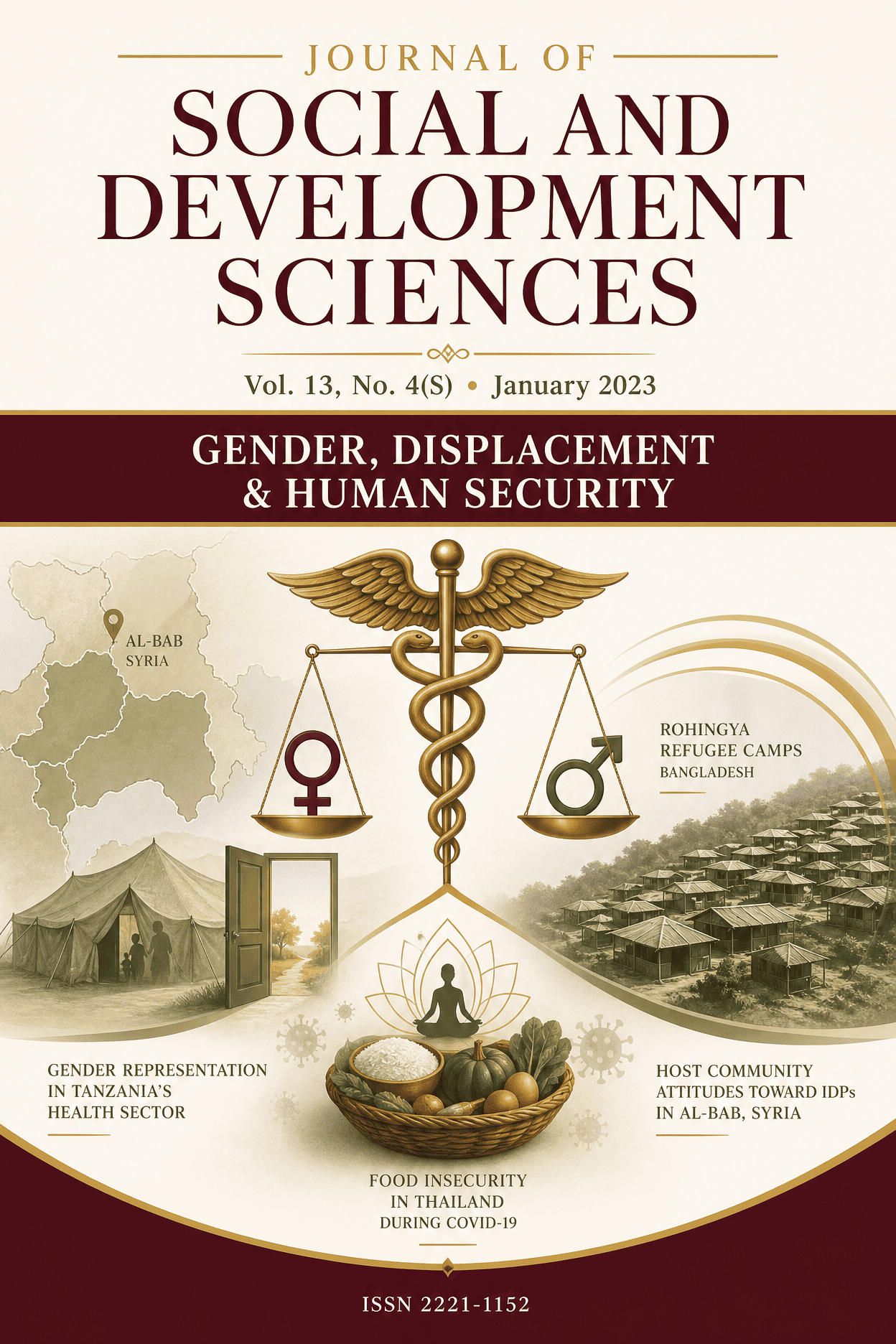
    Host Community Attitudes Towards Internally Displaced Persons: Evidence from Al-Bab, Syria

    • Author: Musallam Abedtalas, Adnan Rashid Mamo

    Considering the unique context of the Al-Bab area in Syria hosting Internally Displaced Persons (IDPs), we tested the role of economic individual self-interest in shaping a host community’s attitude towards IDPs. The findings from analyzing data collected from 496 households indicated that self-interest had a significant effect on their attitudes. Interestingly, when positive and negative attitudes were isolated from each other, the findings revealed that the factors shaping the former may not always be the same for the latter. The particular value of this study is in exploring the host community’s attitude towards IDPs, something which has not been studied and thus contributes to enhancing our knowledge about the attitude towards newcomers.

    Pages 1-10

    PDF - Host Community Attitudes Towards Internally Displaced Persons: Evidence from Al-Bab, Syria (opens in a new tab)
  • Article 2 in this issue

    Stateless Rohingya Refugees in Bangladesh: Life and Livelihood Challenges

    • Author: Md Mostafa Faisal, Zobayer Ahmed

    Rohingya is one of the most persecuted ethnic minority groups in the world, as identified by United Nations. More than one million Rohingya refugees, over half of whom are children, live at various camps in Cox’s Bazar district in Bangladesh. This study uses a mixed methodology approach based on primary data to examine the life and livelihood challenges of Rohingya people in the refugee camps. The study's findings reveal that there is a severe scarcity of basic human needs in the Rohingya camps and a prevalence of widespread human rights violations. Among the life and livelihood challenges in the camps are- poor health services, the weak structure of shelter, scarcity of nutritious food, inadequate water and sanitation infrastructure, lack of education facilities after secondary school, gender-based violence, insecurity, congestion and lack of privacy, limited freedom of movement, and high risk of landslide. The study's findings may guide governments and NGOs operating in Rohingya camps to ensure the community's basic needs and human rights.

    Pages 11-23

    PDF - Stateless Rohingya Refugees in Bangladesh: Life and Livelihood Challenges (opens in a new tab)
  • Article 3 in this issue

    Social Learning Theory and Gender Representation in Leadership Positions: The Case of the Health Sector in Tanzania

    • Author: Zuena Kilugwe Khamis

    Using the Mbinga council as a case, this study sought to document the influence of the social learning theory on gender representation in leadership positions in the Tanzanian health sector. Interviews, semi-structured questionnaires, and a literature review were used to collect data. The Statistical Package for Social Sciences (SPSS) version 20 was used to analyze quantitative data while content analysis was used to analyze qualitative data. The study revealed that in the Tanzanian health sector, the number of women employees is more than that of men, with most of them holding lower positions, which is directly associated with the socialization of boys and girls during their upbringing. Based on the study findings, the study concludes that, despite Tanzania being a signatory to many gender-related international conventions and having many-gender related laws, policies and programs, the gender gap in leadership positions in the health sector is still wide, caused by, among other things, how males and females were brought up. Therefore, full commitment is needed, starting at the family level, to challenge the patriarchal system in the raising of male and female children. Based on the study findings and conclusion, the study recommends that: (i) the government should raise awareness at the grassroots level of discriminative norms and traditions to discourage them. (ii) multiple actors should collaborate (i.e., the family, schools, organizations, the private sector, non-government organizations (NGOs), faith-based organizations (FBOs), community-based organizations (CBOs), the local communities themselves and the state) to ensure gender equality in raising children, which will improve gender representation in administrative leadership positions.

    Pages 24-33

    PDF - Social Learning Theory and Gender Representation in Leadership Positions: The Case of the Health Sector in Tanzania (opens in a new tab)
  • Article 4 in this issue

    Food Insecurity in Thailand during the Coronavirus Pandemic

    • Author: John Walsh, Petcharat Lovichakorntikul

    Food insecurity is a reality for millions of people around the world and affects even relatively affluent populations such as those found in urban Bangkok in Thailand. It is anticipated that the ongoing coronavirus pandemic will have intensified the presence of food insecurity both in the initial closedown that prevented food from entering the city but, also, in the longer term as the economic damage has intensified across the country. This raises questions about the extent to which people are experiencing food insecurity and how are they dealing with it. In particular, what level of resilience are people showing in response to the crisis? A qualitative research program of personal interviews was organized to explore these issues. Content analysis revealed that the sample was responding to these issues in a manner generally predicted by the existing research but with the addition of a non-technical form of mindful meditation we have called ‘everyday fatalism.’ The paper contributes to awareness of food insecurity in Thailand during the coronavirus period and an understanding of the adaptability of people in a Buddhist society dealing with hardship. The spiritual element of life is present in becoming resilient according to how respondents describe their experiences.

    Pages 34-42

    PDF - Food Insecurity in Thailand during the Coronavirus Pandemic (opens in a new tab)