Abstract
Money management refers to the process of managing one's financial resources effectively to maintain a stable financial position. This study was conducted to determine the factors that influence money management behavior. Questionnaires are distributed among adults in Indonesia and analyzed by using IBM SPSS software. The result found that financial literacy, financial behavior, social media, parental education, and spiritual intelligence have a significant and positive influence on money management behavior. Clear insight into the importance of saving can lead to better money management behavior. The findings indicate that more efforts should be made to inculcate money management behavior among Indonesian citizens.
Keywords
- Money Management Behavior Search this journal for Money Management Behavior (opens in a new tab)
- Spiritual Intelligence Search this journal for Spiritual Intelligence (opens in a new tab)
- Financial Literacy Search this journal for Financial Literacy (opens in a new tab)
- Financial Behavior Search this journal for Financial Behavior (opens in a new tab)
- Social Media Search this journal for Social Media (opens in a new tab)
- Parental Education Search this journal for Parental Education (opens in a new tab)
- Indonesia Search this journal for Indonesia (opens in a new tab)
References
- Alekam, J. M., Salniza, M. S. & Mokhtar, S. S. (2018). The Effect of Family, Peer, Behavior, Saving and Spending Behavior on Financial Literacy among Young Generations. International Journal of Organizational Leadership, 7, 320. Retrieved from https://papers.ssrn.com/sol3/papers.cfm?abstract_id=3337614
- Arofah, A. A., Purwaningsih, Y. & Indriayu, M. (2018). Financial literacy, materialism and financial behavior. International Journal of Multicultural and Multireligious Understanding, 5 (4). doi: http://dx.doi.org/10.18415/ijmmu.v5i4.171
- Bamforth, J., Jebarajakirthy, C. & Geursen, G. (2018). Understanding undergraduates’ money management behavior: a study beyond financial literacy. International Journal of Bank Marketing, 36(7), 1285–1310. https://doi.org/10.1108/IJBM-05-2017-0104
- Bona, J. (2018). Factors affecting the spending behavior of college students. J. Fundam. Appl. Sci, 142 - 152. doi: http://dx.doi.org/10.4314/jfas.v10i3s.12
- Bougie, R. & Sekaran, U. (2019). Research Methods for Business: A Skill Building Approach. John Wiley & Sons.
- Cao, Y., Gong, F. & Zeng, T. (2020). Antecedents and consequences of using social media. Journal of Financial Counseling and Planning, 31(1), 162-176. doi: http://dx.doi.org/10.1891/JFCP-18-00049.
- Fajriyah, I. L. & Listiadi, A. (2021). Pengaruh uang saku dan pendidikan keuangan keluarga terhadap pengelolaan keuangan pribadi melalui literasi keuangan sebagai intervening. INOVASI: Jurnal Ekonomi, Keuangan dan Manajemen, 17(1), 61 - 72. Retrieved from https://journal.feb.unmul.ac.id/index.php/INOVASI/article/view/9176
- Friedman, M. (1957). A theory of the consumption function. Princeton: Princeton University Press.
- Godey, B., Manthiou, A., Pederzoli, D., Rokka, J., Aiello, G., Donvito, R. & Singh, R. (2016). Social media marketing efforts of luxury brands: Influence on brand equity and consumer behavior. Journal of Business Research, 69(12), 5833–5841. https://doi.org/10.1016/j.jbusres.2016.04.181
- Hamid, F. S. & Loke, Y. J. (2021). Financial literacy, money management skills and credit card repayments. International Journal of Consumer Studies, 45(2), 235-247. https://doi.org/10.1111/ijcs.12614
- Hariani, L. S. & Andayani, E. (2019). Manajemen keuangan pribadi: literasi ekonomi, literasi keuangan, dan kecerdasan spiritual. Jurnal Ekonomi Modernisasi, 15(3), 162 - 170. doi: https://doi.org/10.21067/jem.v15i3.4411
- Herawati, N. T., Candiasa, I. M., Yadnyana, I. K. & Suharsono, N. (2018). Factors that influence financial behavior among accounting students in Bali. International Journal of Business Administration, 9(3), 30 - 36. doi: https://doi.org/10.5430/ijba.v9n3p30
- Hidayat, M. Z. & Nurdin. (2020). Pengaruh literasi keuangan dan sikap keuangan terhadap perilaku manajemen keuangan. Prosiding Manajemen, 6(2), 944. doi: http://dx.doi.org/10.29313/.v6i2.24036
- Husnawati, H. (2021). Pengaruh Sosial Ekonomi Orang Tua, Perilaku Keuangan dikeluarga, dan Kontrol Diri terhadap Manajemen Keuangan Pribadi Mahasiswa di Kabupaten Sinjai. Study of Scientific and Behavioral Management (SSBM), 2(3). Retrieved from https://journal.uin-alauddin.ac.id/index.php/ssbm/article/view/23896
- Kadir, J. M. A. & Jamaluddin, A. A. (2020). Saving behavior in an emerging country: the role of financial knowledge, parent socialization and peer influence. Journal for Social Sciences, 23(1), 65-73.
- Komal, G. Y., Mehta, M. & Gandhi, S. (2017). Money management practices among students. International Journal of Commerce, Business and Management, 6(1), 2319-2328.
- Kurnia, S. (2020). Hubungan antara Kontrol Diri dengan Perilaku Phubbing pada Remaja di Jakarta. Journal Psikologi: Media Ilmiah Psikologi, 18(1), 58–67.
- Kurukullam, V. (2019). Alarming Rate of Bankruptcies among Young, Naive and Spendthrift Malaysians. AsiaNewit.
- Ladamay, A. Z., Supriyanto, T. & Nugraheni, S. (2021). Pengaruh media sosial, literasi keuangan, risiko, imbal hasil, dan religiusitas terhadap minat berinvestasi sukuk generasi Z di Jakarta. Islamic Economic Journal, 7(2), 181. doi: https://doi.org/10.21111/iej.v7i2.6552
- LeBaron, A. B., Marks, L. D., Rosa, C. M. & Hill, E. J. (2020). Can we talk about money? Financial socialization through parent–child financial discussion. Emerging Adulthood, 8(6), 453-463. https://doi.org/10.1177/2167696820902673
- Lusardi, A. (2019). Financial literacy and the need for financial education: evidence and implications. Swiss Journal of Economics and Statistics, 5, 1-8.
- Md Kassim, A., A., Tamsir, F., Zainal Azim, Z. A., Mohamed, J. & Meor Nordin, H. N. (2020). Students’ saving behavior: do demographic profile, parent background and financial literacy matter? An empirical study in private universities in Selangor. International Journal of Psychosocial Rehabilitation, 24(1), 844-850.
- Md Kassim, A. A., Nejad, M. Y., Othman, J., Mamat, S., Saad. M. A. & Mohamed, I. I. D. (2022). Determinants of money management behavior among Malaysian private universities students. International Journal of Business and Applied Social Science, 8(8). doi: http://dx.doi.org/10.33642/ijbass.v8n8p2
- Md Kassim, A. A., Mohamed, J., Jahari, N. A. & Zain, N. N. M. (2019). Personal saving behavior among Muslim employees. International Journal of Academic Research in Business and Social Sciences, 9(11), 236-253. https://doi.org/10.6007/ijarbss/v9-i11/6545.
- Mien, N. T. N. & Thao, T. P. (2015). Factors affecting personal financial management behaviors: Evidence from Vietnam. Global Business, Economics, Finance and Social Sciences, 10(5), 1-16.
- Modigliani, F. & Brumberg, R. (1954). Utility analysis and the consumption function: an interpretation of cross-section data. Post Keynesian Economics. New Brunswick: Rutgers University Press.
- Onofrei, N., Cociorva, A. & Pasa, A. T. (2022). Understanding money management behavior through the theory of planned behavior: a cross-cultural analysis. International Journal of Applied Behavioral Economics. Retrieved from https://www.igi-global.com/article/understanding-money-management-behavior-through-the-theory-of-planned-behavior/302139
- Parmitasari, R. D., Alwi, Z. & S, S. (2018). Peran kecerdasan spiritual dan gaya hidup hedonisme dalam manajemen keuangan pribadi mahasiswa di kota makassar. Journal Manajemen, Ide, Inspirasi (MINDS), 5(2), 147 - 162. doi: https://doi.org/10.24252/minds.v5i2.5699
- Pertiwi, W. K. (2019). Facebook Jadi Medsos PalingDigemari di Indonesia. https://tekno.kompas.com/read/2019/02/05/11080097/facebook-jadi-medsos-paling-digemari-di-indonesia?page=all. (2) (PDF) The roles of peers and social media in building financial literacy among the millennial generation: A case of Indonesian economics and business students.
- Rahman, M., Isa, C. R. & Masud, M. M. (2021). The role of financial behavior, financial literacy, and financial stress in explaining the financial well-being of B40 group in Malaysia. Futur Bus J, 7, 52. https://doi.org/10.1186/s43093-021-00099-0
- Ramalho, T. & Forte, D. (2022). Financial literacy in Brazil – do knowledge and self-confidence relate to behavior? International Journal of Industrial Management (IJIM). doi: https://doi.org/10.1108/RAUSP-04-2018-0008
- Rosa, I. & Listiadi, A. (2020). Pengaruh literasi keuangan, pendidikan keuangan di keluarga, teman sebaya, dan kontrol diri terhadap manajemen keuangan pribadi. Journal Management, 12(2), 2020, 244-252. doi: https://doi.org/10.30872/jmmn.v12i2.7468
- Sugiharti, H. & Maula, K. A. (2019). Pengaruh literasi keuangan terhadap perilaku pengelolaan keuangan mahasiswa. Accounthink Journal of Accounting and Finance, 4(2). doi: https://doi.org/10.35706/acc.v4i2.2208
- Sundarasen, D. S., Rahman, M. S. & Danaraj, J. (2016). Impact of financial literacy, financial socialization agents, and parental norms on money management. Journal of Business Studies Quarterly, 8(1), 140-156.
- Susanti, A., Ismunawan, Pardi. & Ardyan, E. (2017). Tingkat pendidikan, literasi keuangan, dan perencanaan keuangan terhadap perilaku keuangan UMKM di Surakarta. Telaah Bisnis, 18(1). Retrieved from https://journal.stimykpn.ac.id/index.php/tb/article/view/93/51
- Susanti, N. (2021). Pengaruh financial knowledge, spiritual intelligence, emotional intelligence dan risk tolerance terhadap financial management behavior pada wirausaha di Kota Padang. e-Skripsi Universitas Andalas. Retrieved from http://scholar.unand.ac.id/id/eprint/79619
- Trisuci, C. M. & Abidin, F. I. (2022). The influence of the use of Instagram social media, lifestyle, financial attitude, and ease of digital payment facilities in mobile banking on consumptive behavior in students during the Covid-19 pandemic through the role of financial literacy as a modera. Indonesian. Journal of Law and Economics Review, 16(11). doi: https://doi.org/10.21070/ijler.v15i0.781
- Waranyasathid, R. & Htin, K. Z. W. (2020). Financial literacy and money management among the young. ASEAN Journal of Management & Innovation, 7(1), 79-89.
- Yanto, H., Yulianto, A., Sebayang, L. K. B. & Mulyaga, F. (2017). Improving compliance with accounting standards without public accountability (SAK ETAP) by developing organizational culture: A case of Indonesian SMEs. Journal of Applied Business Research (JABR), 33(5), 929–940. https://doi.org/10.19030/jabr.v33i5.10016
- Zulfaris, M. D., Mustafa, H., Mahussin, N., Alam, M. K. & Daud, Z. M. (2020). Students and money management behavior of a Malaysian public university. Journal of Asian Finance, Economics and Business, 7(3), 245-251. https://doi.org/10.13106/jafeb.2020.vol7.no3.245
Downloads
No downloads have been recorded for this article yet. Figures appear here once readers begin downloading the full text.
How to Cite
Share this article
License
Copyright (c) 2023 Asni Binti Mat Saad, Gavin Jonathan, Aza Azlina Md Kassim, Maryam Yousefi Nejad (Author)

This work is licensed under a Creative Commons Attribution 4.0 International License.
Author (s) should affirm that the material has not been published previously. It has not been submitted and it is not under consideration by any other journal. At the same time author (s) need to execute a publication permission agreement to assume the responsibility of the submitted content and any omissions and errors therein. After submission of revised paper in the light of suggestions of the reviewers, the editorial team edits and formats manuscripts to bring uniformity and standardization in published material.
This work will be licensed under Creative Commons Attribution 4.0 International (CC BY 4.0) and under condition of the license, users are free to read, copy, remix, transform, redistribute, download, print, search or link to the full texts of articles and even build upon their work as long as they credit the author for the original work. Moreover, as per journal policy author (s) hold and retain copyrights without any restrictions.
Keywords
- Money Management Behavior Search this journal for Money Management Behavior (opens in a new tab)
- Spiritual Intelligence Search this journal for Spiritual Intelligence (opens in a new tab)
- Financial Literacy Search this journal for Financial Literacy (opens in a new tab)
- Financial Behavior Search this journal for Financial Behavior (opens in a new tab)
- Social Media Search this journal for Social Media (opens in a new tab)
- Parental Education Search this journal for Parental Education (opens in a new tab)
- Indonesia Search this journal for Indonesia (opens in a new tab)
Section
Published in
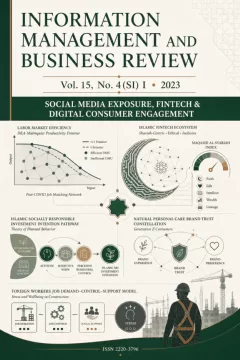 Vol. 15 No. 4(SI)I (2023)
Social Media Exposure, Fintech & Digital Consumer Engagement
View issue contents
Published
Submissions
Have research to publish? Information Management and Business Review welcomes submissions.
Make a Submission