Abstract
Food waste has significant environmental impacts and poses a major challenge for restaurant operations in the Klang Valley. To examine the elements of the Norm Activation Model (NAM) that influence consumer intentions to reduce food waste, a quantitative method was utilized to select 290 respondents. 290 valid responses were collected through face-to-face data distributions and an online questionnaire before being analyzed using the Statistical Package for the Social Sciences (SPSS). The study examines how personal norms (PN), ascription of responsibility (AR), and awareness of consequences (AC) influence personal norms (PN) and how personal norm (PN) influences intention (INT) to reduce food waste. Findings reveal that the intention to reduce food waste (INT) is significantly influenced by personal norms (PN), with awareness of consequences (AC) and ascription of responsibility (AR) both positively influencing personal norms (PN). These interventions align with the NAM model by increasing awareness, reinforcing responsibility, and shaping personal norms that encourage sustainable dining behaviors among consumers. Thus, the findings of the study benefit all key stakeholders, including restaurants, policymakers, and consumers, by advocating effective solutions to minimize food waste in the Klang Valley’s restaurants .
Keywords
- Norm Activation Theory (NAM) Search this journal for Norm Activation Theory (NAM) (opens in a new tab)
- Personal Norm (PN) Search this journal for Personal Norm (PN) (opens in a new tab)
- Awareness of Consequences (AC) Search this journal for Awareness of Consequences (AC) (opens in a new tab)
- Ascription of Responsibility (AR) Search this journal for Ascription of Responsibility (AR) (opens in a new tab)
- Food Waste Search this journal for Food Waste (opens in a new tab)
References
- Ariffin, Z. Z., Anuar, S. N., Mangadi, N. F., Yaakop, A. Y., Sakawi, Z., Jusoh, S., & Ibrahim, M. A. (2023). Household food waste behavior in Klang Valley, Malaysia, and its potential in the circular economy. Sustainability, 15(12), 9431.
- Ariestiningsih, E. S., Muchta, A. A., & Sulaeman, M. (2020). The Role of Ascription of Responsibility on Pro-Environmental Behavior in Jakarta Communities. Proceedings of the 1st International Conference on Recent Innovations (ICRI 2018). 2251-2258. https://doi.org/10.5220/0009941422512258
- Ayd?n, A. E., & Y?ld?r?m, P. (2021). Understanding food waste behavior: The role of morals, habits and knowledge. Journal of Cleaner Production, 280, 124250. https://doi.org/10.1016/j.jclepro.2020.124250
- Chun T’ing, L., Moorthy, K., Gunasaygaran, N., Sek Li, C., Omapathi, D., Jia Yi, H., Anandan, K., & Sivakumar, K. (2021). Intention to reduce food waste: A study among Malaysians. Journal of the Air and Waste Management Association, 71(7), 890–905. https://doi.org/10.1080/10962247.2021.1900001
- De Groot, J. I. M., Bondy, K., & Schuitema, G. (2021). Listen to others or yourself? The role of personal norms on the effectiveness of social norm interventions to change pro-environmental behavior. Journal of Environmental Psychology, 78, 101688. https://doi.org/10.1016/j.jenvp.2021.101688
- Iriyadi, Setiawan, B., & Puspitasari, R. (2023). Consumer intentions to reduce food waste in all-you-can-eat restaurants based on personal norm activation. Heliyon, 9(2), e13399. https://doi.org/10.1016/j.heliyon.2023.e13399
- Jang, Y.-J., & Kim, E. (2023). Social and Personal Norms in Shaping Customers' Environmentally Sustainable Behavior in Restaurants' Social Media Communities. Sustainability, 15(8), 6410. https://doi.org/10.3390/su15086410
- Jang, S. Y., & Ahn, J. (2024). Exploring consumer attitudes and behavior toward food waste reduction in upscale restaurants: A sustainable development perspective. Journal of Sustainability Science, 35(4), 23-45.
- Kim, S. H., & Seock, Y. (2019). The roles of values and social norms on personal norms and pro-environmentally friendly apparel product purchasing behavior: The mediating role of personal norms. Journal of Retailing and Consumer Services, 51, 83–90. https://doi.org/10.1016/j.jretconser.2019.05.023
- Kim, W., Che, C., & Jeong, C. (2022). Food Waste Reduction from Customers’ Plates: Applying the Norm Activation Model in South Korean Context. Land, 11(1), 109. https://doi.org/10.3390/land11010109
- Kumar, V., & Rathore, P. (2024). Nudging consumer behavior for waste management in restaurants: Insights from experimental research. Journal of Consumer Behavior, 48(2), 112-125.
- Lin, H., & Lee, C. (2024). Social norms and consumer responsibility in food waste reduction: Evidence from Asian restaurant settings. International Journal of Hospitality Management, 98, 102014.
- Ma, Y., Mamun, A. A., Ali, M. H., Hoque, M. E., & Li-Li, Z. (2023). Modeling the intention and adoption of food waste prevention practices among Chinese households. Humanities and Social Sciences Communications, 10(1). https://doi.org/10.1057/s41599-023-02348-9
- Munerah, S., Koay, K. Y., & Thambiah, S. (2021). Factors influencing non-green consumers’ purchase intention: A partial least squares structural equation modelling (PLS-SEM) approach. Journal of Cleaner Production, 280, 124192. https://doi.org/10.1016/j.jclepro.2020.124192
- Nelson, P., Scheiber, F., Laughlin, H., & Demir-Lira, Ö. (2021). Comparing face-to-face and online data collection methods in preterm and full-term children: an exploratory study. Frontiers in Psychology, 12. https://doi.org/10.3389/fpsyg.2021.733192.
- Obuobi, B., Zhang, Y., Adu-Gyamfi, G., & Nketiah, E. (2023). Households’ food waste behavior prediction from a moral perspective: a case of China. Environment, Development and Sustainability. https://doi.org/10.1007/s10668-023-03136-w
- Oh, J., & Ki, E. (2022). Extending norm activation theory to understand publics’ support for environmentally responsible organizations. Corporate Communications: An International Journal, 28(3), 381–399. https://doi.org/10.1108/ccij-03-2022-0024
- Phooi, C. L., Azman, E. A., Ismail, R., Arif Shah, J., & Koay, E. S. R. (2022). Food Waste Behavior and Awareness of Malaysian. Scientifica, 2022. https://doi.org/10.1155/2022/6729248
- Ritchie, B. W., Prideaux, B., Thompson, M., & Demeter, C. (2022). Understanding tourists’ attitudes toward interventions for the Great Barrier Reef: an extension of the norm activation model. Journal of Sustainable Tourism, 30(6), 1364–1383. https://doi.org/10.1080/09669582.2021.1948048
- Savari, M., Damaneh, H. E., Damaneh, H. E., & Cotton, M. (2023). Integrating the norm activation model and theory of planned behavior to investigate farmer pro-environmental behavioral intention. Scientific Reports, 13(1). https://doi.org/10.1038/s41598-023-32831-x
- Schwartz, S. H. (1977). Normative Influences on Altruism. Advances in Experimental Social Psychology, 10, 221-279. https://doi.org/10.1016/s0065-2601(08)60358-5
- Sekaran, U. & Bougie, R. (2016) Research Methods for Business: A Skill-Building Approach. 7th Edition, Wiley & Sons, West Sussex.
- Setiawan, B., Afiff, A. Z., & Heruwasto, 1. (2020). Integrating the Theory of Planned Behavior With Norm Activation in an Environmental Context. Social Marketing Quarterly, 26(3), 152450042094922. https://doi.org/10.1177/1524500420949220
- Setiawan, B., Afiff, A. Z., & Heruwasto, 1. (2021). Personal Norm And Environmental Consumer Behavior: An Application Of Norm Activation Theory. ASEAN Marketing Journal, 13(1). https://doi.org/10.21002/amj.v1311.13213
- Sha’ari, N. S. M., Sazali, U. S., Zolkipli, A. T., Vargas, R. Q., & Shafie, F. A. (2023). Environmental assessment of casual dining restaurants in urban and suburban areas of peninsular Malaysia during the COVID-19 pandemic. Environmental Monitoring and Assessment, 195(2), 346. This article explores the environmental impact of food waste in casual dining, with insights into Malaysian consumer behavior
- Shen, G., Li, Z., & Hong, T. (2023). The status of the global food waste mitigation policies: experience and inspiration for China. National Library of Medicine, 37362998. https://www.ncbi.nlm.nih.gov/pmc/articles/PMC10073629/
- Song, J., Cai, L., Yuen, K. F., & Wang, X. (2023). Exploring consumers’ usage intention of reusable express packaging: An extended norm activation model. Journal of Retailing and Consumer Services, 72(November 2022), 103265. https://doi.org/10.1016/j.jretconser.2023.103265
- Talwar, S., Kaur, P., Okumus, B., Ahmed, U., & Dhir, A. (2021). Food waste reduction and taking away leftovers: Interplay of food-ordering routine, planning routine, and motives. International Journal of Hospitality Management, 98, 1-12. https://doi.org/10.1016/j.ijhm.2021.103033
- Wang, J., Li, M., Li, S., & Chen, K. (2022). Understanding Consumers' Food Waste Reduction Behavior—A Study Based on Extended Norm Activation Theory. International Journal of Environmental Research and Public Health, 19(7), 4187. https://doi.org/10.3390/ijerph19074187
Downloads
No downloads have been recorded for this article yet. Figures appear here once readers begin downloading the full text.
How to Cite
Share this article
License
Copyright (c) 2025 Suraya Azmi, Siti Nur Aisyah Abdullah, Noorazlin Ramli, Fatimah Abd Ghani, Yusnaidi (Author)

This work is licensed under a Creative Commons Attribution 4.0 International License.
Author (s) should affirm that the material has not been published previously. It has not been submitted and it is not under consideration by any other journal. At the same time author (s) need to execute a publication permission agreement to assume the responsibility of the submitted content and any omissions and errors therein. After submission of revised paper in the light of suggestions of the reviewers, the editorial team edits and formats manuscripts to bring uniformity and standardization in published material.
This work will be licensed under Creative Commons Attribution 4.0 International (CC BY 4.0) and under condition of the license, users are free to read, copy, remix, transform, redistribute, download, print, search or link to the full texts of articles and even build upon their work as long as they credit the author for the original work. Moreover, as per journal policy author (s) hold and retain copyrights without any restrictions.
Keywords
- Norm Activation Theory (NAM) Search this journal for Norm Activation Theory (NAM) (opens in a new tab)
- Personal Norm (PN) Search this journal for Personal Norm (PN) (opens in a new tab)
- Awareness of Consequences (AC) Search this journal for Awareness of Consequences (AC) (opens in a new tab)
- Ascription of Responsibility (AR) Search this journal for Ascription of Responsibility (AR) (opens in a new tab)
- Food Waste Search this journal for Food Waste (opens in a new tab)
Section
Published in
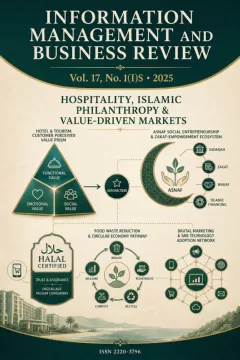 Vol. 17 No. 1(I)S (2025)
Hospitality, Islamic Philanthropy & Value-Driven Markets
View issue contents
Published
Submissions
Have research to publish? Information Management and Business Review welcomes submissions.
Make a Submission