Abstract
The emergence of new technologies, such as Artificial Intelligence (AI), is anticipated to profoundly impact the accounting and auditing sectors. AI is essential for automating repetitive tasks and enhancing audit judgment. This study seeks to investigate the adoption of AI in small audit firms in Malaysia. A qualitative research design was employed, involving semi-structured interviews with nine audit supervisors from small audit firms in Kuala Lumpur, Negeri Sembilan, Pahang, and Melaka. The discussion focuses on two elements: (1) Perceived Usefulness (PU) – emphasizing how AI enhances audit efficiency and accuracy, and (2) Perceived Ease of Use (PEU) – highlighting the ease of adoption and integration of AI tools into existing audit workflows. The findings reveal that AI is perceived as a valuable tool in small audit firms, improving audit quality and workflow by significantly accelerating the audit process. However, human expertise is still required for certain complex tasks and decision-making. Hence, it is crucial to communicate the AI’s capabilities and constraints to prevent users from experiencing undue disappointment. The findings of this study aim to assist regulators and standard-setters in developing guidelines, principles, and frameworks for AI adoption among audit firms in Malaysia.
Keywords
- Artificial Intelligence (AI) Search this journal for Artificial Intelligence (AI) (opens in a new tab)
- Auditing Search this journal for Auditing (opens in a new tab)
- Audit Firms Search this journal for Audit Firms (opens in a new tab)
- Automation Search this journal for Automation (opens in a new tab)
- Technology Adoption Search this journal for Technology Adoption (opens in a new tab)
References
- Abdullah, S. N., Abdul Aziz, A., & Saifulazri, B. Q. (2023). The Impact of Information Technology on Accounting Systems Towards SME Performance in Malaysia. Journal of Social Economics Research, 10(2), 69-80.
- Adeoye, I. O., Akintoye, R. I., Theophilus, A. A., & Olagunju, O. A. (2023). Artificial intelligence and audit quality: Implications for practicing accountants. Asian Economic and Financial Review, 13(11), 756–772.
- Almaqtari, F. A., Farhan, N. H. S., Al-Hattami, H. M., Elsheikh, T., & Al-dalaien, B. O. A. (2024). The Impact of Artificial Intelligence on Information Audit Usage: Evidence from Developing Countries. Journal of Open Innovation: Technology, Market, and Complexity, 10(2).
- Almufadda, G., & Almezeini, N. A. (2022). Artificial Intelligence Applications in the Auditing Profession: A Literature Review. Journal of Emerging Technologies in Accounting, 19(2).
- AlNasrallah, W. & Saleem, F. (2022). Determinants of the Digitalization of Accounting in an Emerging Market: The Roles of Organizational Support and Job Relevance. Sustainability 2022, 14, 6483.
- Attaran, M. & Woods, J. (2019). Cloud Computing Technology: Improving Small Business Performance Using the Internet. Journal of Small Business Entrepreneurship, 31(6), 495-519.
- Chan, D. Y., & Vasarhelyi, M. A. (2011). Innovation and practice of continuous auditing. International Journal of Accounting Information Systems, 12(2).
- Economic Planning Unit (2016). Twelfth Malaysia Plan 2021-2025: A Prosperous, Inclusive, Sustainable Malaysia.
- Estep, C., Griffith, E. E., & MacKenzie, N. L. (2023). How Do Financial Executives Respond to the Use of Artificial Intelligence in Financial Reporting and Auditing? In Review of Accounting Studies, 29(3), 2798–2831.
- Grant Thornton. (2023). Control AI Cybersecurity Risks.
- Hasan, A. R. (2022). Artificial Intelligence (AI) in Accounting & Auditing: A Literature Review. Open Journal of Business and Management, 10(01), 440–465.
- Huang, F., & Vasarhelyi, M. A. (2019). Applying Robotic Process Automation (RPA) in Auditing: A Framework. International Journal of Accounting Information Systems, 35.
- Inayatulloh, Kumala, D., Mangruwa R.D., & Dewi, E. P. (2021). Technology Acceptance Model for Adopting E-Accounting Information System based on open source for SMEs. 2021 International Seminar on Application for Technology of Information and Communication (iSemantic), 263-267.
- Kamal, L. N., Jasni, N. S., Razali, F. M., & Shah, S. Z. O. (2023). Factors Influencing the Intention to Adopt Cloud Accounting Among Malaysian North Borneo SMEs: A TOE Model Approach. Economic Affairs (New Delhi), 68(2).
- Keenoy, C. L. (1958). The Impact of Automation on the Field of Accounting. The Accounting Review, 33(2), 230–236.
- Mahusin, N., Sallehudin, H., & Satar, N. S. M. (2024). Malaysia Public Sector Challenges of Implementation of Artificial Intelligence (AI). IEEE Access, 12, 121035-121051.
- Malaysian Institute of Accountants. (2018). MIA Digital Technology Blueprint: Preparing the Malaysian Accountancy Profession for the Digital World.
- Malaysian Institute of Accountants. (2023). Report on Technology Adoption by the Accounting Profession in Malaysia.
- Marikyan, D. & Papagiannidis, S. (2023). Technology Acceptance Model: A review. In S. Papagiannidis (Ed), TheoryHub Book.
- Martinez, R. (2019). Artificial Intelligence: Distinguishing Between Types & Definitions. Nevada Law Journal, 19, Article 9.
- McCarthy, J. (2007). From Here to Human-level AI. Artificial Intelligence, 171(18).
- Murphy, H. (2017). Better Technology Can Improve the Quality of Audit Work by Carrying Out Tasks Faster Than a Human Could © FT montage.
- Ng, D. T. K., Leung, J. K. L., Chu, K. W. S., & Qiao, M.S. (2021). AI Literacy: Definition, Teaching, Evaluation, and Ethical Issues. In Proceedings of the Association for Information Science and Technology, Salt Lake City, UT, USA, 30 October-2 November 2021, 58, 504-509.
- Omar, S. A., Hasbolah, F., & Zainudin, U. M. (2017). The Diffusion of Artificial Intelligence in Governance of Public Listed Companies in Malaysia. International Journal of Business, Economics and Law, 14(2).
- Omoteso, K. (2012). The Application of Artificial Intelligence in Auditing: Looking Back to the Future. In Expert Systems with Applications, 39(9), 8490–8495. Elsevier Ltd.
- Ria, R. (2023). Adoption of Cloud-based Accounting to Achieve Sustainable Development in Banking Industry: A Case of Indonesia. Journal of Law and Sustainable Development, 11(6), 1-17.
- Seethamraju, R., & Hecimovic, A. (2023). Adoption of Artificial Intelligence in Auditing: An exploratory study. Australian Journal of Management, 48(4), 780–800.
- Shamsudin, A., Khan, M. N. A. A., & Jusoh, A. (2024). Evaluating Technology Adoption Relevance in Audit and Non-audit Firms: A Comparative Analysis. Journal of Information System and Technology Management, 9(35), 75–97.
- Silaban, A. & Siallagan, H. (2019). The Integration of Technology Acceptance Model with the Uses and Gratification Theory Toward the Intention to Use Accounting Information Technology: An Analysis. Pakistan Journal of Social Sciences, 16 (6), 219-226.
- Taherdoost, H. (2018). A Review of Technology Acceptance and Adoption Models and Theories. Procedia Manufacturing, 22, 960–967.
- Tyagi, A. K., Aswathy, S. U., & Abraham, A. (2020). Integrating Blockchain Technology and Artificial Intelligence: Synergies, Perspectives, Challenges and Research Directions. Journal of Information Assurance and Security, 15, 178-193.
- V?rzaru, A. A. (2022). Assessing Artificial Intelligence Technology Acceptance in Managerial Accounting. Electronics (Switzerland), 11(14).
- Wang, P. (2019). On Defining Artificial Intelligence. Journal of Artificial General Intelligence, 10(2).
- World Economy Forum 2015. (2015). Deep Shift: Technology Tipping Points and Social Impact.
- Zawacki-Richter, O., Marín, V. I., Bond, M., & Gouverneur, F. (2019). Systematic Review of Research on Artificial Intelligence Applications in Higher Education – Where Are the Educators? International Journal of Educational Technology in Higher Education, 16(1).
Downloads
No downloads have been recorded for this article yet. Figures appear here once readers begin downloading the full text.
How to Cite
Share this article
License
Copyright (c) 2025 Mohd Syazwan Karim, Nur Farahah Mohd Pauzi, Adriana Shamsudin, Siti Nurulhuda Mamat, Muhammad Mukhlis Abdul Fatah, Khairiah Ahmad, Nurfarahin Roslan (Author)

This work is licensed under a Creative Commons Attribution 4.0 International License.
Author (s) should affirm that the material has not been published previously. It has not been submitted and it is not under consideration by any other journal. At the same time author (s) need to execute a publication permission agreement to assume the responsibility of the submitted content and any omissions and errors therein. After submission of revised paper in the light of suggestions of the reviewers, the editorial team edits and formats manuscripts to bring uniformity and standardization in published material.
This work will be licensed under Creative Commons Attribution 4.0 International (CC BY 4.0) and under condition of the license, users are free to read, copy, remix, transform, redistribute, download, print, search or link to the full texts of articles and even build upon their work as long as they credit the author for the original work. Moreover, as per journal policy author (s) hold and retain copyrights without any restrictions.
Keywords
- Artificial Intelligence (AI) Search this journal for Artificial Intelligence (AI) (opens in a new tab)
- Auditing Search this journal for Auditing (opens in a new tab)
- Audit Firms Search this journal for Audit Firms (opens in a new tab)
- Automation Search this journal for Automation (opens in a new tab)
- Technology Adoption Search this journal for Technology Adoption (opens in a new tab)
Section
Published in
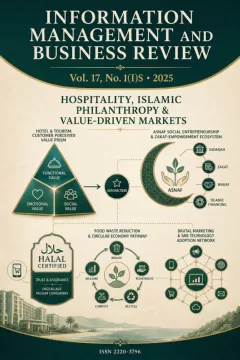 Vol. 17 No. 1(I)S (2025)
Hospitality, Islamic Philanthropy & Value-Driven Markets
View issue contents
Published
Submissions
Have research to publish? Information Management and Business Review welcomes submissions.
Make a Submission