Abstract
The primary objective of a restaurant operation is to attain profitability by cultivating customer loyalty through outstanding service, unforgettable dining experiences, and strong connections that encourage repeat visits. This study investigates whether Indian Muslim or Mamak restaurants are outshining Malay restaurants in urban areas. Qualitative data were collected through semi-structured interviews with 120 customers at selected popular Mamak restaurants in the Klang Valley, Malaysia. These interviews aimed to understand customers' viewpoints and dining experiences. The findings reveal that Mamak restaurants have successfully adapted to shifting consumer preferences, establishing themselves as a resilient and favored dining option, particularly in urban settings. Their continuous innovation, technology integration, and extended operating hours have reinforced their appeal, slightly overshadowing Malay restaurants in these areas. The study highlights the importance of restaurant operators adopting proactive strategies that align with changing consumer demands and market dynamics to remain competitive and sustainable.
Keywords
References
- Abdul Halim, N. R., Mutalib, S., Abd. Ghani, M., & Hashim, H. (2024). Non-conformance report (NCR) on Malaysia halal certification: A case study among small-medium scale food enterprises (SMEs) in Malaysia. Food Control. https://doi.org/10.1016/j.foodcont.2024.110298
- Abdul Majid, M. A., Azman, A. B., Usman, S. B., Zahari, H., & Abdul Raji, M. N. (2024). Leveraging technology for the survival of the restaurant business: a systematic literature review. Journal of Tourism, Hospitality and Culinary Arts, 16(1), 619-639
- Abdullah, K. M., Putit, L., & Yulia, C. (2024). Innovation in the Malaysian Traditional Food Industry: A Conceptual Paper. Advances in Social Sciences Research Journal. https://doi.org/10.14738/assrj.112.2.16419
- Adedoyin, F. F., Erum, N., & Bekun, F. V. (2022). How does institutional quality moderate the impact of tourism on economic growth? Startling evidence from high earners and tourism-dependent economies. Tourism Economics, 28(5), 1311-1332.
- Agustin, H., Hanoum, S., & Wardah, T. A. (2023). The Role of Strategic Flexibility on Business Survival. Jurnal Sosial Humaniora: Penelitian Universitas Djuanda. https://doi.org/10.12962/j24433527.v16i1.18058
- Agustina, T., Susanti, E., & Rana, J. A. S. (2024). Sustainable consumption in Indonesia: Health awareness, lifestyle, and trust among Gen Z and Millennials. Environmental Economics, 15(1), 82.
- Akbar, J., Gul, M., Jahangir, M., Adnan, M., Saud, S., Hassan, S. G., Nawaz, T., & Fahad, S. (2023). Global Trends in Halal Food Standards: A Review. Foods. https://doi.org/10.3390/foods12234200
- Al-Gasawneh, J. A., & Dalain, A. F. (2023). Impact of service quality on customer retention. Calitatea, 24(195), 280-285.
- Alshamsi, A., Alshurideh, M., Kurdi, B. A., & Salloum, S. A. (2021). The influence of service quality on customer retention: A systematic review in higher education. In Proceedings of the International Conference on Advanced Intelligent Systems and Informatics 2020 (pp. 404-416). Springer International Publishing.
- Alt, R. (2021). Digital transformation in the restaurant industry: Current developments and implications. Journal of Smart Tourism, 1(1), 69-74.
- Al-Tit, A. A. (2015). The effect of service and food quality on customer satisfaction and hence customer retention. Asian Social Science, 11(23), 129.
- Amel, E., Lee, D., Secatore, E., & Singer, E. (2020). Independent restaurants are a nexus of small businesses in the United States and drive billions of dollars of economic activity that is at risk of being lost due to the COVID-19 pandemic. C. Lexecon.
- Amidi, A., Darvishmoghaddam, E., Razmfarsa, A., & Othman, R. B. (2022). Impact of five important factors on restaurant performance and hospitality management: an empirical analysis of technological innovation. Future Technology, 1(2), 1–17. https://doi.org/10.55670/fpll.futech.1.2.1
- Anaam, F. (2024). Effect of Ambience in the Restaurant Industry.
- Ansai, N., Wambogo, E., Herrick, K. A., Zimmer, M. C., Reedy, J., Hales, C. M., & Ogden, C. L. (2023). Dietary Contributions of Food Outlets by Urbanization Level in the US Population 2 Years and Older, NHANES 2013-2018. The American Journal of Clinical Nutrition, 117(5), 946–954. https://doi.org/10.1016/j.ajcnut.2023.02.014
- Antoshkona, N. (2022). Prospects of incorporating the concept of programming consumer experiences in the restaurant business. Herald of Khmelnytskyi National University Economic Sciences, 312(6(1)), 228–233. https://doi.org/10.31891/2307-5740-2022-312-6(1)-35
- Azlie, W. E., Zahari, M. S. M., Majid, H. N. A., & Hanafiah, M. H. (2023). To what extent does consumers’ perceived health consciousness regarding organic food influence their dining choices at organic restaurants? An empirical investigation. International Journal of Gastronomy and Food Science, 34, 100843.
- Baid, P., & Madhwani, R. (2024). Impact of restaurant music on customers’ perception of service quality. https://doi.org/10.62823/ijemmasss/6.3(i).6823
- Baiomy, A. E., Jones, E., & Goode, M. M. (2019). The influence of menu design, menu item descriptions and menu variety on customer satisfaction. A case study of Egypt. Tourism and Hospitality Research, 19(2), 213-224.
- Baumann, S., Szabo, M., & Johnston, J. (2019). Understanding the food preferences of people of low socioeconomic status. Journal of Consumer Culture, 19(3), 316-339.
- Buhalis, D., Harwood, T., Bogicevic, V., Viglia, G., Beldona, S., & Hofacker, C. (2019). Technological disruptions in services: Lessons from tourism and hospitality. Journal of service management, 30(4), 484-506.
- Calza, F., Sorrentino, A., & Tutore, I. (2023). Managing environmental sustainability in customer experience processes: A multi-stakeholder analysis within the food delivery ecosystem. Business Process Management Journal, 29(8), 210-229.
- Can, Ü. (2021). A conceptual assessment of current trends in the restaurant industry accompanied by future forecasts. Journal of New Tourism Trends, 2(2), 209-219.
- Caporaso, N. (2021). The impact of molecular gastronomy within the food science community. In Gastronomy and Food Science (pp. 1-18). Academic Press.
- Chiang, C.-F., & Yen, Y. C. (2024). Preferential segmentation in F&B service innovation. Journal of Foodservice Business Research, 1–25. https://doi.org/10.1080/15378020.2024.2430068
- Chinedu, G. S. C., & Edenkwo, C. (2024). Value and Lifestyle Segmentation Strategies and Customer Patronage of Food and Beverage Firms in Rivers State. JALINGO JOURNAL OF SOCIAL AND MANAGEMENT SCIENCES, 5(4), 131-144.
- Chua, B. L., Karim, S., Lee, S., & Han, H. (2020). Customer restaurant choice: an empirical analysis of restaurant types and eating-out occasions. International journal of environmental research and public health, 17(17), 6276.
- ?iri?, N., ?enadi?, M., Muhi, B., & Jovanovi?, D. (2014). Quality of gourmand products and services and modern trends in the restaurant industry. Ekonomika Poljoprivrede (1979), 61(2), 409–422. https://doi.org/10.5937/EKOPOLJ1402409C
- Coe, C. (2024). Social physics: an application of measurement to organizations (Doctoral dissertation)
- Cristina, C., Indrianti, V., Wiyana, T., & Rosma, D. (2024). The impact of digital menu design, menu item description, and menu variety on consumer satisfaction in the hospitality industry, especially in restaurants. In Studies in Systems, Decision and Control (pp. 97–104). https://doi.org/10.1007/978-3-031-65207-3_9
- Davydenko, I., Khramtsova, Y., Krupenna, I., Baraniuk, D., & Naumik-Gladka, K. (2024). Strategic Management of the Hotel, Restaurant and Tourism Business: The Impact of Innovative and Marketing Strategies on Competitiveness. Pacific Business Review International, 17(6).
- Decrop, A. (1999). Triangulation in qualitative tourism research. Tourism Management, 20(1), 157-161.
- Dhamija, H. (2024). Unraveling Niche Marketing Dynamics. Indian Scientific Journal Of Research In Engineering And Management, 08(05), 1–5. https://doi.org/10.55041/ijsrem35036
- Fan, W., & Huo, S. (2020). Nighttime Cultural Consumption Demands and Suggestions for Improvement in the Old City of Beijing. DEStech Transactions on Social Science, Education and Human Science. https://doi.org/10.12783/DTSSEHS/EELSS2020/34654
- Fedorova, A. (2020). Research and analysis of business processes in a catering enterprise. https://doi.org/10.30987/CONFERENCEARTICLE_5FD755C0127BD9.87408786
- Feldman, C. H., & Wunderlich, S. (2023). Cultural food distancing: a conceptual discourse on the evolution of seminal to present and future models of traditional food practices. British Food Journal, 125(5), 1936-1952.
- Fouad, R. S., & Mokhtar, R. R. (2025). The Role of Generational Traits in Shaping Service Practices and Customer Perceptions: A Case Study in QSRs. Journal of Association of Arab Universities for Tourism and Hospitality, 28(1), 124-140.
- Fowler, D. (2023). Impact of poor service on hospitality industry organizations: A viewpoint. Tourism and Hospitality International Journal, 20(1), 95-102.
- Ganesh, M. K. (2024). Farm-to-Table Initiatives in Restaurant Food Production: Benefits, Challenges, and Consumer Perceptions. https://doi.org/10.61877/ijmrp.v2i7.174
- Goodman, J. (2019). Strategic customer service: Managing the customer experience to increase positive word of mouth, build loyalty, and maximize profits. Amacom.
- Hashim, N. A. A. N., Nawi, N. M. M., Bakar, N. A., Rahim, M. A., Yusoff, A. M., Halim, M. H. A., ... & Remeli, M. R. (2021, November). Factors influencing customer revisit intention to Mamak restaurants in Penang. In International Conference on Business and Technology (pp. 275-289). Cham: Springer International Publishing.
- Hubbard, L. J. (2018). Small Business Restaurant Marketing Strategies for Sustainability (Doctoral dissertation, Walden University).
- Ishak, F. A. C., Kang, S. S., Fikeri, N. A. S. M., Ab Karim, M. S., & Mohamad, S. F. (2024). Restoring Restaurant Design and Layout: Towards Safer Dining Out Experience. Journal of Advanced Research Design, 116(1), 1-12. https://doi.org/10.37934/ard/116.1.112
- Jadhav, A. B., Adsure, T., Kamble, A. B., Dhakane, A., & Karanjkar, S. (2024). A Comprehensive Survey on Digitization in the Restaurant Sector. 1–6. https://doi.org/10.1109/raics61201.2024.10689768
- Jalis, M. H., & Husin, N. M. (2019). Core features of the indian muslim restaurant concept in West Malaysia. 7. https://doi.org/10.24191/E-AJ.V7ISI-TEMIC18.5381
- Jasonos, M., & McCormick, R. (2017). Technology integration for restaurants & hospitality industry in the year 2025.
- Jayasinghe, S., Byrne, N. M., & Hills, A. P. (2025). Cultural influences on dietary choices. Progress in Cardiovascular Diseases.
- Jeon, H. M., Sung, H. J., & Kim, H. Y. (2020). Customers’ acceptance intention of self-service technology in the restaurant industry: expanding UTAUT with perceived risk and innovativeness. Service Business, 14, 533-551.
- Jordaan, B. (2023). The forces and barriers pushing Dutch restaurants to change and their effects on being more environmentally sustainable (Bachelor's thesis, University of Twente).
- Jusuf, D. I. (2023). Digital technology and changes in consumer behavior: Case study of the millennial generation. Jurnal Ekonomi, 12(04), 1338-1343.
- Katsikouli, P., Wilde, A. S., Dragoni, N., & Høgh?Jensen, H. (2021). On the benefits and challenges of blockchains for managing food supply chains. Journal of the Science of Food and Agriculture, 101(6), 2175-2181.
- Kaur, D. P., Malhotra, P., Dutta, R., & Kaur, H. J. (2023). Restaurant Automation: A Framework using Data Acquisition and Visualization for Improved Customer Experiences. 409–413. https://doi.org/10.1109/icdabi60145.2023.10629293
- Khan, M. A. (2020). Technological disruptions in restaurant services: Impact of innovations and delivery services. Journal of Hospitality & Tourism Research, 44(5), 715-732.
- Koh, Y., Rhou, Y., Lee, S., & Singal, M. (2018). Does franchising alleviate restaurants’ vulnerability to economic conditions?. Journal of Hospitality & Tourism Research, 42(4), 627-648.
- Kraak, V. (2019). Food service and restaurant sectors. In Healthy and Sustainable Food Systems (pp. 103-113). Routledge. https://doi.org/10.4324/9781351189033-9
- Kulshrestha, R. (2025). Changing Tastes: How Globalization Is Shaping Regional Cuisines- Culinary Innovation and Fusion Cuisine, Variety, and Availability of Ingredients. In Global Sustainable Practices in Gastronomic Tourism (pp. 231-242). IGI Global Scientific Publishing.
- Lee, W., Jang, S. S., & Kim, H. S. (2024). The effect of digital transformation: Boosting productivity in the restaurant industry. International Journal of Hospitality Management, 123, 103896.
- Lim, W. M., Aggarwal, A., & Dandotiya, R. (2022). Marketing luxury services beyond affluence in the new normal: Insights from fine dining during the coronavirus pandemic. Journal of Retailing and Consumer Services, 66, 102936.
- Lin, P. M., Peng, K. L., Au, W. C. W., Qiu, H., & Deng, C. D. (2023). Digital menus innovation diffusion and transformation process of consumer behavior. Journal of Hospitality and Tourism Technology, 14(5), 732-761.
- Liu, P., & Tse, E. C. Y. (2018). Exploring factors on customers’ restaurant choice: an analysis of restaurant attributes. British Food Journal, 120(10), 2289-2303.
- Mahasuweerachai, P., & Suttikun, C. (2022). The effect of green self-identity on perceived image, warm glow and willingness to purchase: A new generation’s perspective towards eco-friendly restaurants. Sustainability, 14(17), 10539.
- Manhas, P. S., Sharma, P., & Quintela, J. A. (2024). Product Innovation and Customer Experience: Catalysts for Enhancing Satisfaction in Quick Service Restaurants. Tourism and Hospitality, 5(3), 559-576.
- Mardatiilah, A., & Rosmayani, R. (2023). The effect of innovation on sustainable competitive advantage through local wisdom in Padang restaurants in Pekanbaru. JPPI (Jurnal Penelitian Pendidikan Indonesia). https://doi.org/10.29210/020232586
- Mishra, C. V. (2023). From Farm to Fork: An In-depth Review of Sustainable Practices in Gastronomy. International Journal for Multidimensional Research Perspectives, 1(2), 47-61.
- Mohamed, H. E., Hasanein, A. M., & Saad, S. G. (2022). The Impact of Digital Menus on Customer Behavioral Intentions in Casual Dining Restaurants: Mediating Role of Customer Satisfaction. International Academic Journal Faculty of Tourism and Hotel Management, 8(2), 49-73.
- Mohd Alias, M. S., Mohamed Rani, Z., & Ariffin, H. F. (2024). Tourism Destination Image: Towards a Better Performance of Malay Restaurant by Reflecting Competitive Advantage in Business Organization. Information Management and Business Review, 16(3(I)S), 16–22. https://doi.org/10.22610/imbr.v16i3(i)s.3953
- Mohd Fikri, N. H., Abdul Rahman, A. E., & Noh, I. (2021). Exploring culinary heritage practices among the younger Chetti generations in Melaka. Journal of Ethnic Foods, 8(1), 25. doi.org/10.1186/S42779-021-00101-8
- Nderitu, L., & Mutinda, R. (2024). Hygiene and sanitation practices on customer satisfaction in ethnical restaurants found in Nairobi County. International Journal of Advanced Research, 12(09), 841–870. https://doi.org/10.21474/ijar01/19520
- Ngo, Q. H. (2024). The effects of differentiation strategy on market orientation and performance in Vietnamese small restaurants. Tourism and hospitality management, 30(3), 401-416. https://doi.org/10.20867/thm.30.3.9
- Nie, X., Zhao, W. M., & Guan, J. (2025). Towards a framework of menu research: insights from the multiple level perspective and signaling theory. British Food Journal, 127(1), 233-252 https://doi.org/10.1108/BFJ-11-2023-1039
- Nongkhai, J., Suttikun, C., & Mahasuweerachai, P. (2023). Why Young Consumers Engage with Mobile Self-Ordering Applications (MFOAs) at Restaurants During COVID-19: The Role of Functional and Psychological Factors. https://doi.org/10.1080/08974438.2023.2255573
- Nor, N. M. S. N. M., & Zahari, M. S. M. (2025). Menu Hybridization Development: Opportunity for Food Business Performance. In Innovative Trends Shaping Food Marketing and Consumption (pp. 157-188). IGI Global Scientific Publishing.
- Nyamekye, M. B., Adam, D. R., Boateng, H., & Kosiba, J. P. (2023). Place attachment and brand loyalty: The moderating role of customer experience in the restaurant setting. International Hospitality Review, 37(1), 48-70.
- Okumus, B., Ozturk, A. B., & Bilgihan, A. (2021). Generation Y's dining out behavior. International Hospitality Review, 35(1), 41-56.
- Oliinyk, N., Podolskyi, M., Velykochyy, V., Albeshchenko, O., & Domashenko, S. (2024). Enhancing hotel and restaurant business efficiency through digital technologies. Multidisciplinary Reviews, 8.
- Olsen, M. D., & Zhao, J. (2014). The restaurant revolution—growth, change and strategy in the international foodservice industry. In Quick Service Restaurants, Franchising, and Multi-Unit Chain Management (pp. 1-34). Routledge.
- Othman, M., Abu Bakar, A. Z., Kandasamy, T., & Chua, B.-L. (2018). Identifying success factors of Mamak restaurants in Malaysia. http://psasir.upm.edu.my/id/eprint/74545/
- Othman, Z., Salehuddin, M., Zahari, M., & Radzi, S. M. (2018). The effect of service delivery failures on service recovery: A causal study. Int. J. Acad. Res. Bus. Soc. Sci, 8(15), 33-48.
- Pauzi, N., Razali, A., Man, S., Syed Jaafar, S. M. J., & Jamaludin, M. H. (2025). Influence of customer intention on patronizing halal logos in the food premises of Malaysia. Journal of Islamic Marketing, 16(2), 484-501. https://doi.org/10.1108/jima-05-2023-0158
- Postova, V. V. (2021). Features of the development and implementation of competitive advantages of establishments of the restaurant economy in modern market conditions. Scientific Bulletin of Mukachevo State University. Series “Economics, 8(1), 58-67. https://doi.org/10.52566/MSU-ECON.8(1).2021.58-67
- Prasanna, S., Verma, P., & Bodh, S. (2024). The role of food industries in sustainability transition: A review. Environment, Development and Sustainability, 1-21.
- Protasiuk, E. (2024). Unsettled Times: The Contestation and Reproduction of Flexible Scheduling in Pandemic-Era Restaurant Work. Work And Occupations. https://doi.org/10.1177/07308884241265477
- Rahma, T. H. P., Setiawan, B., Isaskar, R., & Wahyuningtyas, A. S. H. (2024). The Influence of Crowdedness and Brand Experience to Increase Customer Loyalty in a Spicy Noodle Restaurant. Journal of Social Economic of Agriculture, 13(1), 10-19. https://doi.org/10.26418/jsea.v13i1.75400
- Rahman, A., & Khan, P. I. (2014). Effect of Service Convenience on Service Loyalty: Moderating Role of Consumer Characteristics. South Asian Journal of Management, 21(3), 7. https://www.questia.com/library/journal/1P3-4160999431/effect-of-service-convenience-on-service-loyalty
- Rajan, A. (2023). Gastronomic evolution: A review of traditional and contemporary Food Culture. International Journal for Multidimensional Research Perspectives, 1(2), 62-76.
- Rajendran, S. D., Kamarulzaman, N. H., & Rahman, A. (2024). The mediating role of halal supply chain integrity in enhancing performance for halal herbal-based food SMEs. Journal of Islamic Marketing. https://doi.org/10.1108/jima-03-2022-0090
- Ramírez, J. G. C. (2022). Struggling Small Businesses in the US. The next challenge to economic recovery. International Journal of Business Intelligence and Big Data Analytics, 5(1), 81-91.
- Ramly, A. S. M., Ahmad, R., & Ahmadin, S. N. (2003). Factors influencing customers patronizing mamak restaurants–a survey in Shah Alam. In Second National Educators Conference (pp. 10-21).
- Rasool, N., & Bhat, J. I. (2025). Artificial Intelligence in Restaurants. In Artificial Intelligence in the Food Industry (pp. 171-205). CRC Press.
- Rawson, K., & Shore, E. (2019). Dining out: A global history of restaurants. Reaktion Books.
- Saleem, N., & Ghai, A. (2023). The impact of economic recession on Delhi's hotel and restaurant industry: a comprehensive analysis.
- Salim, P. (2022). Immersive Technology Study As A Science Innovation to Enhance the Modern Dining Experience.
- Salzberg, A. C., Gough, M. Z., & Suen, I. S. (2019). Sustainable innovation behavior in restaurants. Journal of Foodservice Business Research, 22(2), 167-190.
- Sari, D. K., Saputra, R., & Handinata, D. (2024). Supply Chain Management Resilience: How It Works To The Sustainability of Culinary SMEs Through the Decade. Indonesian Journal of Business and Entrepreneurship. https://doi.org/10.17358/ijbe.10.2.367
- Sayed, A. (2022). The interrelationship between niche marketing and Competitiveness. International Design Journal, 12(3), 65–78. https://doi.org/10.21608/idj.2022.234783
- Searight, T. (2023). Eating On And Beyond The Infinite Corridor (Doctoral dissertation, Massachusetts Institute of Technology).
- Shahrom, N. F. N., Zaidi, N. F. N., Shamsuri, A. H., & Mohd Nazar, M. Z. Z. (2024). Strategi Pemasaran Produk Halal: Kajian Kes Di Mokti’s Ice Cream. Journal of Contemporary Islamic Studies, 10(1), 1–10. https://doi.org/10.24191/jcis.v10i1.5
- Shariff, S. N. F. A., Omar, M., Jalis, M. H., & Indriastuti, M. (2024). Exploring the Impact of Malaysia's Culinary Heritage on Tourism and Economic Development. Environment-Behaviour Proceedings Journal, 9(30), 139-144. https://doi.org/10.21834/e-bpj.v9i30.6198
- Shiri, N., & Jafari?Sadeghi, V. (2023). Corporate social responsibility and green behaviour: Towards sustainable food?business development. Corporate Social Responsibility and Environmental Management, 30(2), 605-620.
- Siebert, M. (2024). Franchise your business: The guide to employing the greatest growth strategy ever. Entrepreneur Press.
- Su, C. H., Tsai, C. H., Chen, M. H., & Lv, W. Q. (2019). US sustainable food market generation Z consumer segments. Sustainability, 11(13), 3607.
- Suchánek, P., & Králová, M. (2023). Relationship Between Customer Expectations and Financial Performance of Food Industry Businesses in a Customer Satisfaction Model. Economic and Business Review, 25(2), 103–117. https://doi.org/10.15458/2335-4216.1320
- Sujangi, N. A. A. A., Salim, S., Deraman, F., Ismail, N., & Deraman, N. A. (2023). The Factors that Influence Customer Satisfaction Towards Restaurants in Malaysia. International Journal of Business and Technology Management, 5(S1), 263-273. doi.org/10.55057/ijbtm.2023.5.s1.25
- Taheri, B., & Gannon, M. (2021). Contemporary issues and future trends in food tourism. International Journal of Tourism Research, 23(2). https://doi.org/10.1002/JTR.2446
- Tahir, M. M. (2022). Influence of Special Treatment, Interactive Features, Physical Features, and Price on Customer Loyalty Restaurant Industry. International Journal of Circular Economy and Waste Management, 2(2), 1–14. https://doi.org/10.4018/ijcewm.306214
- Talukder, M. B., Das, I. R., & Kumar, S. (2025). Future Trends and Prospects of the Food Industry: Perspectives from Hospitality. In Food and Industry 5.0: Transforming the Food System for a Sustainable Future (pp. 289-303). Cham: Springer Nature Switzerland.
- Tan, S., & Tan, S. (2024). A story of food and place: constructing Chinese identities in a multicultural Malaysian society. Identities-Global Studies in Culture and Power, 1–24. https://doi.org/10.1080/1070289x.2024.2335775
- Tang, J. (2024). A Study on Nyonya Food Culture from the Perspective of Cross-Cultural Adaptation Theory. Scientific and Social Research, 6(5), 43-49. doi.org/10.26689/ssr.v6i5.6881
- Tehrani, M. A., & Ulubay, M. (2022). A survey on organizational resilience in Iranian restaurants during COVID-19. Journal of Business, Economics and Finance. https://doi.org/10.17261/pressacademia.2022.1593
- Timokhovich, A. N. (2024). Features of the restaurant market and consumer behavior in the Moscow restaurant business segment: study results. ??????? ????????????, 8, 87–94. https://doi.org/10.26425/1816-4277-2024-8-87-94
- Tomasella, B., Ali, A., & Gill, D. (2024). Hospitality that cares: a qualitative investigation into small foodservice businesses’ social responsibility. Current Issues in Tourism, 27(12), 1853-1869.
- Tuncer, I. (2020). Customer Experience in the Restaurant Industry: Use of Smart Technologies (pp. 254–272). IGI Global. https://doi.org/10.4018/978-1-7998-1989-9.CH012
- Tvaltvadze, G. (2024). Exploring trends in Helsinki's dining culture: A Study about current inspirations of restaurateurs.
- Vasani, S., Thakarar, N., & Abdulkareem, A. M. (2024). Service Quality and Customer Satisfaction with Special Reference to Restaurants. https://doi.org/10.20944/preprints202407.1441.v1
- Verma, V. C., & Gupta, D. D. (2018). An Investigative Study of Factors Influencing Dining Out in Casual Restaurants Among Young Consumers. 4(1), 39. https://doi.org/10.11648/J.EBM.20180401.16
- Warde, A., Whillans, J., & Paddock, J. (2019). The allure of variety: Eating out in three English cities. Poetics, 72, 17–31. https://doi.org/10.1016/J.POETIC.2018.09.001
- Wong, I. A., Huang, J., Lin, Z., & Jiao, H. (2022). Smart dining, smart restaurant, and smart service quality (SSQ). International Journal of Contemporary Hospitality Management, 34(6), 2272-2297.
- Yasmeen, B., & Fischer, F. (2024). Food Choices of Contemporary Cuisine and Traditional Foods: Effects on Family Ties. Nutrients, 16(23), 4126.
- Yong, R. Y. M., Chua, B. L., Fakfare, P., & Han, H. (2024). Sustainability à la carte: A systematic review of green restaurant research (2010-2023). Journal of Travel & Tourism Marketing, 41(4), 508-537.
- Yoon, J., & Yu, H. (2022). Impact of customer experience on attitude and utilization intention of a restaurant-menu curation chatbot service. Journal of Hospitality and Tourism Technology, 13(3), 527-541.
- Yousuf, A., Oláh, J., Sarihasan, I., Rauf, A., & Felföldi, J. (2023). Is flexibility a dual mechanism? Evidence from the Hungarian food industry. Journal of International Studies, 16(1), 83–97. https://doi.org/10.14254/2071-8330.2023/16-1/6
- Zainuddin, W. A. R. W., Idris, A. K. M., Abd Rahim, A. S. K., Siddiqe, H. A., & Faat, F. (2023). Examining the effect of service quality dimensions on customer satisfaction in Western-themed restaurants. environment, 8(32), 50-62.
- Zanetta, L. D., Xavier, M. C., Hakim, M. P., Stedefeldt, E., Zanin, L. M., Medeiros, C. O., & Cunha, D. T. da. (2024). How does the consumer choose a restaurant? An overview of the determinants of consumer satisfaction. Food Research International. https://doi.org/10.1016/j.foodres.2024.114369
- Zatsu, V., Shine, A. E., Tharakan, J. M., Peter, D., Ranganathan, T. V., Alotaibi, S. S., ... & Nayik, G. A. (2024). Revolutionizing the food industry: The transformative power of artificial intelligence review. Food Chemistry: X, 101867.
- Zeithaml, V. A., Berry, L. L., & Parasuraman, A. (1988). Communication and control processes in the delivery of service quality. Journal of Marketing, 52(2), 35-48.
- Zhang, C., & Yao, H. (2022). Impact of Social Media on Young Consumers’ Hotel Decision-making Behavior. https://doi.org/10.2991/assehr.k.220109.003
- Zhang, Z., & Kurbanbaeva, A. (2024). Franchising is one of the tools for organizing and strategic business development in the regions. Ìzdenìster, Na?tiželer, 2 (102), 559–565. https://doi.org/10.37884/2-2024/54
Downloads
No downloads have been recorded for this article yet. Figures appear here once readers begin downloading the full text.
How to Cite
Share this article
License
Copyright (c) 2025 Mohd Salehuddin Mohd Zahari, Zul Hazam Mohd Piah, Mohamad Fadzly Che Omar, Nursyafiqah Ramli, Hanafi Hamzah (Author)

This work is licensed under a Creative Commons Attribution 4.0 International License.
Author (s) should affirm that the material has not been published previously. It has not been submitted and it is not under consideration by any other journal. At the same time author (s) need to execute a publication permission agreement to assume the responsibility of the submitted content and any omissions and errors therein. After submission of revised paper in the light of suggestions of the reviewers, the editorial team edits and formats manuscripts to bring uniformity and standardization in published material.
This work will be licensed under Creative Commons Attribution 4.0 International (CC BY 4.0) and under condition of the license, users are free to read, copy, remix, transform, redistribute, download, print, search or link to the full texts of articles and even build upon their work as long as they credit the author for the original work. Moreover, as per journal policy author (s) hold and retain copyrights without any restrictions.
Keywords
Section
Published in
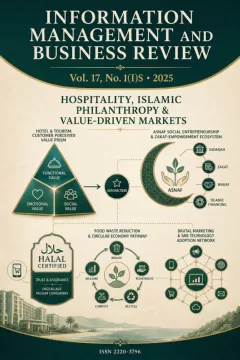 Vol. 17 No. 1(I)S (2025)
Hospitality, Islamic Philanthropy & Value-Driven Markets
View issue contents
Published
Submissions
Have research to publish? Information Management and Business Review welcomes submissions.
Make a Submission