Abstract
Inclusive education, which aims to provide equal learning opportunities for all students regardless of their abilities or disabilities, has gained considerable attention globally. This study presents a bibliometric analysis of literature on inclusive education, providing a comprehensive overview of research trends, influential publications, key authors, and collaborative networks within this domain. Using a comprehensive database search, the study analyses scholarly articles published in the Scopus database, employing bibliometric techniques such as citation analysis, co-authorship networks, and keyword co-occurrence mapping. A bibliometric analysis was conducted using data from prominent academic databases. This study utilizes bibliometric tools to examine scholarly discourse on inclusive education, identifying key themes, influential authors, and global research collaborations. Publications were analyzed based on metrics such as the number of publications, citation counts, authorship patterns, and geographical distribution. The findings reveal the evolution of research on inclusive education, highlighting significant shifts in focus areas, emerging themes, and the geographical distribution of research contributions. The analysis revealed a steady increase in publications on inclusive education over the past two decades, with a notable surge in the last five years. Influential authors and seminal works were highlighted, along with leading journals and institutions contributing to this field. The study also identified emerging trends and under-researched areas that warrant further exploration. This study used the Scopus database, specifically using biblioMagika®2.9. Therefore, the articles related to inclusive education in other databases were not included. This study is essential because it can help researchers focus their time on exploring topics that have not been thoroughly investigated.
Keywords
References
- Ainscow, M. (2020). Promoting Inclusion and Equity in Education: Lessons from International Experiences. Nordic Journal of Studies in Educational Policy, 6, 7-16.
- https://doi.org/10.1080/20020317.2020.1729587
- Ainscow, M., Slee, R., & Best, M. (2019). Editorial: The Salamanca statement: 25 years on. International Journal of Inclusive Education, 23(7-8), 671-676. https://doi.org/10.1080/13603116.2019.1622800
- Asian Development Bank (ADB). (2020). Education in Indonesia: A white paper. https://www.adb.org/publications/education-indonesia-white-paper
- Forlin, C., & Sin, K. F. (2010). Developing Support for Inclusion: A Professional Learning Approach for Teachers in Hong Kong. International Journal of Whole Schooling, 6(1), 7-26.
- Ioannidi, V. and Malafantis, K. (2022). Inclusive education and pedagogy: A practice for all students. European Journal of Education Studies, 9(10). https://doi.org/10.46827/ejes.v9i10.4476
- Kultusministerkonferenz (KMK). (2022). Inclusive education in schools in the German education system. Standing Conference of the Ministers of Education and Cultural Affairs of the Länder in the Federal Republic of Germany. https://www.kmk.org
- Lauchlan, F., & Greig, S. (2015). Educational inclusion in England: origins, perspectives and current directions. Learning support, 30(1), 69-82.
- Rahmawati, N., & Amka, A. (2022). Government policy and implementation of inclusive education in Indonesia. Journal of Education and Learning, 16(1), 45–54. https://doi.org/10.xxxx/jel.v16i1.12345
- Sunardi, Yusuf, M., Gunarhadi, P. & Yeager, J. L. (2011). The implementation of inclusive education for students with special needs in Indonesia. Excellence in Higher Education, 2(1), 1–10. https://doi.org/10.5195/ehe.2011.27
- Symeonidou, S., & Phtiaka, H. (2014). ‘My colleagues wear blinkers... If they were trained, they would understand better. Reflections on teacher education on inclusion in Cyprus. Journal of Research in Special Educational Needs, 14(2), 110-119.
- UNESCO. (2015). Education 2030: Incheon Declaration and Framework for Action for the Implementation of Sustainable Development Goal 4. United Nations Educational, Scientific and Cultural Organization. https://unesdoc.unesco.org/ark:/48223/pf0000245656
Downloads
No downloads have been recorded for this article yet. Figures appear here once readers begin downloading the full text.
How to Cite
Share this article
License
Copyright (c) 2025 Syahrina Hayati Md Jani, Siti Mariam Ali, Siti Nurul Akma Ahmad (Author)

This work is licensed under a Creative Commons Attribution 4.0 International License.
Author (s) should affirm that the material has not been published previously. It has not been submitted and it is not under consideration by any other journal. At the same time author (s) need to execute a publication permission agreement to assume the responsibility of the submitted content and any omissions and errors therein. After submission of revised paper in the light of suggestions of the reviewers, the editorial team edits and formats manuscripts to bring uniformity and standardization in published material.
This work will be licensed under Creative Commons Attribution 4.0 International (CC BY 4.0) and under condition of the license, users are free to read, copy, remix, transform, redistribute, download, print, search or link to the full texts of articles and even build upon their work as long as they credit the author for the original work. Moreover, as per journal policy author (s) hold and retain copyrights without any restrictions.
Keywords
Section
Published in
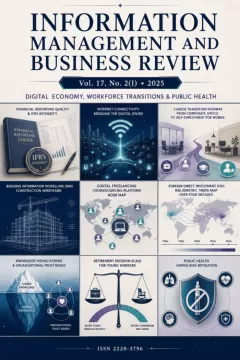 Vol. 17 No. 2(I) (2025)
Digital Economy, Workforce Transitions & Public Health
View issue contents
Published
Submissions
Have research to publish? Information Management and Business Review welcomes submissions.
Make a Submission