Abstract
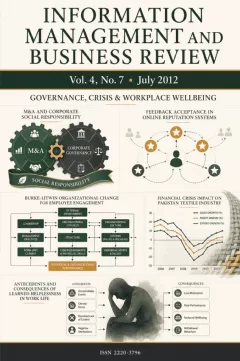
Technologies, processes and products are easily imitated in today’s business world, so organizations can differentiate themselves from others only with their human capital. Helplessness, which may reflect itself as alienation, withdrawal, turnover intention is a serious problem that could prevent the adequate utilization of human capital. The overarching purpose of this study was to review “learned helplessness literature” with specific focus on helplessness in work context. This study, hopefully provided insights about why employees exhibit passive behaviors and apathy; in other words fall into helplessness even though they could initiate a change. In the first part, development of learned helplessness concept was explained together with initial models and experiments. After providing this background information, the individual and work-related antecedents of helplessness were listed. As part of antecedents, the impact of locus of control, gender, role stressors (i.e., workload, ambiguity) and organization structure was discussed briefly. In the third part, both organizational and individual consequences of helplessness were mentioned. Finally, suggestions were made to both practitioners and researchers in order to contribute advancement of theory and improvement of quality of work life.
Keywords
- Learned Helplessness Search this journal for Learned Helplessness (opens in a new tab)
- Apathy Search this journal for Apathy (opens in a new tab)
- Attributions Search this journal for Attributions (opens in a new tab)
- Passivity Search this journal for Passivity (opens in a new tab)
- And Stress Search this journal for And Stress (opens in a new tab)
References
- Abramis, D. J. (1994). Work role ambiguity, job satisfaction, and job performance: Meta-analysis and review. Psychological Reports , 75(3f), 1411-1433.
- Abramson, L. Y., Seligman, M. P. & Teasdale, J. D. (1978). Learned helplessness in human: critique and reformulation. Journal of Abnormal Psychology, 87(1), 49-74.
- Armon, G., Shirom, A. & Melamed, S. (2012). The big five personality factors as predictors of changes across time in burnout and its facets. Journal of Personality, 80(2), 403-427.
- Ashforth, B. E. (1989). The experience of powerlessness in organizations. Organizational Behavior and Decision Processes, 43(2), 207-242.
- Ashforth, B. E. & Saks, A. M. (2000). Personal control in organizations: A longitudinal investigation with newcomers. Human Relations, 53(3), 311-339.
- Baucom, D. H. & Danker-Brown, P. (1979). Influence of sex roles on the development of learned helplessness. Journal of Consulting and Clinical Psychology, 47 (5), 928-936.
- Baucom, D. H. & Danker-Brown, P. (1984). Sex role identity and sex stereotyped tasks in the development of learned helplessness in women. Journal of Personality and Social Psychology , 46 (2), 422-430.
- Bieling, P. J., Israeli, A. L. & Antony, M. M. (2004). Is perfectionism good, bad, or both? Examining models of the perfectionism construct. Personality and Individual Differences, 36(6), 1373-1385.
- Brunstein, J. C. & Olbrich, E. (1985). Personal helplessness and action control: Analysis of achievement related cognitions, self-assessments, and performance. Journal of Personality and Social Psychology, 48(6), 1540-1551.
- Campbell, C. R. & Martinko, M. J. (1998). An integrative attributional perspective of empowerment and learned helplessnes: A multimethod field study. Journal of Management , 24(2), 173-200.
- Carlson, D. S. & Kacmar, K. M. (1994). Learned helplessness as a predictor of employee outcomes: An applied model. Human Resource Management Review, 4(3), 235-256.
- Cemalcılar, Z., Canbeyli, R. & Sunar, D.(2003). Learned helplessness, theraphy and personality traits: An experimental study. The Journal of Social Psychology, 143(1),65-81.
- Costello, C. G. (1978). A critical review of Seligman’s laboratory experiments on learned helplessness and depression in humans. Journal of Abnormal Psychology, 87(1), 21-31.
- Dunkley, D. M., Zuroff, D. C. & Blankstein, K. R. (2003). Self-critical perfectionism and daily affect: Dispositional and situational influences on stress and coping. Journal of Personality and Social Psychology , 84(1), 234-252.
- Dweck, C. & Llicht, B. (1980). Learned helplessness and intellectual achievement. In J. Garber, & M.E.P. Seligman Human Helplessness: Theory and application . New York: Academic Press.
- Enns, M. W., Cox, B. J., Sareen, J. & Freeman, P. (2001). Adaptive and maladaptive perfectionism in medical students: A longitudinal investigation. Medical Education, 35(11), 1034-1042.
- Fernet, C., Austin, S., Trépanier, S. G. & Dussault, M. (2012). How do job characteristics contribute to burnout? Exploring the distinct mediating roles of perceived autonomy, competence, and relatedness. European Journal of Work and Organizational Psychology, 1-31.ifirst article.
- Fosco, E. & Geer, J. H. (1971). Effects of gaining control over aversive stimuli after differing amounts of no control. Psychological Reports , 29(3), 1153-1154.
- Frost, R. O., Benton, N. & Dowrick, P. W. (1990). Self evaluations, videotape review and dysphoria. Journal of Social and Clinical Psychology, 9(3), 367-374.
- Gatchel, R. J. & Proctor, J. D. (1976). Physiological correlates of learned helplessness in man. Journal of Abnormal Psychology, 85(1), 27-34.
- Güler, B. K. (2006). Çalışma Hayatında Öğrenilmiş Çaresizlik . Ankara: Liberte Yayınları.
- Helplessness (2011). In Oxford Advance Learner’s Dictionary online. Retrieved from http://oald8.oxfordlearnersdictionaries.com/dictionary/helplessness#helpless.
- Hewitt, P. L. & Flett, G. L. (1990). Perfectionism and depression: A multidimensional analysis. Journal of Social Behavior and Personality, 5(5), 423-438.
- Hill, R. W., Huelsman, T. J., Furr, R. M., Kibler, J., Vicente, B. B. & Kennedy, C. (2004). A new measure of perfectionism: The Perfectionism Inventory. Journal of Personality Assessment, 82(1), 80-91.
- Hiroto, D. S. (1974). Locus of control and learned helplessness. Journal of Experimental Psychology, 102(2), 187-193.
- Job, R. F. (1987). Learned helplessness in chickens. Animal Learning & Behavior, 15(3), 347-350.
- Kiefer, L. F. (1990). Learned helplessness: A factor in women's depression. Journal of Women and Social Work , 5(1), 21-31.
- Klein, D. C. & Seligman, M. E. P. (1976). Reversal of performance deficits and perceptual deficits in learned helplessness and depression. Journal of Abnormal Psychology, 85(1), 11-26.
- Klein, D. C., Fencil-Morse, E. & Seligman, M. E. (1976). Learned helplessness, depression and, the attribution of failure. Journal of Personality and Social Psychology, 33(5), 508-516.
- Learned helplessness. (2012). In Collins English Dictionary. Retrieved from http://www.collinsdictionary.com/dictionary/english/learned-helplessness.
- Learned helplessness. (2012). In Oxford Dictionary online. Retrieved from http://oxforddictionaries.com/definition/learned%2Bhelplessness?q=learned+helplessness.
- LeUnes, A. D., Nation, J. R. & Turley, N. M. (1980). Male-female performance in learned helplessness. The Journal of Psychology, 104(2) , 225-258.
- Mackey, J. & Martinko, M. J. (2012). The role of gender and attributional style in counterproductive aggressive work behaviors. In S.Fox & T.R.Lituchy, Gender and Dysfuctional Workplace, Cheltenham, UK, Edward Elgar Publishing Limited.
- Maier, S. F. & Seligman, M. (1976). Learned helplessness: Theory and evidence. Journal of Experinental Psychology: General, 105(1 ), 3-46.
- Marx, K. (2011). The economic and philosophical manuscripts . Retrieved from Marks/Engels Works: http://www.marxists.org/archive/marx/works/1844/epm/index.htm, July 9th, 2011.
- Martinko, M. J. & Gardner, W. L. (1982). Learned helplessness: An alternative explanation on performance deficits. Academy of Management Review, 7(2), 195-204.
- McMullen, M. B. & Krantz, M. (1988). Burnout in day care workers: The effects of learned helplessness and self esteem. Child & Youth Care Quarterly, 17(4), 275-280.
- Miller, W. R. & Seligman, M. E. (1975). Depression and learned helplessness in man. Journal of Abnormal Psychology, 84(3), 228-238.
- Miller, W. R., Seligman, M. E. & Kurlander, H. M. (1975). Learned helplessnes, depression and anxiety. Journal of Nervous and Mental Disease, 161(5), 347-357.
- Myers, D. G. (2004). Exploring Social Psychology . Third Edition . New York: McGraw-Hill .
- O’Neill, J. W. & Xiao, Q. (2010). Effects of organizational/occupational characteristics and personality traits on hotel manager emotional exhaustion. International Journal of Hospitality Management , 29(4), 652-658.
- Ormel, J. & Wohlfarth, T. (1991). How neuroticism, long-term difficulties and life situation change influence psychological distress: A longitudinal model. Journal of Personality and Social Psychology, 60(5), 744-755.
- Overton, W. & Meehan, A. (1982). Individual difference in formal operational thought: Sex role and learned helplessness. Child Development, 53(6), 1536-1543.
- Peterson, C., Maier, S. F. & Seligman, M. E. (1993). Learned helplessness: A theory for the age of personal control . New York: Oxford Press.
- Porsolt, R. D., Le Pichon, M. & Jalfre, M. (1977). Depression: A new animal model sensitive to antidepressant treatment. Nature, 266 (5604), 730-732.
- Roth, S. & Bootzin, R. R. (1974). Th effects of experiementally induced expectancies of external control: An investigation of learned helplessness. Journal of Personality and Social Psychology, 29(2), 253264.
- Roth, S. & Kubal, L. (1975). Effects of noncontingent reinforcement on tasks of differing importance: Facilitation and learned helplessness. Journal of Personality and Social Psychology, 32(4), 680691.
- Rozell, E. J., Gunderson, D. E. & Terpstra, D. E. (1998). Gender differences in the factors affecting helpless behavior and performance. Journal of Social Behavior and Personality, 13(2), 265-280.
- Schaufeli, W. B. & Buunk, B. P. (2003). Burnout: An overview of 25 years of research in theorizing. In M. J. Schabracq, J. A. Winnubst, & C. L. Cooper, The handbook of work and health psychology . Chichester: Wiley
- Schulman, P. (1999). Applying learned optimism to increase sales productivity. Journal of Personal Selling and Sales Management , 19(1), 31-37.
- Seligman, M. E. P.(1990). Learned Optimism. New York: NY: Pocket Books.
- Seligman, M. E. P. (1992). Helplessness: On depression, development, and death. A Series of Psychology Books. New York: W. H. Freeman Publishing.
- Seligman, M. E. P. & Schulman, P. (1986). Explanatory style as a predictor of productivitiy and quiting among life insurance sales agents. Journal of Personality and Social Psychology, 50(4), 832-838.
- Seligman, M. E. P. & Maier, S. F. (1967). Failure to escape traumatic shock. Journal of Experimental Psychology, 74(1), 1-9.
- Shepperd, C. D., Tashchian, A. & Ridnour, R. E. (2011). An investigation of the job burnout syndrome in personal selling. Journal of Personal Selling & Sales Management , 31(4), 397-409.
- Tayfur, O. (2011). Çalışma hayatında öğrenilmiş çaresizlik ve tükenmişliğin nedenleri ve sonuçları üzerine bir çalışma. [ A study on antecedents and consequences of learned helplessness and burnout in work life], Unpublished PhD Dissertation. Ankara, Turkey.
- Tayfur, O. & Arslan, M. (2012). The alleviating effect of perceived supervisor support on workload, workfamily conflict & learned helplessness. Mediterranean Journal of Social Sciences, 3(6), 229-236.
- Tennen, H. & Eller, S. J. (1977). Attributional components of learned helplessness and facilitation. Journal of Personality and Social Psychology, 35(4), 265-271.
- Tubre, T. & Collins, J. (2000). Jackson and Schuler (1985) revisited: a meta-analysis of the relationships between role ambiguity, role conflict, and job performance. Journal of Management, 26(1), 155169.
- Watson, D. & Clark, L. A. (1984). Negative affectivity: The disposition to experience aversive emotional states. Psychological Bulletin , 96(3), 465-490.
- Wortman, C. M. & Brehm, J. W. (1975). Response to uncontrollable outcomes: An integration of reactance theory and the learned helplessness model. In L. Berkowitz. Advances in experimental social psychology (8). New York: Academic Press.
- Yuksel, F. & Ozkiraz, A. (2012). The main problem of Turkish public administation: Learned helplessness. African Journal of Business Management, 6(4), 1214-1221.
- Zimmerman, M. A. (1990). Toward a theory of learned resourcefulness: A structural model analysis of participation and empowerment . Journal of Research in Personality, 24(1),71-86.
Downloads
No downloads have been recorded for this article yet. Figures appear here once readers begin downloading the full text.
How to Cite
Share this article
License
Copyright (c) 2012 Ozge Tayfur (Author)

This work is licensed under a Creative Commons Attribution 4.0 International License.
Author (s) should affirm that the material has not been published previously. It has not been submitted and it is not under consideration by any other journal. At the same time author (s) need to execute a publication permission agreement to assume the responsibility of the submitted content and any omissions and errors therein. After submission of revised paper in the light of suggestions of the reviewers, the editorial team edits and formats manuscripts to bring uniformity and standardization in published material.
This work will be licensed under Creative Commons Attribution 4.0 International (CC BY 4.0) and under condition of the license, users are free to read, copy, remix, transform, redistribute, download, print, search or link to the full texts of articles and even build upon their work as long as they credit the author for the original work. Moreover, as per journal policy author (s) hold and retain copyrights without any restrictions.
Keywords
- Learned Helplessness Search this journal for Learned Helplessness (opens in a new tab)
- Apathy Search this journal for Apathy (opens in a new tab)
- Attributions Search this journal for Attributions (opens in a new tab)
- Passivity Search this journal for Passivity (opens in a new tab)
- And Stress Search this journal for And Stress (opens in a new tab)
Section
Published
Submissions
Have research to publish? Information Management and Business Review welcomes submissions.
Make a Submission