Abstract
Technology has significantly enhanced access to education, enabling students to benefit from lower costs and higher productivity. This advancement has been further expedited by the incorporation of AI, especially through applications like AI chatbots. Despite these advancements, students in higher educationespecially those enrolled in public universities in developing countries- often exhibit skepticism toward adopting AI chatbots for academic assistance. Thus, the main goal of this study is to find out how students in public universities in developing nations plan to use AI chatbots as teaching aids. The study will use a purposive sampling strategy to gather data from students at different public universities, with a focus on Malaysia. To construct a robust conceptual model that explains students' behavioral intentions toward AI chatbot usage, this research adopts an integrated framework combining the Technology Acceptance Model (TAM) and the Task– Technology Fit (TTF) theory. For data analysis, the study will use the PLS-SEM approach, a well-regarded regression technique suitable for examining complex relationships in structural models. The research's conclusions are anticipated to provide theoretical and practical insights. This study may theoretically add to the body of knowledge on AI chatbot adoption by illuminating the complex human behaviors linked to the adoption of new technologies. Practically, the findings may give governments, university administrators, and AI chatbot developers important information on how to work together to create AI chatbots that are more dependable, user-friendly, and attractive to students, especially in developing countries.
Keywords
- AI Chatbots Search this journal for AI Chatbots (opens in a new tab)
- Task-Technology Fit Search this journal for Task-Technology Fit (opens in a new tab)
- Technology Acceptance Model Search this journal for Technology Acceptance Model (opens in a new tab)
- Students' Intention Search this journal for Students' Intention (opens in a new tab)
- Public Universities Search this journal for Public Universities (opens in a new tab)
References
- Al-Abdullatif, A. M. (2023). Modeling Students’ Perceptions of Chatbots in Learning: Integrating Technology Acceptance with the Value-Based Adoption Model. Education Sciences, 13(11), 1151. https://doi.org/10.3390/educsci13111151
- Al-Emran, M. (2021). Evaluating the Use of Smartwatches for Learning Purposes through the Integration of the Technology Acceptance Model and Task-Technology Fit. International Journal of Human–Computer Interaction, 37(19), 1874–1882. https://doi.org/10.1080/10447318.2021.1921481
- Al-Mamary, Y. H., Alfalah, A. A., Alshammari, M. M., & Abubakar, A. A. (2024). Exploring factors influencing university students’ intentions to use ChatGPT: analysing task-technology fit theory to enhance behavioural intentions in higher education. Future Business Journal, 10(1), 119. https://doi.org/10.1186/s43093-024-00406-5
- Almusawi, H. A., & Durugbo, C. M. (2024). Linking task-technology fit, innovativeness, and teacher readiness using structural equation modelling. Education and Information Technologies. https://doi.org/10.1007/s10639-023-12440-x
- Al-Rahmi, W. M., Al-Adwan, A. S., Al-Maatouk, Q., Othman, M. S., Alsaud, A. R., Almogren, A. S., & Al-Rahmi, A. M. (2023). Integrating Communication and Task–Technology Fit Theories: The Adoption of Digital Media in Learning. Sustainability, 15(10), 8144. https://doi.org/10.3390/su15108144
- Araujo, T. (2018). Living up to the chatbot hype: The influence of anthropomorphic design cues and communicative agency framing on conversational agent and company perceptions. Computers in human behavior, 85, 183-189.
- Adam, M., Wessel, M., & Benlian, A. (2021). AI-based chatbots in customer service and their effects on user compliance. Electronic Markets Electronic Markets, 31(2), 427–445. https://doi.org/10.1007/s12144-024-06072-8
- Ayanwale, M. A. (2024). Using Diffusion Theory of Innovation to Investigate Perceptions of STEM and Non-STEM Students' Adoption of Chatbot Systems in Higher Education: A Multiple Group Analysis. IEEE Global Engineering Education Conference (EDUCON).
- Ahmad, S. F., Alam, M. M., Rahmat, M. K., Mubarik, M. S., & Hyder, S. I. (2022). Academic and administrative role of artificial intelligence in education. Sustainability, 14(3), 1101.
- Alturki, U., & Aldraiweesh, A. (2022). Adoption of Google Meet by Postgraduate Students: The Role of Task Technology Fit and the TAM Model. Sustainability, 14(23), 15765. https://doi.org/10.3390/su142315765
- Ayanwale, M. A., & Ndlovu, M. (2024). Investigating factors of students’ behavioral intentions to adopt chatbot technologies in higher education: Perspective from expanded diffusion theory of innovation. Computers in Human Behavior Reports, 14, 100396. https://doi.org/10.1016/j.chbr.2024.100396
- Bilquise, G., Ibrahim, S., & Salhieh, S. M. (2024). Investigating student acceptance of an academic advising chatbot in higher education institutions. Education and Information Technologies, 29(5), 6357–6382. https://doi.org/10.1007/s10639-023-12076-x
- Belda-Medina, J., & Calvo-Ferrer, J. R. (2022). Using chatbots as AI conversational partners in language learning. Applied Sciences, 12(17), 8427.
- Bagozzi, R. P. (2007). The legacy of the technology acceptance model and a proposal for a paradigm shift. Journal of the association for information systems, 8(4), 3.
- Chang, D. H., Lin, M. P. C., Hajian, S., & Wang, Q. Q. (2023). Educational design principles of using an AI chatbot that supports self-regulated learning in education: Goal setting, feedback, and personalization. Sustainability, 15(17), 12921. https://doi.org/10.3390/su151712921
- Chanda, R. C., Vafaei-Zadeh, A., Hanifah, H., & Ramayah, T. (2025). Artificial intelligence teaching assistant adoption in university education: Key drivers through the ability, motivation, and opportunity framework. Education and Information Technologies, 30(2). https://doi.org/10.1007/s10639-025-13360-8
- Dahri, N. A., Yahaya, N., Al-Rahmi, W. M., Almogren, A. S., & Vighio, M. S. (2024). Investigating factors affecting teachers’ training through mobile learning: Task technology fit perspective. Education and Information Technologies, 29(3). https://doi.org/10.1007/s10639-023-12434-9
- Davis, F. D. (1989). Perceived usefulness, perceived ease of use, and user acceptance of information technology. MIS quarterly, 319–340.
- Goodhue, D. L., & Thompson, R. L. (1995). Task-technology fit and individual performance. MIS Quarterly, 213-236.
- Gupta, P., & Yadav, S. (2022). A TAM-based Study on the ICT Usage by the Academicians in Higher Educational Institutions of Delhi NCR. Data Engineering and Communications Technologies, (111). https://doi.org/10.1007/978-981-16-9113-3_25
- Hair, J. F., Hult, G. T. M., Ringle, C. M., & Sarstedt, M. (2017). A Primer on Partial Least Squares Structural Equation Modeling (PLS-SEM) (2nd ed.). Sage Publications.
- Hair, J. F., Thomas, G., Hult, M., Ringle, C. M., & Sarstedt, M. (2022). A Primer on Partial Least Squares Structural Equation Modeling (3rd ed.). Thousand Oaks, CA: Sage.
- Henseler, J., Ringle, C., & Sarstedt, M. (2015). A New Criterion for Assessing Discriminant Validity in Variance-based Structural Equation Modeling. Journal of the Academy of Marketing Science, 43(1), 115-135.
- Hwang, G.-J., & Chang, C.-Y. (2023). A review of opportunities and challenges of chatbots in education. Interactive Learning Environments, 31(7), 4099–4112.
- Koh, L. Y., Lee, J. Y., Wang, X., & Yuen, K. F. (2023). Urban drone adoption: Addressing technological, privacy, and task–technology fit concerns. Technology in Society, 72, 102203.
- https://doi.org/10.1016/j.techsoc.2023.102203
- Kamalov, F., Santandreu Calonge, D., & Gurrib, I. (2023). New era of Artificial Intelligence in education: Towards a sustainable multifaceted revolution. Sustainability, 15(16), 12451.
- Khan, R. A., & Jawaid, M. (2020). Technology-enhanced assessment (TEA) in the COVID-19 pandemic. Pakistan Journal of Medical Sciences, 36, S108. https://doi.org/10.12669/pjms.36.COVID19-S4.2795
- Kock, N. (2015). Common method bias in PLS-SEM: A full collinearity assessment approach. International Journal of e-Collaboration, 11(4), 1-10.
- Lin, X. (2024). Factors Influencing College Students’ Use of AI Chatbots for Learning Empirical Study based on the TAM extended model. 2024 5th International Conference on Artificial Intelligence and Electromechanical Automation (AIEA), 151–159.
- https://doi.org/10.1109/AIEA62095.2024.10692550
- Lo Presti, A., De Rosa, A., & Viceconte, E. (2021). I want to learn more! Integrating technology acceptance and task–technology fit models for predicting behavioural and future learning intentions. Journal of Workplace Learning, 33(8), 591–605. https://doi.org/10.1108/JWL-11-2020-0179
- Lu, H.-P., & Yang, Y.-W. (2014). Toward an understanding of the behavioral intention to use a social networking site: An extension of task-technology fit to social-technology fit. Computers in Human Behavior, 34, 323–332. https://doi.org/10.1016/j.chb.2013.10.020
- Maheshwari, G. (2024). Factors influencing students’ intention to adopt and use ChatGPT in higher education: A study in the Vietnamese context. Education and Information Technologies, 29(10), 12167–12195. https://doi.org/10.1007/s10639-023-12333-z
- Mello, R. F., Freitas, E., Pereira, F. D., Cabral, L., Tedesco, P., & Ramalho, G. (2023). Education in the age of generative AI: Context and recent developments. arXiv preprint arXiv:2309.12332.
- Monserrat, M., Mas, A., Mesquida, A. L., & Clarke, P. (2022). Investigating the use of artificial intelligence (AI) in educational settings: A systematic review. Communications in Computer and Information Science, 1646, 3–17.
- Mikalef, P., Krogstie, J., 2020. Examining the interplay between big data analytics and contextual factors in driving process innovation capabilities. Eur. J. Inf. Syst., 29(3), 260–287.
- https://doi.org/10.1080/0960085X.2020.1740618.
- Myin, M. T., & Watchravesringkan, K. (2024). Investigating consumers’ adoption of AI chatbots for apparel shopping. Journal of Consumer Marketing, 41(3), 314–327. https://doi.org/10.1108/JCM-03-2022-5234
- Ng’ambi, D., Brown, C., Bozalek, V., Gachago, D., & Wood, D. (2016). Technology-enhanced teaching and learning in South African higher education–A rearview of a 20-year journey. British Journal of Educational Technology, 47(5), 843–858. https://doi.org/10.1111/bjet.12485
- Pillai, R., Sivathanu, B., Metri, B., & Kaushik, N. (2024). Students’ adoption of AI-based teacher-bots (T-bots) for learning in higher education. Information Technology & People, 37(1), 328–355. https://doi.org/10.1108/ITP-02-2021-0152
- Rahi, S., Khan, M. M., & Alghizzawi, M. (2020). Extension of technology continuance theory (TCT) with task technology fit (TTF) in the context of Internet banking user continuance intention. International Journal of Quality & Reliability Management, 38(4), 986–1004. https://doi.org/10.1108/IJQRM-03-2020-0074
- Rahman, M. K., Ismail, N. A., Hossain, M. A., & Hossen, M. S. (2025). Students’ mindset to adopt AI chatbots for the effectiveness of online learning in higher education. Future Business Journal, 11(1), 30. https://doi.org/10.1186/s43093-025-00459-0
- Robayo-Pinzon, O., Rojas-Berrio, S., Rincon-Novoa, J., & Ramirez-Barrera, A. (2023). Artificial intelligence and the value Co-creation process in higher education institutions. International Journal of Human-Computer Interaction, 40(20), 1–17.
- Rapp, A., Curti, L., & Boldi, A. (2021). The human side of human-chatbot interaction: A systematic literature review of ten years of research on text-based chatbots. International Journal of Human-Computer Studies, 151, 102630.
- Robinson, R.S. (2023). Purposive Sampling. Encyclopedia of Quality of Life and Well-Being Research. Springer, Cham. https://doi.org/10.1007/978-3-031-17299-1_2337.
- Saihi, A., Ben-Daya, M. & Hariga, M. (2025). The moderating role of technology proficiency and academic discipline in AI-chatbot adoption within higher education: Insights from a PLS-SEM analysis. Educ Inf Technol, 30, 5843–5881. https://doi.org/10.1007/s10639-024-13023-0
- Saihi, A., Ben-Daya, M., Hariga, M., & As’ad, R. (2024). A Structural equation modeling analysis of generative AI chatbots adoption among students and educators in higher education. Computers and Education: Artificial Intelligence, 7, 100274. https://doi.org/10.1016/j.caeai.2024.100274
- Sánchez-Prieto, J. C., Cruz-Benito, J., Therón, R., & García-Peñalvo, F. (2020). Assessed by Machines: Development of a TAM-Based Tool to Measure AI-based Assessment Acceptance Among Students. International Journal of Interactive Multimedia and Artificial Intelligence, 6(4), 80-86. https://doi.org/10.9781/ijimai.2020.11.009
- Shmueli, G., Sarstedt, M., Hair, J. F., Cheah, J. H., Ting, H., Vaithilingam, S., & Ringle, C. M. (2019). Predictive Model Assessment in PLS-SEM: Guidelines for Using PLSpredict. European Journal of Marketing, 53(11), 2322-2347.
- Stöhr, C., Ou, A. W., & Malmström, H. (2024). Perceptions and usage of AI chatbots among students in higher education across genders, academic levels, and fields of study. Computers and Education: Artificial Intelligence, 7, 100259. https://doi.org/10.1016/j.caeai.2024.100259
- Sun, P., Li, L., Hossain, M. S., & Zabin, S. (2025). Investigating students’ behavioral intention to use ChatGPT for educational purposes. Sustainable Futures, 9, 100531. https://doi.org/10.1016/j.sftr.2025.100531
- Urbani, R., Ferreira, C., & Lam, J. (2024). Managerial framework for evaluating AI chatbot integration: Bridging organizational readiness and technological challenges. Business Horizons, 67(5), 595–606. https://doi.org/10.1016/j.bushor.2024.05.004
- Wang, X., Wong, Y. D., Chen, T., & Yuen, K. F. (2021). Adoption of shopper-facing technologies under social distancing: A conceptualisation and an interplay between task-technology fit and technology trust. Computers in Human Behavior, 124, 106900. https://doi.org/10.1016/j.chb.2021.106900
- Wu, B., & Chen, X. (2017). Continuance intention to use MOOCs: Integrating the technology acceptance model (TAM) and task technology fit (TTF) model. Computers in Human Behavior, 67, 221–232. https://doi.org/10.1016/j.chb.2016.10.028
- Yang, T.-C., & Chen, J.-H. (2023). Pre-service teachers’ perceptions and intentions regarding the use of chatbots through statistical and lag sequential analysis. Computers and Education: Artificial Intelligence, 4, 100119. https://doi.org/10.1016/j.caeai.2022.100119
- Yildiz Durak, H., & Onan, A. (2024). Predicting the use of chatbot systems in education: a comparative approach using PLS-SEM and machine learning algorithms. Current Psychology, 43(28), 23656–23674. https://doi.org/10.1007/s12144-024-06072-8
Downloads
No downloads have been recorded for this article yet. Figures appear here once readers begin downloading the full text.
How to Cite
Share this article
License
Copyright (c) 2025 Cheong Yew Ooi, Ali Vafaei-Zadeh (Author)

This work is licensed under a Creative Commons Attribution 4.0 International License.
Author (s) should affirm that the material has not been published previously. It has not been submitted and it is not under consideration by any other journal. At the same time author (s) need to execute a publication permission agreement to assume the responsibility of the submitted content and any omissions and errors therein. After submission of revised paper in the light of suggestions of the reviewers, the editorial team edits and formats manuscripts to bring uniformity and standardization in published material.
This work will be licensed under Creative Commons Attribution 4.0 International (CC BY 4.0) and under condition of the license, users are free to read, copy, remix, transform, redistribute, download, print, search or link to the full texts of articles and even build upon their work as long as they credit the author for the original work. Moreover, as per journal policy author (s) hold and retain copyrights without any restrictions.
Keywords
- AI Chatbots Search this journal for AI Chatbots (opens in a new tab)
- Task-Technology Fit Search this journal for Task-Technology Fit (opens in a new tab)
- Technology Acceptance Model Search this journal for Technology Acceptance Model (opens in a new tab)
- Students' Intention Search this journal for Students' Intention (opens in a new tab)
- Public Universities Search this journal for Public Universities (opens in a new tab)
Section
Published in
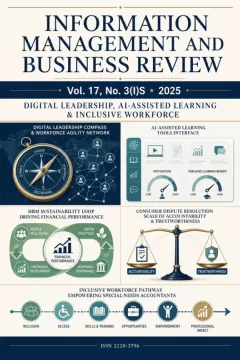 Vol. 17 No. 3(I)S (2025)
Digital Leadership, AI-Assisted Learning & Inclusive Workforce
View issue contents
Published
Submissions
Have research to publish? Information Management and Business Review welcomes submissions.
Make a Submission