Abstract
This study investigates both the direct and mediated influences of authentic leadership on organizational citizenship behaviour toward the environment (OCBE), with psychological capital serving as an intervening mechanism. Using a quantitative approach, data were gathered from 396 frontline employees across six public sector institutions in Sri Lanka through a survey questionnaire. The findings reveal that psychological capital plays a partial mediating role in the association between authentic leadership and OCBE. This indicates that authentic leadership affects OCBE not only directly but also indirectly by fostering employees’ psychological capital. The observed relationships highlight the pivotal role of authentic leadership in enhancing positive psychological resources and promoting environmentally responsible discretionary behaviours among employees. The proposed research framework offers practical insights for senior management in Sri Lankan public sector organizations, particularly in the development of leadership initiatives aimed at cultivating authentic leaders who can encourage environmental sustainability through employees’ OCBE.
Keywords
- Authentic Leadership Search this journal for Authentic Leadership (opens in a new tab)
- Organizational Citizenship Behaviour toward the Environment Search this journal for Organizational Citizenship Behaviour toward the Environment (opens in a new tab)
- Psychological Capital Search this journal for Psychological Capital (opens in a new tab)
- Public Sector Search this journal for Public Sector (opens in a new tab)
- Sri Lanka Search this journal for Sri Lanka (opens in a new tab)
References
- Afsar, B., Badir, Y., & Kiani, U. S. (2016). Linking spiritual leadership and employee pro-environmental Behavior: The influence of workplace spirituality, intrinsic motivation, and environmental passion. Journal of Environmental Psychology, 45, 79–88. https://doi.org/10.1016/j.jenvp.2015.11.011 DOI: https://doi.org/10.1016/j.jenvp.2015.11.011
- Aguilera, R. V., Rupp, D. E., Williams, C. A., & Ganapathi, J. (2007). Putting the S back in corporate social Responsibility: A multilevel theory of social change in organizations. Academy of Management Review, 32(3), 836–863. https://doi.org/10.5465/amr.2007.25275678 DOI: https://doi.org/10.5465/amr.2007.25275678
- Ajzen, I. (1991). The theory of planned behavior. Organizational Behavior and Human Decision Processes, 50(2), 179–211. DOI: https://doi.org/10.1016/0749-5978(91)90020-T
- Akisik, O., & Gal, G. (2017). The impact of corporate social responsibility and internal controls on Stakeholders’ view of the firm and financial performance. Sustainability Accounting, Management and Policy Journal, 8(3), 246–280. DOI: https://doi.org/10.1108/SAMPJ-06-2015-0044
- Amunkete, S., & Rothmann, S. (2015). Authentic leadership, psychological capital, job satisfaction and Intention to leave in state-owned enterprises. Journal of Psychology in Africa, 25(4), 271–281. DOI: https://doi.org/10.1080/14330237.2015.1078082
- Armstrong, J. H. (2019). Modeling effective local government climate policies that exceed state targets. Energy Policy, 132, 15–26. DOI: https://doi.org/10.1016/j.enpol.2019.05.018
- Atwijuka, S., & Caldwell, C. (2017). Authentic leadership and the ethic of care. Journal of Management Development, 36(8), 1040–1051. DOI: https://doi.org/10.1108/JMD-12-2016-0331
- Avey, J. B., Luthans, F., & Jensen, S. M. (2009). Psychological capital: A positive resource for combating Employee stress and turnover. Human Resource Management, 48(5), 677–693. DOI: https://doi.org/10.1002/hrm.20294
- Avolio, B. J., & Gardner, W. L. (2005). Authentic leadership development: Getting to the root of positive forms of leadership. The Leadership Quarterly, 16(3), 315–338. DOI: https://doi.org/10.1016/j.leaqua.2005.03.001
- Avolio, B. J., Gardner, W. L., & Walumbwa, F. O. (2007). Authentic leadership questionnaire. Mind Garden. http://www.mindgarden.com DOI: https://doi.org/10.1037/t06442-000
- Avolio, B. J., Gardner, W. L., Walumbwa, F. O., Luthans, F., & May, D. R. (2004). Unlocking the mask: A look at the process by which authentic leaders impact follower attitudes and behaviours. The Leadership Quarterly, 15(6), 801–823. DOI: https://doi.org/10.1016/j.leaqua.2004.09.003
- Avolio, B. J., & Mhatre, K. H. (2012). Authentic leadership: Advances in theory and research. In K. S. Cameron & G. M. Spreitzer (Eds.), The Oxford Handbook of Positive Organizational Scholarship (pp. 773–783). Oxford University Press.
- Bakker, A.B., & Demerouti, E. (2007). The Job Demands?Resources model: state of the art. Journal of Managerial Psychology, 22(3), 309–328. DOI: https://doi.org/10.1108/02683940710733115
- Bamberg, S., & Möser, G. (2007). Twenty years after Hines, Hungerford, and Tomera: A new meta-analysis of psycho-social determinants of pro-environmental behaviour. Journal of Environmental Psychology, 27(1), 14–25. DOI: https://doi.org/10.1016/j.jenvp.2006.12.002
- Bansal, P., & Roth, K. (2000). Why companies go green: A model of economic responsiveness. Academy of Management Journal, 43(4), 717–736. DOI: https://doi.org/10.2307/1556363
- Bartlett, J. E., Kotrlik, J. W., & Higgins, C. C. (2001). Organizational research: Determining an appropriate Sample size in survey research. Information Technology, Learning, and Performance Journal, 19(1), 43–50. DOI: https://doi.org/10.5032/jae.2002.03001
- Blau P.M. (1964). Exchange and Power in Social Life. New York: John Wiley.
- Boiral, O. (2009). Greening the corporation through organizational citizenship behaviours. Journal of Business Ethics, 87(2), 221–236. DOI: https://doi.org/10.1007/s10551-008-9881-2
- Boiral, O., & Paillé, P. (2012). Organizational citizenship behaviour for the environment: Measurement and validation. Journal of Business Ethics, 109(4), 431–445. DOI: https://doi.org/10.1007/s10551-011-1138-9
- Boiral, O., Talbot, D., & Paillé, P. (2015). Leading by example: A model of organizational citizenship Behaviour for the environment. Business Strategy and the Environment, 24(6), 532–550. https://doi.org/10.1002/bse.1835 DOI: https://doi.org/10.1002/bse.1835
- Cheema, S., Afsar, B., & Javed, F. (2020). Employees' corporate social responsibility perceptions and Organizational citizenship behaviors for the environment: The mediating roles of organizational identification and environmental orientation fit. Corporate Social Responsibility and Environmental Management, 27(1), 9–21. DOI: https://doi.org/10.1002/csr.1769
- Christensen R. K., & Whiting S. W. (2009). Employee evaluations in the public sector: Public service motivation, task and citizenship behaviors. The Korean Journal of Policy Studies, 23, 41-56. DOI: https://doi.org/10.52372/kjps23203
- Clapp-Smith, R., Vogelgesang, G. R., & Avey, J. B. (2009). Authentic leadership and positive psychological Capital: The mediating role of trust at the group level of analysis. Journal of Leadership & Organizational Studies, 15(3), 227–240. DOI: https://doi.org/10.1177/1548051808326596
- Coxen, L., Van der Vaart, L., & Stander, M. W. (2016). Authentic leadership and organisational citizenship Behaviour in the public health care sector: The role of workplace trust. SA Journal of Industrial Psychology, 42(1), a1364. https://doi.org/10.4102/sajip.v42i1.1364 DOI: https://doi.org/10.4102/sajip.v42i1.1364
- Dahl, R. A., & Lindblom, C. E. (1953). Politics, economics, and welfare. Harper and Brothers.
- Daily, B. F., Bishop, J. W., & Govindarajulu, N. (2009). A conceptual model for organizational citizenship behaviour directed toward the environment. Business & Society, 48(2), 243–256. DOI: https://doi.org/10.1177/0007650308315439
- De Cuyper, N., Mäkikangas, A., Kinnunen, U., Mauno, S., & Witte, H. D. (2012). Cross-lagged associations between perceived external employability, job insecurity, and exhaustion: Testing gain and loss spirals according to the conservation of resources theory. Journal of Organizational Behavior, 33(6), 770–788. DOI: https://doi.org/10.1002/job.1800
- Fredrickson, B. L. (2001). The role of positive emotions in positive psychology: The broaden-and-build theory of positive emotions. American Psychologist, 56(3), 218–226. DOI: https://doi.org/10.1037/0003-066X.56.3.218
- Gardner, W. L., Avolio, B. J., & Walumbwa, F. O. (2005). Authentic leadership theory and practice: Origins, Effects and development. Elsevier.
- Handoyo, S. (2024). Public governance and national environmental performance nexus: Evidence from cross-country studies. Heliyon, 10(23), e40637. DOI: https://doi.org/10.1016/j.heliyon.2024.e40637
- Hayes, A. (2013). Introduction to mediation, moderation, and conditional process analysis. Guilford Press.
- Hobfoll, S. E. (2001). The influence of culture, community, and the nested?self in the stress process: Advancing conservation of resources theory. Applied Psychology, 50(3), 337–421. DOI: https://doi.org/10.1111/1464-0597.00062
- Hobfoll, S. E. (1989). Conservation of resources: A new attempt at conceptualizing stress. American Psychologist, 44(3), 513–524. DOI: https://doi.org/10.1037/0003-066X.44.3.513
- Ilies, R., Morgeson, F. P., & Nahrgang, J. D. (2005). Authentic leadership and eudaimonic well-being: Understanding leader–follower outcomes. The Leadership Quarterly, 16(3), 373–394. DOI: https://doi.org/10.1016/j.leaqua.2005.03.002
- Isen, A. M. (2000). Positive affect and decision making. In M. Lewis & J. Haviland-Jones (Eds.), Handbook of emotions(2nd ed., pp. 417–435). Guilford Press.
- Kulin, J., & Sevä, I. J. (2019). The role of government in protecting the environment: Quality of government and the translation of normative views about government responsibility into spending preferences. International Journal of Sociology, 49(2), 110–129. https://doi.org/10.1080/00207659.2019.1582964 DOI: https://doi.org/10.1080/00207659.2019.1582964
- Laschinger, H. K. S., & Fida, R. (2014). New nurses' burnout and workplace wellbeing: The influence of authentic leadership and psychological capital. Burnout Research, 1(1), 19–28. https://doi.org/10.1016/j.burn.2014.03.002 DOI: https://doi.org/10.1016/j.burn.2014.03.002
- Lussier, R. N., & Achua, C. F. (2013). Leadership: Theory, application, skill development. South-Western College.
- Luthans, F. (2002). Positive organizational behavior: Developing and managing psychological strengths. Academy of Management Executive, 16(1), 57–75. https://doi.org/10.5465/ame.2002.6640181 DOI: https://doi.org/10.5465/ame.2002.6640181
- Luthans, F., & Avolio, B. J. (2003). Authentic leadership development. In K. S. Cameron, J. E. Dutton, & R. E. Quinn (Eds.), Positive organizational scholarship (pp. 241–258). Berrett-Koehler.
- Luthans, F., Avolio, B. J., Avey, J. B., & Norman, S. M. (2007). Positive psychological capital: Measurement and the relationship between performance and satisfaction. Personnel Psychology, 60(3), 541–572. https://doi.org/10.1111/j.1744-6570.2007.00083.x DOI: https://doi.org/10.1111/j.1744-6570.2007.00083.x
- Luthans, F., & Youssef, C. (2007). Emerging positive organizational behaviour. Journal of Management, 33(3), 321–349. https://doi.org/10.1177/0149206307300814 DOI: https://doi.org/10.1177/0149206307300814
- Luu, T. T. (2018). Activating tourists’ citizenship behaviour for the environment: The roles of CSR and frontline employees’ citizenship behaviour for the environment. Journal of Sustainable Tourism, 26(7), 1178–1203. https://doi.org/10.1080/09669582.2017.1349774 DOI: https://doi.org/10.1080/09669582.2017.1330337
- Luu, T. T. (2019). Building employees’ organizational citizenship behavior for the environment: The role of environmentally-specific servant leadership and a moderated mediation mechanism. International Journal of Contemporary Hospitality Management, 31(1), 406–426. https://doi.org/10.1108/IJCHM-07-2017-0437 DOI: https://doi.org/10.1108/IJCHM-07-2017-0425
- Macik-Frey, M., Quick, J. C., & Cooper, C. L. (2009). Authentic leadership as a pathway to positive health. Journal of Organizational Behavior, 30(3), 453–458. https://doi.org/10.1002/job.584 DOI: https://doi.org/10.1002/job.561
- MacKinnon, D. P., Warsi, G., & Dwyer, J. H. (1995). A simulation study of the mediated effect measures. Multivariate Behavioral Research, 30(1), 41–62. https://doi.org/10.1207/s15327906mbr3001_3 DOI: https://doi.org/10.1207/s15327906mbr3001_3
- Maqsoom, A., Prasittisopin, L., & Ullah, F. (2025). Impact of responsible leadership on construction Employees’ pro-environmental behavior: Exploring the mediating role of key variables. Sustainable Futures, 9, 100668. https://doi.org/10.1016/j.sftr.2025.100668 DOI: https://doi.org/10.1016/j.sftr.2025.100668
- Norman, S., Luthans, B., & Luthans, K. (2005). The proposed contagion effect of hopeful leaders on the Resiliency of employees and organizations. Journal of Leadership and Organizational Studies, 12(2), 55–64. https://doi.org/10.1177/107179190501200208 DOI: https://doi.org/10.1177/107179190501200205
- Norman, S. M., Avey, J. B., Nimnicht, J. L., & Pigeon, G. N. (2010). The interactive effects of psychological Capital and organizational identity on employee organizational citizenship and deviance behaviours. Journal of Leadership & Organizational Studies, 17(4), 380–391. https://doi.org/10.1177/1548051809353764 DOI: https://doi.org/10.1177/1548051809353764
- Northouse, P. G. (2010). Leadership: Theory and practice (5th ed.). Sage.
- Opatha, H. H. D. N. P., & Arulrajah, A. (2014). Green human resource management: Simplified general reflections. International Business Research, 7(8), 101–112. https://doi.org/10.5539/ibr.v7n8p101 DOI: https://doi.org/10.5539/ibr.v7n8p101
- Paillé, P., & Boiral, O. (2013). Pro-environmental behaviour at work: Construct validity and Determinants. Journal of Environmental Psychology, 36, 118–128. https://doi.org/10.1016/j.jenvp.2013.07.014 DOI: https://doi.org/10.1016/j.jenvp.2013.07.014
- Paillé, P., Boiral, O., & Chen, Y. (2013). Linking environmental management practices and organizational Citizenship behaviour for the environment: A social exchange perspective. The International Journal of Human Resource Management, 24(18), 3552–3575. https://doi.org/10.1080/09585192.2013.777934 DOI: https://doi.org/10.1080/09585192.2013.777934
- Pradhan, R. K., Jena, L. K., & Bhattacharya, P. (2016). Impact of psychological capital on organizational Citizenship behaviour: Moderating role of emotional intelligence. Cogent Business & Management, 3(1), 1194174. https://doi.org/10.1080/23311975.2016.1194174 DOI: https://doi.org/10.1080/23311975.2016.1194174
- Preacher, K. J., & Hayes, A. F. (2004). SPSS and SAS procedures for estimating indirect effects in simple mediation models. Behavior Research Methods, Instruments, & Computers, 36(4), 717–731. https://doi.org/10.3758/BF03206553 DOI: https://doi.org/10.3758/BF03206553
- Preacher, K. J., & Hayes, A. F. (2008). Asymptotic and resampling strategies for assessing and comparing Indirect effects in multiple mediator models. Behavior Research Methods, 40(3), 879–891. https://doi.org/10.3758/BRM.40.3.879 DOI: https://doi.org/10.3758/BRM.40.3.879
- Preacher, K. J., Rucker, D. D., & Hayes, A. F. (2007). Assessing moderated mediation hypotheses: Theory, methods, and prescriptions. Multivariate Behavioral Research, 42(1), 185–227. https://doi.org/10.1080/00273170701341316 DOI: https://doi.org/10.1080/00273170701341316
- Raineri, N., & Paillé, P. (2015). Linking corporate policy and supervisory support with environmental Citizenship behaviours: The role of employee environmental beliefs and commitment. Journal of Business Ethics, 137(1), 129–148. https://doi.org/10.1007/s10551-015-2548-x DOI: https://doi.org/10.1007/s10551-015-2548-x
- Ramus, C. A., & Killmer, A. B. (2007). Corporate greening through prosocial extra-role behaviours: A Conceptual framework for employee motivation. Business Strategy and the Environment, 16(8), 554–570. https://doi.org/10.1002/bse.504 DOI: https://doi.org/10.1002/bse.504
- Ramus, C. A., & Steger, U. (2000). The roles of supervisory support behaviours and environmental policy in Employee “eco-initiatives” at leading-edge European companies. Academy of Management Journal, 43(4), 605–626. https://doi.org/10.2307/1556357 DOI: https://doi.org/10.2307/1556357
- Rego, A., Sousa, F., Marques, C., & Cunha, M. P. (2012). Authentic leadership promotes employees’ Psychological capital and creativity. Journal of Business Research, 65(3), 429–437. https://doi.org/10.1016/j.jbusres.2011.10.003 DOI: https://doi.org/10.1016/j.jbusres.2011.10.003
- Rego, A., Júnior, D. R., & Cunha, M. P. (2015). Authentic leaders promoting store performance: The mediating Roles of virtuousness and potency. Journal of Business Ethics, 128(3), 617–634. https://doi.org/10.1007/s10551-014-2125-8 DOI: https://doi.org/10.1007/s10551-014-2125-8
- Robertson, J. L., & Barling, J. (2013). Greening organizations through leaders’ influence on employees’ pro-environmental behaviors. Journal of Organizational Behavior, 34(2), 176–194. https://doi.org/10.1002/job.1820 DOI: https://doi.org/10.1002/job.1820
- Robertson, J. L., & Barling, J. (2017). Toward a new measure of organizational environmental citizenship Behavior. Journal of Business Research, 75, 57–66. https://doi.org/10.1016/j.jbusres.2017.02.007 DOI: https://doi.org/10.1016/j.jbusres.2017.02.007
- Stritch, J. M., & Christensen, R. K. (2014). Going green in public organizations. American Review of Public Administration, 46(3), 337–355. https://doi.org/10.1177/0275074014524297 DOI: https://doi.org/10.1177/0275074014552470
- Tajfel, H., & Turner, J.C. (1985). The Social Identity Theory of Intergroup Behavior. In S. Worchel, & W. G. Austin (Eds.), Psychology of Intergroup Relations (2nd ed., pp. 7-24). Chicago, IL: Nelson-Hall.
- Thompson, G., & Vecchio, R. P. (2009). Situational leadership theory: A test of three versions. The Leadership Quarterly, 20(5), 837–848. https://doi.org/10.1016/j.leaqua.2009.06.014 DOI: https://doi.org/10.1016/j.leaqua.2009.06.014
- Valsania, E. S., León, J., Alonso, F., & Cantisano, G. (2012). Authentic leadership and its effect on employees’ organizational citizenship behaviours. Psicothema, 24(4), 561–566.
- Vigoda-Gadot, E., & Cohen, A. (2004). Citizenship and management in public administration: Integrating Behavioral theories and managerial thinking. Edward Elgar. DOI: https://doi.org/10.4337/9781781957721
- Voulvoulis, N., & Burgman, M. A. (2019). The contrasting roles of science and technology in environmental Challenges. Critical Reviews in Environmental Science and Technology, 49(12), 1079–1106. https://doi.org/10.1080/10643389.2019.1579624 DOI: https://doi.org/10.1080/10643389.2019.1565519
- Walumbwa, F. O., Avolio, B. J., Gardner, W. L., Wernsing, T. S., & Peterson, S. J. (2008). Authentic leadership: Development and validation of a theory-based measure. Journal of Management, 34(1), 89–126. https://doi.org/10.1177/0149206307308913 DOI: https://doi.org/10.1177/0149206307308913
- Wilensky, H. L. (1960). Work, careers, and social integration. International Social Science Journal, 12(4), 543–560.
- Xanthopoulou, D., Bakker, A. B., Demerouti, E., & Schaufeli, W. B. (2007). The role of personal resources in the job demands-resources model. International Journal of Stress Management, 14(2), 121–141. https://doi.org/10.1037/1072-5245.14.2.121 DOI: https://doi.org/10.1037/1072-5245.14.2.121
- Xu, J., Liu, Y., & Chung, B. (2017). Leader psychological capital and employee work engagement: The roles of employee psychological capital and team collectivism. Leadership & Organization Development Journal, 38(7), 969–985. https://doi.org/10.1108/LODJ-12-2015-0269 DOI: https://doi.org/10.1108/LODJ-05-2016-0126
- Ying, M., Faraz, N. A., Ahmed, F., & Raza, A. (2020). How does servant leadership foster employees’ voluntary Green behaviour? A sequential mediation model. International Journal of Environmental Research and Public Health, 17(5), 1792. https://doi.org/10.3390/ijerph17051792 DOI: https://doi.org/10.3390/ijerph17051792
- Yuan, R., Masron, T. A., Chen, Y., & Azman, N. S. (2025). Government effectiveness on environmental issues Degradation in developing countries. International Journal of Environmental Science and Technology. Advance online publication. https://doi.org/10.1007/s13762-025-06560-9 DOI: https://doi.org/10.1007/s13762-025-06560-9
- Youssef?Morgan, C. M., & Luthans, F. (2015). Psychological capital and well?being. Stress and Health, 31(3), 180– DOI: https://doi.org/10.1002/smi.2623
- 188. https://doi.org/10.1002/smi.2623 DOI: https://doi.org/10.1002/smi.2623
- Zhang, H., Everett, A. M., Elkin, G., & Cone, M. H. (2012). Authentic leadership theory development: Theorizing on Chinese philosophy. Asia Pacific Business Review, 18(4), 587–605. https://doi.org/10.1080/13602381.2012.690683 DOI: https://doi.org/10.1080/13602381.2012.690258
- Zhang, W., Zhang, W., & Daim, T. U. (2023). The voluntary green behavior in green technology innovation: The dual effects of the green human resource management system and the leader's green traits. Journal of Business Research, 165, 114049. https://doi.org/10.1016/j.jbusres.2023.114049 DOI: https://doi.org/10.1016/j.jbusres.2023.114049
Downloads
Full-text downloads recorded for this article, by month.
No downloads have been recorded for this article yet. Figures appear here once readers begin downloading the full text.
How to Cite
Share this article
License
Copyright (c) 2026 Subramaniam Sri Ramalu (Author)

This work is licensed under a Creative Commons Attribution 4.0 International License.
Author (s) should affirm that the material has not been published previously. It has not been submitted and it is not under consideration by any other journal. At the same time author (s) need to execute a publication permission agreement to assume the responsibility of the submitted content and any omissions and errors therein. After submission of revised paper in the light of suggestions of the reviewers, the editorial team edits and formats manuscripts to bring uniformity and standardization in published material.
This work will be licensed under Creative Commons Attribution 4.0 International (CC BY 4.0) and under condition of the license, users are free to read, copy, remix, transform, redistribute, download, print, search or link to the full texts of articles and even build upon their work as long as they credit the author for the original work. Moreover, as per journal policy author (s) hold and retain copyrights without any restrictions.
Keywords
- Authentic Leadership Search this journal for Authentic Leadership (opens in a new tab)
- Organizational Citizenship Behaviour toward the Environment Search this journal for Organizational Citizenship Behaviour toward the Environment (opens in a new tab)
- Psychological Capital Search this journal for Psychological Capital (opens in a new tab)
- Public Sector Search this journal for Public Sector (opens in a new tab)
- Sri Lanka Search this journal for Sri Lanka (opens in a new tab)
Section
Published in
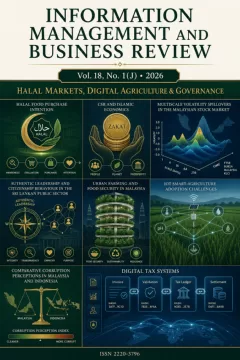 Vol. 18 No. 1(I) (2026)
Halal Markets, Digital Agriculture & Governance
View issue contents
Published
Submissions
Have research to publish? Information Management and Business Review welcomes submissions.
Make a Submission