Abstract
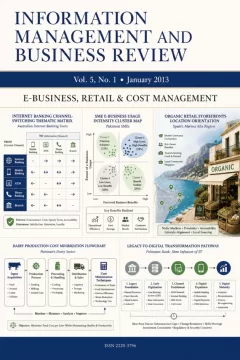
This research provides a case study of a niche market in Marina Alta and Marina Baja counties located on the coast of the province of Alicante, Spain. These counties attract foreign residents from Germany, United Kingdom, and Scandinavia who are the frequent consumers of organic products. Accordingly, retailers choose the store location based on demand for organic products and detects a niche market in Spain. In addition, the study reveals the consumption patterns of organic-oriented consumers. In-depth interview is conducted with store managers and a researcher-administered survey is applied to the customers to identify the market. The study reveals the relationship between the presence of foreign residents who are more familiar to organic products and organic retailers’ choice of store location. Results are given and discussed.
Keywords
- Niche Market Search this journal for Niche Market (opens in a new tab)
- Organic Market Search this journal for Organic Market (opens in a new tab)
- Retailing Search this journal for Retailing (opens in a new tab)
- Case Study Search this journal for Case Study (opens in a new tab)
- Spain Search this journal for Spain (opens in a new tab)
References
- Finch, J. E. (2006). The Impact of Personal Consumption Values and Beliefs on Organic Food Purchase Behavior. Journal of Food Products Marketing, 11(4), 63-76.
- Achilleas, K. & Anastasios, S. (2008). Marketing aspects of quality assurance systems: The organic food sector case. British Food Journal, 110(8), 829-839.
- Albardíaz, M. A. (2000). Comportamiento del consumidor hacia los alimentos ecológicos. Distribución y Consumo, Abril-Mayo, 56-57.
- Alonso, A., Guzmán, G. & Centit, M. (2000).Caracterización de la agricultura ecológica en España. Análisis de una estrategia de comercialización directa: es caso de la SCA el Romeral, Introducción a la Agroecología como desarrollo rural sostenible, Madrid, Oxford University Press.
- Baker, S., Thompson, K. E., Engelken, J. & Huntley, K. (2004). Mapping the values driving organic food choice: Germany vs the UK. European Journal of Marketing, 38(8), 995-1012.
- Brugarolas, M. & Rivera, L. (2002). Comportamiento del consumidor valenciano ante los productos ecológicos e integrados. Estudios Agrosociales y Pesqueros, 192, 105-121.
- Chamorro, A. (2004). Estrategias de marketing para productos de alimentación ecológica. Ecoliva: olivicultura ecológica. IVM editerranean Conference of Green Olive and Olive Oil Ecology, 549553, Génave, Spain.
- Chan, R. K. & Lau, L. Y. (2000). Antecedents of green purchases: a survey in China. Journal of Consumer Marketing, 17(4), 338-357.
- Coughlan, A. T., Erin, A., Louis, W. S. & El-Ansary, A. I. (2006). Marketing Channels. New Jersey: Pearson Education.
- Dalgic, T. & Leeuw, M. (1994). Niche Marketing Revisited: Concept, Applications and Some European Cases. European Journal of Marketing, 28(4), 39-55.
- European Court of Auditors Special Report. (2012). http://eca.europa.eu/portal/pls/portal/ docs/1/15290741.PDF, accessed on 17 August 2012.
- Follows, S. B. & Jobber, D. (2000). Environmentally responsible purchase behavior: a test of a consumer model. European Journal of Marketing, 34(5), 723-746.
- Hughner, R. S., McDonagh, P., Prothero, A., Shultz, C. J. & Stanton, J. (2007). Who are organic food consumers? A compilation and review of why people purchase organic food. Journal of Consumer Behaviour, 6(2-3), 94-110.
- International Federation of Organic Agriculture Movements (IFOAM). (2012). http://www.ifoam.org/growing_organic/growing_organic_main.php, accessed on19 December 2012.
- Jones, P., Clarke-Hill, C., Shears, P. & Hillier, D. (2001). Retailing organic foods. British Food Journal, 103(5), 358 - 365.
- Kotler, P. & Armstrong, G. (2008). Principles of Marketing. New Jersey: Pearson Education.
- Kottila, M. R. & Rönni, P. (2008). Collaboration and trust in two organic food chains. British Food Journal, 110(4), 376-94.
- Latacz-Lohmann, U. & Foster, C. (1997). From niche to mainstream - strategies for marketing organic food in Germany and the UK. British Food Journal, 99(8), 275-82.
- Loureiro, M. L. & Hine, S. (2002). Discovering Niche Markets: A Comparison of Consumer Willingness to Pay for A Local (Colorado-Grown), Organic, and GMO-free product. Journal of Agricultural and Applied Economics, 34(3), 477-87.
- Ministry of Rural and Marine Environment (MARM). (2010). http://www.mapa.es/ alimentacion/pags/ecologica/pdf/marketing.pdf accessed on 10 March 2010.
- Munuera, J. L. & Pemartín, M. (2006). El consumidor europeo de productos ecológicos. Distribución y Consumo, Enero-Febrero, 50-63.
- Naspetti, S. & Zanoli, R. (2009). Organic Food Quality and Safety Perception Throughout Europe. Journal of Food Products Marketing , 15(3), 249-266.
- Ngobo, P. V. (2011). What Drives Household Choice of Organic Products in Grocery Stores? Journal of Retailing, 87(1), 90-100.
- Padel, S. & Foster, C. (2005). Exploring the gap between attitudes and behaviour: Understanding why consumers buy or do not buy organic food. British Food Journal, 107(8), 606-25.
- Pearson, D. & Henryks, J. (2008). Marketing Organic Products: Exploring Some of the Pervasive Issues. Journal of Food Products Marketing, 14(4), 95-108.
- Reibstein, D. J. & Farris, P. W. (1995). Market Share and Distribution: A Generalization, a Speculation, and Some Implications. Marketing Science, 14(3), 190-202.
- Richter, T. & Hempfling, G. (2003). https://www.fibl.org/fileadmin/documents/shop/1285supermarket.pdf, accessed on 17 August 2012.
- Sanjuán, A. I., Sánchez, M., Gil, J. M., Gracia, A. & Soler, F. (2003). Brakes to organic market enlargement in Spain: consumers’ and retailers’ attitudes and willingness to pay. International Journal of Consumer Studies, 27(2), 134-144.
- Soler, F., Gil, J. M. & Sánchez, M. (2002). Consumers’ acceptability of organic food in Spain: Results from an experimental auction market. British Food Journal, 104(8), 670-687.
- Straughan, R. D. & Roberts, J. A. (1999). Environmental segmentation alternatives: a look at green consumer. behavior in the new millennium , 16(6), 558-575.
- Squires, L., Juric, B. & Cornwell, B. T. (2001). Level of market development and intensity of organic food consumption: cross-cultural study of Danish and New Zealand consumers. Journal of Consumer Marketing, 18(5), 392-409.
- Vlosky, R. P., Ozanne, L. K. & Fortenot, R. (1999). Conceptual Model of US consumer willingness-to-pay for environmentally certified wood products. Journal of Consumer Marketing, 16(2), 122-136.
- World Health Organization. (2010). http://www.destinationmediterranean.co.uk/locations/ index.php?n=7&s=19, accessed on 10 March 2010.
Downloads
No downloads have been recorded for this article yet. Figures appear here once readers begin downloading the full text.
How to Cite
Share this article
License
Copyright (c) 2013 BeyzaGültekin, María D. De Juan-Vigaray, Ana Espinosa Seguí (Author)

This work is licensed under a Creative Commons Attribution 4.0 International License.
Author (s) should affirm that the material has not been published previously. It has not been submitted and it is not under consideration by any other journal. At the same time author (s) need to execute a publication permission agreement to assume the responsibility of the submitted content and any omissions and errors therein. After submission of revised paper in the light of suggestions of the reviewers, the editorial team edits and formats manuscripts to bring uniformity and standardization in published material.
This work will be licensed under Creative Commons Attribution 4.0 International (CC BY 4.0) and under condition of the license, users are free to read, copy, remix, transform, redistribute, download, print, search or link to the full texts of articles and even build upon their work as long as they credit the author for the original work. Moreover, as per journal policy author (s) hold and retain copyrights without any restrictions.
Keywords
- Niche Market Search this journal for Niche Market (opens in a new tab)
- Organic Market Search this journal for Organic Market (opens in a new tab)
- Retailing Search this journal for Retailing (opens in a new tab)
- Case Study Search this journal for Case Study (opens in a new tab)
- Spain Search this journal for Spain (opens in a new tab)
Section
Published
Submissions
Have research to publish? Information Management and Business Review welcomes submissions.
Make a Submission