Abstract
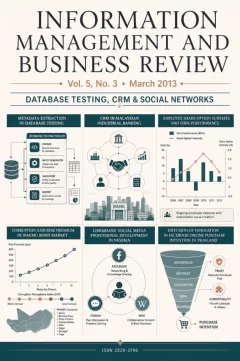
This paper examines the impact of employee share option schemes (ESOs) on one company in Malaysia. It is hoped that the findings of this study will be useful to companies who wish to adopt such schemes and to market regulators. The financial and operational indicators were studied for a total period of 11 years (five pre-ESOs and five post ESOs). In line with the findings of other studies done in Malaysia, Singapore and other countries, it has been found that the deterioration in financial performance was not arrested by ESOs. The operation and productivity of the company showed no improvement postESOs. This study concludes that ESOs do not motivate employees and the objectives of the ESOs were not fulfilled. This study also finds that the beneficiaries of ESOs are the majority shareholders/managers and the losers are the minority shareholders. Based on these results, it will be difficult to make a case for the usefulness of ESOs.
Keywords
- Productivity Search this journal for Productivity (opens in a new tab)
- Performance Search this journal for Performance (opens in a new tab)
- Share Option Schemes Search this journal for Share Option Schemes (opens in a new tab)
- Employees Search this journal for Employees (opens in a new tab)
- Market Search this journal for Market (opens in a new tab)
- Ratio Search this journal for Ratio (opens in a new tab)
References
- Agrawal, A. & Knoeber, C. R. (1996). Firm Performance and Mechanisms to Control Agency Problems between Managers and Shareholders. Journal of Financial and Quantitative Analysis, 3, 377-397.
- AL. (2008). Financial Statement. Kuala Lumpur: Press Metal Berhad. Retrieved 18 September 2011 from http://www.pressmetal.com.
- Block, S. B. & Hirt, G. A. (2008). Foundations of Financial Management, 12th Edition, New York: McGrawHill/Irwin.
- Brickley, J. A., Bhagat, S. & Lease, R. C. (1985). The impact of long-range managerial compensation plans on shareholder wealth. Journal of Accounting and Economics, 7, 115-129.
- Bursa Malaysia Berhad. (2011). General Announcement No MM-000908-51358; issued by Bumiputra Merchant Bankers Berhad on 8.9.2000. Retrieved 31 July 2011 from http://www.bursamalaysia.com/website/bm/listed_companies/company_announcements/anno uncements/archives.jsp.
- Davidson, W. N. & Worrell, D. L. (1994). ESOPS’s fables: The influence of employee stock ownership plans on corporate stock prices and subsequent operating performance . Human Resource Planning December 1994. Retrieved 29 July 2011 from http://www.entrepreneur.com/trade journals/article/print/16952455.html .
- Demsetz, H. (1983). The structure of ownership and the theory of the firm. Journal of Law and Economics 2(2), 375-390.
- Dhiman, R. K. (2009). The elusive stock option plan-productivity link: evidence from India . International Journal of Productivity and Performance Management, 58(6), 542-563.
- Ghazali, Z. (2008). The use of ESOS as Interest Alignment Mechanism in Malaysia: A Mismatched of a Problem and Solutions. Academic Exercise, Universiti Sains Malaysia. Retrieved 20 July 2011 from http://eprints.usm.my/10402/1/THE_USE_OF_ESOS_AS_INTEREST_ALIGNMENT_MECHANI SM_IN_MALAYSIA.pdf.
- Haugen, R. A. & Lemma, W. S. (1981). Resolving the agency problems of external capital through options. Journal of Finance, 36 , 629-648 .
- Investopedia, U. L. C. (2011). Advanced financial statement analysis. Retrieved 30 July 2011 from http://www.investopedia.com/inv/pdf/tutorials/financialstatements.pdf.
- Jensen, M. & Meckling, W. (1976). Theory of the firm: Managerial behaviour, agency costs and ownership structure. Journal of Financial Economics, 3(4), 305-360.
- Meng, R., Zhou, X. & Zhu, H. (2010). Do ESOP’s enhance firm performance? Evidence from China’s reform experiment . Journal of Banking and Finance. Retrieved 5 July 2011 from. Doi 10.1016/j.jbankfin.2010.11.004.
- Ng, W. C. (1999). The Impact of Employees’ Share Option Schemes in Singapore. Academic Exercise . University of Singapore.
- Obiyathulla, I. B, Sharifah-Raihan, S. M. Z., Mohd-Eskandar, S. M. R & Azhar, M. (2009). Granting Employee Stock Options (ESOs), Market Reaction and Financial Performance . Asian Academy of Management Journal of Accounting and Finance, 5(1), 117-138.
- Parkin, M. (2005). Economics. Seventh edition, Singapore, Addison-Wesley.
- Pendleton, A. & Andrew, R. (2010). Employee Stock Ownership, Involvement, and Productivity: An Interaction Based Approach. Industrial and Labor Relations Review, 64(1), 23-35.
- Sesil, J. C. & Maya, K. K. (2005). The Impact of Broad-Based Stock Options on Firm Performance: Does Size Matter? A quick view. Working paper series in human resource management. Retrieved 4 September from http://chrs.rutgers.edu/pub_documents/Article%2023%20all.pdf .
- Securities Commission Malaysia. Retrieved 24 August 2011 from http://www.sc.com.my.
- Sengupta S., Whitfield, K. & McNabb, B. (2007). Employee share ownership and performance: golden path or golden handcuffs? International Journal of Human Resource Management, 18(8), 1507-1538.
- Soon, K. H. (2001). Employee Stock Options: Why Issue Them? Academic Exercise . University of Singapore. Business Section, The Star Newspaper, Saturday, 2nd July 2011.
- Tai, C. F. (2000). The Impact of Employee Stock Options on Firm Performance. Academic Exercise . National University of Singapore.
- Yeo, G., Chen, S. S., Wai, H. K. & Cheng-few, L. (1999). Effects of Executive Stock Options on Shareholder Wealth and Firm Performance: The Singapore Evidence. The Financial Review, 34, 1-20.
- Yu, P. L. (2008). Broad-based stock options program and firm productivity. Unpublished Ph.D dissertation. The State University of New York at Buffalo.
Downloads
No downloads have been recorded for this article yet. Figures appear here once readers begin downloading the full text.
How to Cite
Share this article
License
Copyright (c) 2013 Choi Sang Long, Mahanra Rao a/l Gondyah, Ajagbe Akintunde Musibau (Author)

This work is licensed under a Creative Commons Attribution 4.0 International License.
Author (s) should affirm that the material has not been published previously. It has not been submitted and it is not under consideration by any other journal. At the same time author (s) need to execute a publication permission agreement to assume the responsibility of the submitted content and any omissions and errors therein. After submission of revised paper in the light of suggestions of the reviewers, the editorial team edits and formats manuscripts to bring uniformity and standardization in published material.
This work will be licensed under Creative Commons Attribution 4.0 International (CC BY 4.0) and under condition of the license, users are free to read, copy, remix, transform, redistribute, download, print, search or link to the full texts of articles and even build upon their work as long as they credit the author for the original work. Moreover, as per journal policy author (s) hold and retain copyrights without any restrictions.
Keywords
- Productivity Search this journal for Productivity (opens in a new tab)
- Performance Search this journal for Performance (opens in a new tab)
- Share Option Schemes Search this journal for Share Option Schemes (opens in a new tab)
- Employees Search this journal for Employees (opens in a new tab)
- Market Search this journal for Market (opens in a new tab)
- Ratio Search this journal for Ratio (opens in a new tab)
Section
Published
Submissions
Have research to publish? Information Management and Business Review welcomes submissions.
Make a Submission