Abstract
This article discusses about the marketing theory from the perspective of philosophy of science. The discussion focused on the aspects of the ontology, epistemology, and axiology. From the aspect of the ontology, it seems that the essence of marketing is a useful science and mutually beneficial for both the marketer and the stakeholders, or in other words that marketing knowledge is useful knowledge for the benefit of humankind that can be realized through the exchange process. Side of the ontology covers what the substance of marketing knowledge, the substance of truth and reality that is inherent with marketing. Meanwhile, aspects of epistemology cover a variety of approaches, methods, sources, structure and validation or marketing truth. Finally, axiology fields are related to ethics in marketing and marketing research. Marketing ethics and ethics in marketing research is a crucial matter, including in this case is trust.
Keywords
- Philosophy of Science Search this journal for Philosophy of Science (opens in a new tab)
- Marketing Theory Search this journal for Marketing Theory (opens in a new tab)
- Ontology Search this journal for Ontology (opens in a new tab)
- Epistemology Search this journal for Epistemology (opens in a new tab)
- Axiology Search this journal for Axiology (opens in a new tab)
References
- Akaah, I. P. & Riordan, E. A. (1989). Judgments of Marketing Professionals about Ethical Issues in Marketing Research: A Replication and Extension. Journal of Marketing Research , 26(1), 112-112.
- Anderson, P. F. (1983). Marketing, Scientific Progress, and Scientific Method. The Journal of Marketing , 47(4), 18-31.
- Andreasen, A. R. (2002). Marketing Social Marketing in the Social Change Marketplace. Journal of Public Policy & Marketing , 21(1), 2-13.
- Arndt, J. (1985). On Making Marketing Science More Scientific: Role of Orientations, Paradigms, Metaphors, and Puzzle Solving. Journal of Marketing , 49, 11-23.
- Bagozzi, R. P. (1975). Marketing as Exchange. The Journal of Marketing , 39(4), 32-39.
- Bagozzi, R. P. (1978). Marketing as Exchange: A Theory of Transactions in the Marketplace. American Behavioral Scientist , 21, 535-556.
- Bahm, A. J. (1980). What is Science. New Mexico: World Books, Alburquerge.
- Bartels, R. (1967). A Model for Ethics in Marketing. The Journal of Marketing , 31(1), 20-26.
- Brinkmann, J. (2002). Business and Marketing Ethics as Professional Ethics. Concepts, Approaches and Typologies. Journal of Business Ethics , 41(1/2), 159-177.
- Crawford, M. C. (1970). Attitudes of Marketing Executives toward Ethics in Marketing Research. Journal of Marketing , 34, 46-52.
- Dharmmesta, B. S. (2006). Teori Pemasaran: Perkembangan Historis Dan Isu-isu Kritis. Makalah tidak dipublikasikan untuk Modul Perkuliahan Program S3 Manajemen (Maret).
- Ferrell, O. C. & Gresham, L. G. (1985). A Contingency Framework for Understanding Ethical Decision Making in Marketing. Journal of Marketing , 49, 87-96.
- Gioia, D. A. & Pitre, E. (1990). Multiparadigm Perspectives on the Theory Building. Academy of Management Review , 15(14), 584-602.
- Gronross, C. (1994). From Marketing Mix to Relationship Marketing: Toward A Paradigm Shift in Marketing. Management Decision , 32(2), 4-20.
- Hasting, G. & Saren, M. (2003). The Critical Contribution of Social Marketing. Theory and Application Marketing Theory , 3(3), 305–322.
- Hill, R. B. & Fout, S. (2005). Work Ethic and Employment Status: A Study of Job Seekers. Journal of Industrial Teacher Education , 42(3), 48-65.
- Hunt, S. D. (1976). The Nature and Scope of Marketing. Journal of Marketing , 40, 17-28.
- Hunt, S. D. (1990). Truth in Marketing Theory and Research. The Journal of Marketing , 54(3), 1-15.
- Hunt, S. D. (1991). Modern Marketing Theory: Critical Issues in the Philosophy of Marketing Science, Cincinnati, OH: South-Western Publishing Co.
- Hunt, S. D. (2001). The Influence of Philosophy, Philosophies, and Philosophers on a Marketer's Scholarship. The Journal of Marketing , 65(4), 117-122.
- Hunt, S. D., Chonko, L. B. & Wilcox, J. B. (1984). Ethical Problems of Marketing Researchers. Journal of Marketing Research , 21, 309-324.
- Hunt, S. D. & Vitell, S. (1986). A General Theory of Marketing Ethics. Journal of Macromarketing , 6, 5- 15.
- Keraf, S. (1998). Etika Bisnis, Tuntutan dan Relevansinya. Yogyakarta: Kanisius.
- Kotler, P. & Keller, K. L. (2012). Marketing Management . 14th ed., Edinburgh Gate, Essex: Prentice Hall
- Kotler, P. & Levy, S. J. (1969). Broadening the Concept of Marketing. Journal of Marketing , 33, 10-15.
- Malhotra, N. K. & Miller, G. (1996). Ethical Issues in Marketing Managed Health Care. Journal of Health Care Marketing, 16(1), 60-65.
- Malhotra, N. K. & Miller, G. L. (1998). An Integrated Model for Ethical Decisions in Marketing Research. Journal of Business Ethics , 17(3), 263-280.
- Marketing Staff of the Ohio State University. (1965). A Statement of Marketing Philosophy. Journal of Marketing , 29 (1), 43-44,
- Moorman, C. & Rust, R. T. (1999). The Role of Marketing. The Journal of Marketing , 63, 180-197.
- Morgan, R. M. & Hunt, S. D. (1994). The Commitment-Trust Theory of Relationship Marketing. Journal of Marketing , 58, 20-38.
- Rallapalli, K. C. (1999). A Paradigm for Development and Promulgation of a Global Code of Marketing Ethics. Journal of Business Ethics , 18 (1), 125-137.
- Reidenbach, R. E. & Robin, D. P. (1991). Epistemological Structures in Marketing: Paradigms, Metaphors, and Marketing Ethics. Business Ethics Quarterly , 1(2), 185-200.
- Robin, D. P. & Reidenbach, R. E. (1993). Searching for a Place to Stand: Toward a Workable Ethical Philosophy for Marketing. Journal of Public Policy & Marketing , 12(1), 97-105.
- Sarantakos, S. (1993). Social Research, Melbourne: Mcmillan education, Australia Pty., Ltd.
- Shaw, E. H. (2009). Exploration and Insights, Reflections on The History of Marketing Thought. Journal of Historical Research in Marketing , 1 (2), 330-345.
- Surajiyo. (2008). Filsafat Ilmu dan Perkembangannya di Indonesia, Yogyakarta: Bumi Aksara.
- Suriasumantri, J. S. (1993). Filsafat Ilmu Sebagai Pengantar Populer. Jakarta: Sinar Harapan.
- Lecturer Team of Philosophy of Science in the Faculty of Philosophy UGM. (2007). Filsafat Ilmu, Sebagai Dasar Pengembangan Ilmu Pengetahuan. Yogyakarta: Liberty.
- Tybout, A. M. & Zaltman, G. (1974). Ethics in Marketing Research: Their Practical Relevance. Journal of Marketing Research , 11(4), 357-368.
- Zeithaml, V. A. & Bitner, M. J. (2003). Services Marketing: Integrating Customer Focus across The Firm. New York: McGraw-Hill.
Downloads
No downloads have been recorded for this article yet. Figures appear here once readers begin downloading the full text.
How to Cite
Share this article
License
Copyright (c) 2013 Tanti Handriana, Basu Swastha Dharmmesta (Author)

This work is licensed under a Creative Commons Attribution 4.0 International License.
Author (s) should affirm that the material has not been published previously. It has not been submitted and it is not under consideration by any other journal. At the same time author (s) need to execute a publication permission agreement to assume the responsibility of the submitted content and any omissions and errors therein. After submission of revised paper in the light of suggestions of the reviewers, the editorial team edits and formats manuscripts to bring uniformity and standardization in published material.
This work will be licensed under Creative Commons Attribution 4.0 International (CC BY 4.0) and under condition of the license, users are free to read, copy, remix, transform, redistribute, download, print, search or link to the full texts of articles and even build upon their work as long as they credit the author for the original work. Moreover, as per journal policy author (s) hold and retain copyrights without any restrictions.
Keywords
- Philosophy of Science Search this journal for Philosophy of Science (opens in a new tab)
- Marketing Theory Search this journal for Marketing Theory (opens in a new tab)
- Ontology Search this journal for Ontology (opens in a new tab)
- Epistemology Search this journal for Epistemology (opens in a new tab)
- Axiology Search this journal for Axiology (opens in a new tab)
Section
Published in
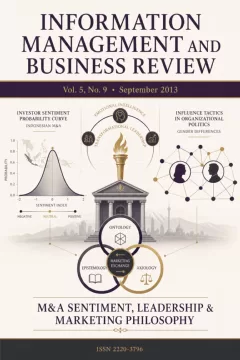 Vol. 5 No. 9 (2013)
M&A Sentiment, Leadership & Marketing Philosophy
View issue contents
Published
Submissions
Have research to publish? Information Management and Business Review welcomes submissions.
Make a Submission