Abstract
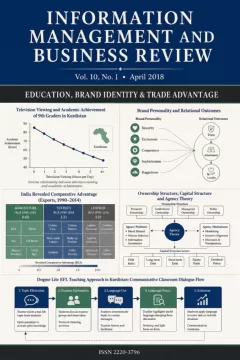
This study examines the relationship between watching television and academic achievement of school going 9th-grade students in Kurdistan region of Iraq. After a brief review of some related research and programs the ground realities and problems prevails in Kurdistan region of Iraq society regarding students spending time watching television, their life will be shaped by television, and this affects their academic achievements. The researcher used a quantitative Causal-Comparative research methodology, and 240 9th graders students selected in three different schools. Non-random purposive sampling was used to collect the data. in general, this study finds that television viewing has a moderately negative effect on the academic achievement. This means the more students spent time watching Television the less grade they will achieve in their school. Finally, there are some recommendations provided that should be taken by families and educators including, watching certain programs, co-viewing, having only one television at home.
Keywords
References
- Annie, W., Stoker, H. W. & Ward, M. M. (1996). Achievement and Ability Tests - Definition of the Domain, Educational Measurement 2, University Press of America, pp. 2–5, ISBN 978-0-7618-0385-0.
- Brown, J. & Walsh-Childers, K. (n.d.). Sex on Television: Do all kids see the same show? Retrieved from http://www.medialit.org/reading-room/sex-Televesion-do-all-kids-see-same-show
- Caldas, S. J. & Bankston, C. (1999). Black and white TV: Race, television viewing, and academic achievement. Sociological Spectrum, 19(1), 39-62.
- Chonchaiya, W. & Pruksananonda, C. (2008). Television viewing associates with delayed language development. Acta Paediatrica, 97(7), 977-982.
- Hofferth, S. L. (2010). Home media and children’s achievement and behavior. Child development, 81(5), 1598-1619.
- Hornik, R. (1978). Television access and the slowing of cognitive growth. American Educational Research Journal, 15(1), 1-15.
- Khan, G. M. (2012). The Impact of Television Viewing On the Academic Achievements of Students between Upper and Lower Socio-Economic Level in Karachi.
- Kureishi, W. & Yoshida, K. (2012). Does Viewing Television Affect the Academic Performance of Children? Social Science Japan Journal, 20(1).
- Paavonen, E. J., Roine, M., Pennonen, M. & Lahikainest, A. R. (2009). Do parental co-viewing and discussions mitigate tv-induced fears in young children? Child: Care, Health & Development, 35(6), 773-780. doi: 10.1111/j.1365-2214.2009.01009.x
- Rideout, V. J., Vandewater, E. A. & Wartella, E. A. (2003). Zero to six: Electronic media in the lives of infants, toddlers, and preschoolers. Kaiser Family Foundation, Retrieved from http://www.nyu.edu/classes/stephens/History of Television page.htm
- Shin, N. (2004). Exploring pathways from television viewing to academic achievement in school-age children. J. Genetic Psychology, 165, 367-382.
- Vedadi, S., Aris, B. B., Iqbal, S. M. J. & Muneer, S. (2013). Street Children and its Impact on Educational Attainment in North-Western State (Punjab) of Pakistan. Journal of Education and Vocational Research, 4(12), 366-372.
Downloads
No downloads have been recorded for this article yet. Figures appear here once readers begin downloading the full text.
How to Cite
Share this article
License
Copyright (c) 2018 Karwan Kakabra Kakamad, Abdulfatah Hasan Fatah (Author)

This work is licensed under a Creative Commons Attribution 4.0 International License.
Author (s) should affirm that the material has not been published previously. It has not been submitted and it is not under consideration by any other journal. At the same time author (s) need to execute a publication permission agreement to assume the responsibility of the submitted content and any omissions and errors therein. After submission of revised paper in the light of suggestions of the reviewers, the editorial team edits and formats manuscripts to bring uniformity and standardization in published material.
This work will be licensed under Creative Commons Attribution 4.0 International (CC BY 4.0) and under condition of the license, users are free to read, copy, remix, transform, redistribute, download, print, search or link to the full texts of articles and even build upon their work as long as they credit the author for the original work. Moreover, as per journal policy author (s) hold and retain copyrights without any restrictions.
Keywords
Section
Published
Submissions
Have research to publish? Information Management and Business Review welcomes submissions.
Make a Submission