Abstract
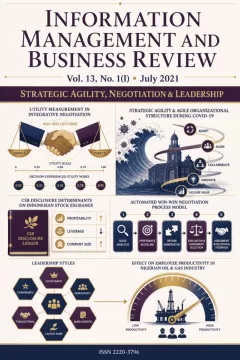
This paper builds an automated negotiation process model for integrative negotiations. The process model defines and automates the necessary phases and activities along with the integrative negotiation approach principles to create win-win outcomes that mutually satisfy negotiating parties. However, to realize this objective, the negotiation literature and theories are reviewed to determine the relevant theories for integrative negotiations that help to develop and form the basis of the process model. After investigation, it became evident that three main theories, which are Decision Theory, Rational Choice Theory and Mutual Gains Theory, contribute to building the integrative process model by setting its phases and components. The model is composed of five main phases with several sub-phases. Decision theory with mutual gains theory provides the robust process model through several phases, and rational choice theory with mutual gains theory ensures they are implemented in a fair, objective manner to come up with a satisfying win-win solution. Hence, automated negotiation processes when designed in a robust manner that is based on the theory that serves integrative approaches could lead to win-win negotiation outcomes. The foundation of the win-win negotiation process model contributes to designing win-win negotiation outcomes through structuring automated negotiation and setting its phases along with the integrative negotiation principles. It develops the negotiation field by integrating automation and the integrative approach principles in a process model.
Keywords
- Negotiation Search this journal for Negotiation (opens in a new tab)
- Automated Negotiation Search this journal for Automated Negotiation (opens in a new tab)
- Integrative Negotiation Search this journal for Integrative Negotiation (opens in a new tab)
- Win-Win Outcome Search this journal for Win-Win Outcome (opens in a new tab)
- Negotiation Process Model Search this journal for Negotiation Process Model (opens in a new tab)
References
- Alfredson, T. & Cungu, A. (2008). Negotiation Theory and Practice: A Review of the Literature. FAO.
- Amadae, S. M. (2016). Rational Choice Theory. From Britannica: https://www.britannica.com/topic/rationalchoice-theory
- Arunachalam, V. & Dilla, W. N. (1995). Judgment Accuracy and Outcomes of Negotiation: A Causal Modeling Analysis of Decision-aiding Effects. Organizational Behavior and Human Decision Processes, 61, 289–304.
- Braun, P., Brzostowski, J., Kersten, G., Kim, J. B., Kowalczyk, R., Strecker, S. & Vahidov, R. (2006). e-Negotiation Systems and Software Agents: Methods, Models, and Applications. Intelligent Decision-making Support Systems, 271-300.
- Burke, P. J. & Stets, J. E. (2009). Identity Theory. New York: Oxford University Press. From Oxford Scholarship Online.
- Carmel, E., Herniter, B. C. & Nunamaker, J. F. (1993). Labor-management Contract Negotiations in an Electronic Meeting Room: A Case Study. Group Decision and Negotiation, 2, 27–60.
- Carnevale, P. J. & Pruitt, D. G. (1992). Negotiation and Mediation. Annual Review of Psychology, 43, 531-582.
- Croson, R. T. (1999). Look at Me When You Say That: An Electronic Negotiation Simulation. Simulation and Gaming, 30, 23-37.
- de Callieres, F. (1983). On the Manner of Negotiating with Princes. Paris, France: University of Notre Dame Press.
- de Felice, F. B. (1975). Negotiations, or the Art of Negotiating. New York: Doubleday Anchor.
- Drolet, A. L. & Morris, M. W. (2000). Rapport in Conflict Resolution: Accounting for How Face-to-Face Contact Fosters Mutual Cooperation in Mixed-Motive Conflicts. Journal of Experimental Social Psychology, 36, 26-50.
- Druckman, D. (1997). Negotiating in the International Context, in Peacemaking in International Conflict: Methods and Techniques. Washington DC: United States Institute of Peace Press, 81-124.
- Festinger, L. (1957). A Theory of Cognitive Dissonance. New York: Row Peterson.
- Fisher, R. & Ury, W. (1981). Getting to Yes. United Kingdom: Penguin Group.
- Fisher, R., Ury, W. & Patton, B. (1991). Getting to Yes: Negotiating Agreement Without Giving In. Revised 2nd edition. New York, USA: Penguin Books.
- Gifford, D. G. (2007). Legal Negotiation: Theory and Practice. St. Paul, MN: Thomson/West.
- Gulliver, P. H. (1979). Disputes and Negotiations: A Cross-cultural Perspective. New York: Academic Press.
- Hansson, S. O. (1994). Decision Theory. Stockholm: Royal Institute of Technology.
- Jennings, N. R., Faratin, P., Lomuscio, A. R., Parsons, S., Wooldridge, M. J. & Sierra, C. (2001). Automated Negotiations: Prospects, Methods and Challenges. Group Decision and Negotiation, 10(2), 199-215.
- Kersten, G. E. & Lo, G. (2003). Aspire: Integration of Negotiation Support System and Software Agents for EBusiness Negotiation. International Journal of Internet and Enterprise Management, 1(3), 293-315.
- Knudsen, L. K. (2007). Trust and Mutual Gains Approach: Negotiations Between Westerners and Chinese. Bergen: Norwegian School of Economics and Business Administration.
- Lande, J. (2017). Taming the Jungle of Negotiation Theories. The Negotiator's Desk Reference, Research Paper No. 2017-29.
- Lewicki, R. J., Barry, B., Saunders, D. M. & John, M. W. (2003). Negotiation, 4th edition. Irwin: McGraw-Hill.
- Lewicki, R. J., Saunders, D. M. & Barry, B. (2015). Negotiation. New York, NY: McGraw-Hill Education.
- McLeod, S. (2018). Maslow's Hierarchy of Needs. From Simply Psychology: https://www.simplypsychology.org/maslow.html
- Mintzberg, Raisinghani, D. & Théorêt, A. (1976). The Structure of 'Unstructured' Decision Processes. Administrative Sciences Quarterly, 21, 246-275.
- Muscato, C. (2019). Social Interaction Theory, Social Roles & the Presentation of Self. From Study.com: https://study.com/academy/lesson/social-interaction-theory-social-roles-the-presentation-ofself.html
- Nash, J. F. (1950). The Bargaining Problem. Econometrica, 18(2), 155-62.
- Raiffa, H. (1982). The Art and Science of Negotiations. Belknap Press of Harvard University Press Cambridge.
- Rapoport, A. (1966). Two-person Game Theory. Ann Arbor: University of Michigan Press.
- Spangle, M. L. & Isenhart, M. W. (2003). Negotiation: Communication for Diverse Settings. CA: SAGE Publications, Inc.
- Sundberg, N. D., Winebarger, A. A. & Taplin, J. R. (2019). Clinical Psychology: Evolving Theory, Practice, and Research (4th Edition). United States: Pearson. From KB Manage: https://www.kbmanage.com/concept/field-theory
- Wittek, R. (2013). Rational Choice Theory. In R. L. Warms, & J. R. McGee, Theory in Social and Cultural Anthropology - An Encyclopedia (p. 1056). USA: SAGE Publications, Inc.
- Zartman, I. (1988). Common Elements in the Analysis of the Negotiation Process. Negotiation Journal, 4, 31-43.
- Zartman, W. (1975). Negotiations: Theory and Reality. Journal of International Affairs, 29, 69-77.
Downloads
No downloads have been recorded for this article yet. Figures appear here once readers begin downloading the full text.
How to Cite
Share this article
License
Copyright (c) 2021 Latifa Ghalayini, Dana Deeb (Author)

This work is licensed under a Creative Commons Attribution 4.0 International License.
Author (s) should affirm that the material has not been published previously. It has not been submitted and it is not under consideration by any other journal. At the same time author (s) need to execute a publication permission agreement to assume the responsibility of the submitted content and any omissions and errors therein. After submission of revised paper in the light of suggestions of the reviewers, the editorial team edits and formats manuscripts to bring uniformity and standardization in published material.
This work will be licensed under Creative Commons Attribution 4.0 International (CC BY 4.0) and under condition of the license, users are free to read, copy, remix, transform, redistribute, download, print, search or link to the full texts of articles and even build upon their work as long as they credit the author for the original work. Moreover, as per journal policy author (s) hold and retain copyrights without any restrictions.
Keywords
- Negotiation Search this journal for Negotiation (opens in a new tab)
- Automated Negotiation Search this journal for Automated Negotiation (opens in a new tab)
- Integrative Negotiation Search this journal for Integrative Negotiation (opens in a new tab)
- Win-Win Outcome Search this journal for Win-Win Outcome (opens in a new tab)
- Negotiation Process Model Search this journal for Negotiation Process Model (opens in a new tab)
Section
Published in
 Vol. 13 No. 1(I) (2021)
Strategic Agility, Negotiation & Leadership
View issue contents
Published
Submissions
Have research to publish? Information Management and Business Review welcomes submissions.
Make a Submission