Articles

  • Article 1 in this issue

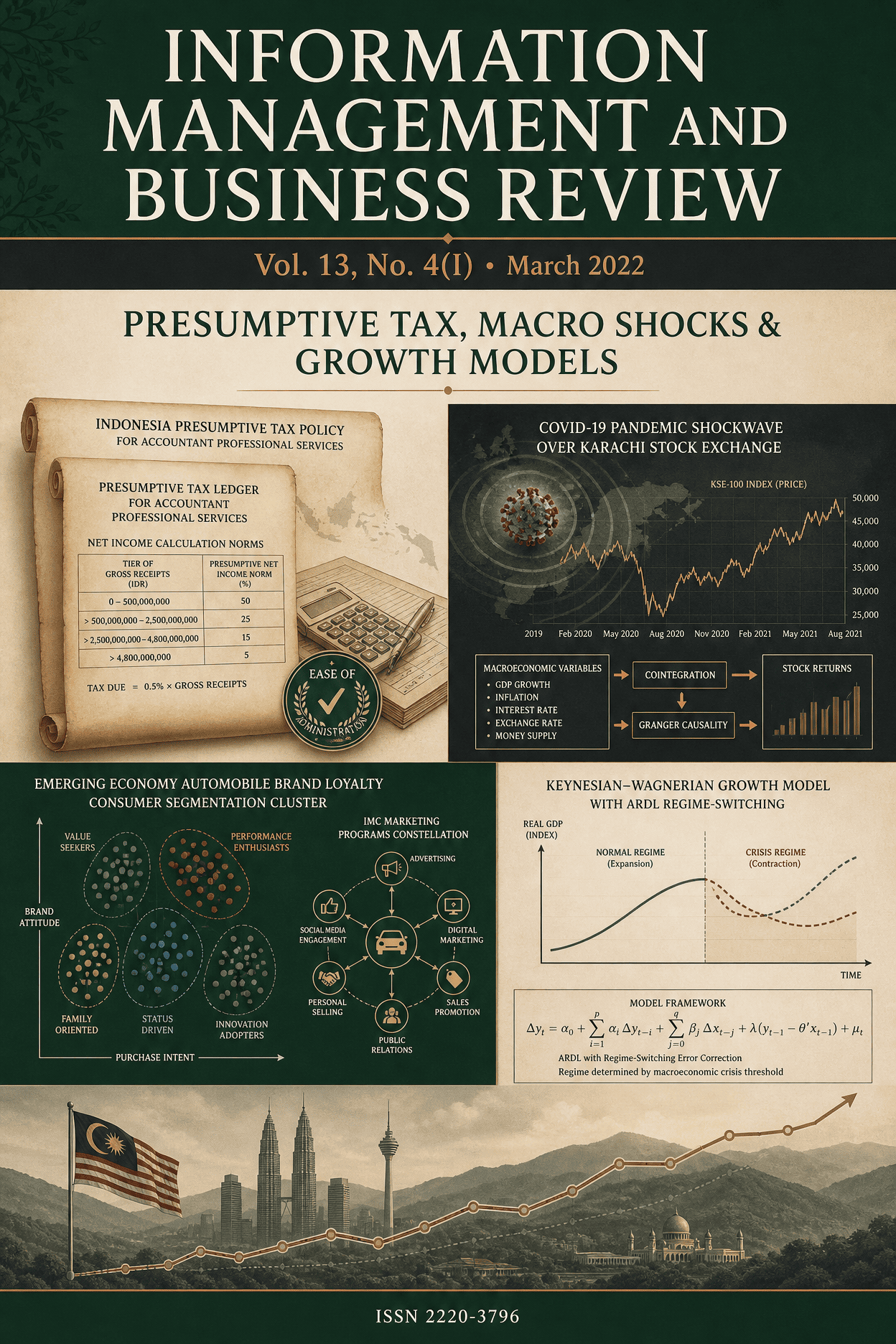
    Evaluating Indonesia's Presumptive Tax Policy on Accountant Professional Services

    • Author: Neni Susilawati, Raxel Edo Bramasta, Murwendah, Arfah Habib Saragih

    There is no disagreement about accountants' expertise in bookkeeping. Initially, the assumed tax policy was meant to alleviate bookkeeping requirements for small and medium-sized businesses that were unable to do so. However, why does the accounting profession benefit from not performing bookkeeping if it has specific gross revenue? This issue encourages authors to evaluate Indonesia's presumptive tax regulations for accountants' professional services. The objectives of this research are to ascertain why accountants employ Net Income Calculation Norms to determine their income taxes, to assess presumptive tax policies through the perspective of tax collection principles, and to explore more suitable presumptive tax policies for the accounting profession. This study applies a qualitative method, collecting data through indepth interviews. The findings indicate that the accounting profession's presumptive tax policy fulfills the concept of ease of administration for taxpayers but not the principle of substance over form or revenue productivity. The government should deregulate the policy of Net Income Calculation Norms for Accountant Professional Services so that it maintains consistency with the policy, the objective of providing presumptive taxation to taxpayers with a certain gross sale.

    Pages 1-10

    PDF - Evaluating Indonesia's Presumptive Tax Policy on Accountant Professional Services (opens in a new tab)
  • Article 2 in this issue

    COVID-19 Entwined the Dynamic Relationship between Stock Returns and Macroeconomic Variables

    • Author: Amina Malik, Babar Zaheer Butt, Haroon Aziz

    The state of any stock market is dependent on the economic and financial conditions prevailing in the country and can be used to see the mirror image of collective disposition in financial and economic terms. Therefore, this study examines the dynamic relationship between macroeconomic variables and stock prices in Pakistan in the COVID-19 pandemic scenario. For this purpose, monthly data has been taken from Jan 2019 to June 2021 and divided into Pre-COVID, COVID and overall periods. Data related to economic variables and stock prices have been retrieved from various sources including Statistical Reviews & Bulletins of State Bank of Pakistan, Karachi Stock Exchange and Pakistan Economic Survey. To assess the relationship between economic variables and stock prices, Cointegration, Granger-causality and Impulse Repose Function Tests have been applied on three data series. The results of the study reveal that there is a long-term equilibrium relationship between all economic variables and stock prices in the Pre-COVID period. However, most of the economic variables do not have such a relationship during the COVID period and the pattern of the relationship is almost the same in the overall period. Even the short-run dynamic relationship between economic variables and stock returns is affected by the pandemic. The results show that economic variables affect stock returns differently in the COVID situation than in the Pre-COVID scenario and it also affects the short-run relationship in the overall period. This research study provides imminent findings on the linkage between macroeconomic variables and stock prices in the Pakistani context. It helps investors and regulators in customizing their decisions and macroeconomic regulations respectively to improve the financial and economic stability of the country in the wake of the pandemic. Keeping in view the findings and implications of this study, investors and stakeholders need to weigh the uncertainty associated with COVID-pandemic before making investment decisions.

    Pages 11-22

    PDF - COVID-19 Entwined the Dynamic Relationship between Stock Returns and Macroeconomic Variables (opens in a new tab)
  • Article 3 in this issue

    Consumer Loyalty and Brand Marketing Programs in an Emerging Economy: Evidence from the Automobile Industry

    • Author: Sayibu Ibrahim Nnindini, Justice Boateng Dankwah

    The study examined the relationship between brand marketing programs and brand loyalty of automobile users in an emerging economy context. Adopting a positivist paradigm, a quantitative approach was employed. Using a cross-sectional survey, data was collected from 700 respondents. Scales of measures were evaluated using exploratory and confirmatory factor analysis after which consumer loyalty segments were created using cluster analysis. Logistic regression was carried out to evaluate the effect of brand marketing programs on consumer loyalty. The study revealed a positive and significant association between brand marketing efforts and consumers’ purchase decisions and loyalty to automobile brands. Four brand marketing efforts were also found to be significantly associated with the two segments (high and low involvement) at varying degrees.

    Pages 23-38

    PDF - Consumer Loyalty and Brand Marketing Programs in an Emerging Economy: Evidence from the Automobile Industry (opens in a new tab)
  • Article 4 in this issue

    The Development of Growth Model with the Implication of Crisis Regime

    • Author: Mohd Shahrol Nizam, Norimah Rambeli

    This conceptual paper aims to develop the theory of growth proposed by Keynes by considering crises or events that occur as well as incorporating interaction variables into the model to be studied simultaneously. Studies related to growth theory have been conducted before. However, previous studies have ignored crises or important events that affect economic growth. Although the Keynesian theory has been used to achieve the objectives of the study, past studies have proven that Wagner's Law may exist in some situations. Therefore, the opinions of these two economic figures related to the theory of government expenditure and economic growth should be given attention. The main objective of this conceptual paper was to assess the relationship between interactional variables and dummy variables of structural change in three regimes or different crises occurring simultaneously and the effects on economic growth in Malaysia for the long-term and short-term periods. The Autoregressive Distributed Lag (ARDL) method will be used to ascertain long-term and short-term relationships between endogenous and exogenous variables. Then, the results from previous studies are included in the findings section of the study.

    Pages 39-51

    PDF - The Development of Growth Model with the Implication of Crisis Regime (opens in a new tab)